
Our website uses affiliate links. If you click through any of these affiliate links in this article to make a purchase, we may earn a small commission at no extra cost to you. As Amazon Associates, we earn from qualifying purchases. Read our Disclosure for more. Thanks for your support!
If you’ve never considered visiting Sarajevo before, this Sarajevo itinerary is about to change your mind.
Tucked away in one of Europe’s most underrated corners, the Balkans, Sarajevo is a city that has it all: rich history, stunning architecture and the most welcoming locals.
From learning about the city’s dark past to finding the little pleasures of life in a cup of traditional Bosnian coffee, this Sarajevo itinerary is your ticket to unveiling the secret charms of one of Europe’s most authentic capitals.
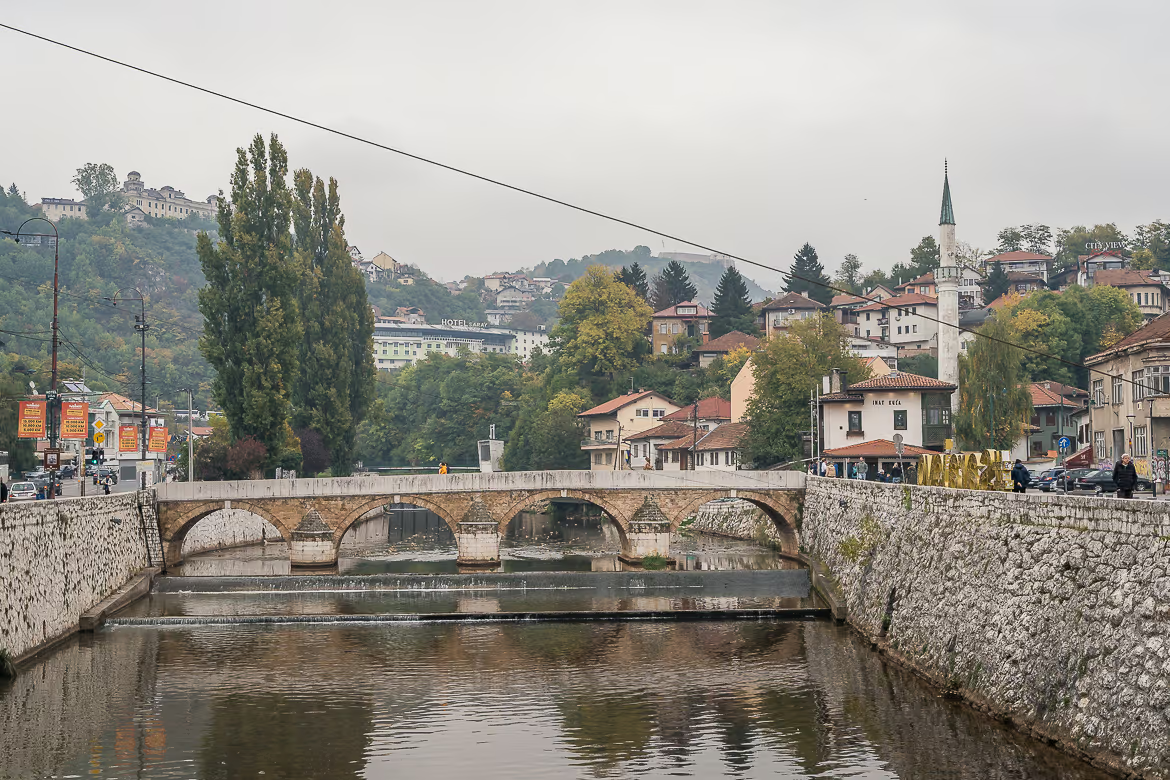
Where Is Sarajevo?
The city of Sarajevo is the capital of Bosnia and Herzegovina, an often overlooked country in the Balkan Peninsula.
The city lies in a valley surrounded by the Dinaric Alps, a geographical feature that played a significant part during the 1990s Sarajevo Siege. Additionally, the Miljacka River flows through the city.
Is Sarajevo Worth Visiting?
As we often do in our city itineraries and travel guides, we’ll try to answer this question as thoroughly as possible. Yet, this time, allow us to add a personal touch, too.
Growing up in the 1990s, we would often hear about Sarajevo, always in the context of war and darkness.
In the sheltered microcosm of our childhood and adolescence, we’d watch the harrowing footage on the news as though it were a war film, without giving it much thought.
In retrospect, we believe that was probably our way of dealing with what reached us through our TV screens.
Fast forward to the spring of 2025, when we started discussing a trip to Bosnia & Herzegovina. Like we always do before visiting a new country for the first time, we researched Bosnia’s history.
Yet no books or internet sources can compare to actually visiting the places where historic events took place, especially if we’re talking about a destination’s recent past.
After visiting Sarajevo a few months later, we realised that this trip was meant to be one of the most important and life-changing history lessons we’d ever have.
Therefore, Sarajevo is definitely worth visiting for history buffs or anyone interested in understanding the events and decisions that shaped a large part of Europe, the Balkans.
But Bosnia’s history didn’t start in the 1990s. Sarajevo feels like an open-air museum, where the city’s many layers of history effortlessly unfold.
From the Ottoman times to Sarajevo’s annexation by Austria-Hungary to the Communist era to the Bosnian War, it’s all there, waiting for you.
This history lesson is made possible simply by walking around and marvelling at the city’s diverse architecture, yet another reason to visit Sarajevo in its own right.
Grand mosques with tall minarets, elegant Western-style buildings and bland Communist-era blocks compose the unique image of a city that has been a true melting pot of cultures for centuries.
Sarajevo’s multicultural character is also a valid reason to visit Bosnia’s capital, as is the warmth and kindness of its people, who will always greet you with the broadest smile.
Last but not least, if you’re responsible travellers always on the lookout for less-saturated destinations, you should know that Sarajevo is one of Europe’s last strongholds of authenticity.
Still untouched by mass tourism, Sarajevo offers a glimpse into the real life of a bustling city in the Balkans.
For us Greeks (aka fellow Balkans), Sarajevo brings back all the good memories from when life was still easy and carefree in our once-authentic capital, Athens.
How Many Days in Sarajevo
Sarajevo is a compact city with most of its main attractions in the historic centre. The city’s history spans many centuries, starting with the Ottoman and Austro-Hungarian periods.
However, Sarajevo is most popular for its recent past, the dark period of the Sarajevo Siege, which lasted roughly between 1992 and 1996.
War attractions are scattered across the city centre and its suburbs, which is why they are best seen on a guided tour.
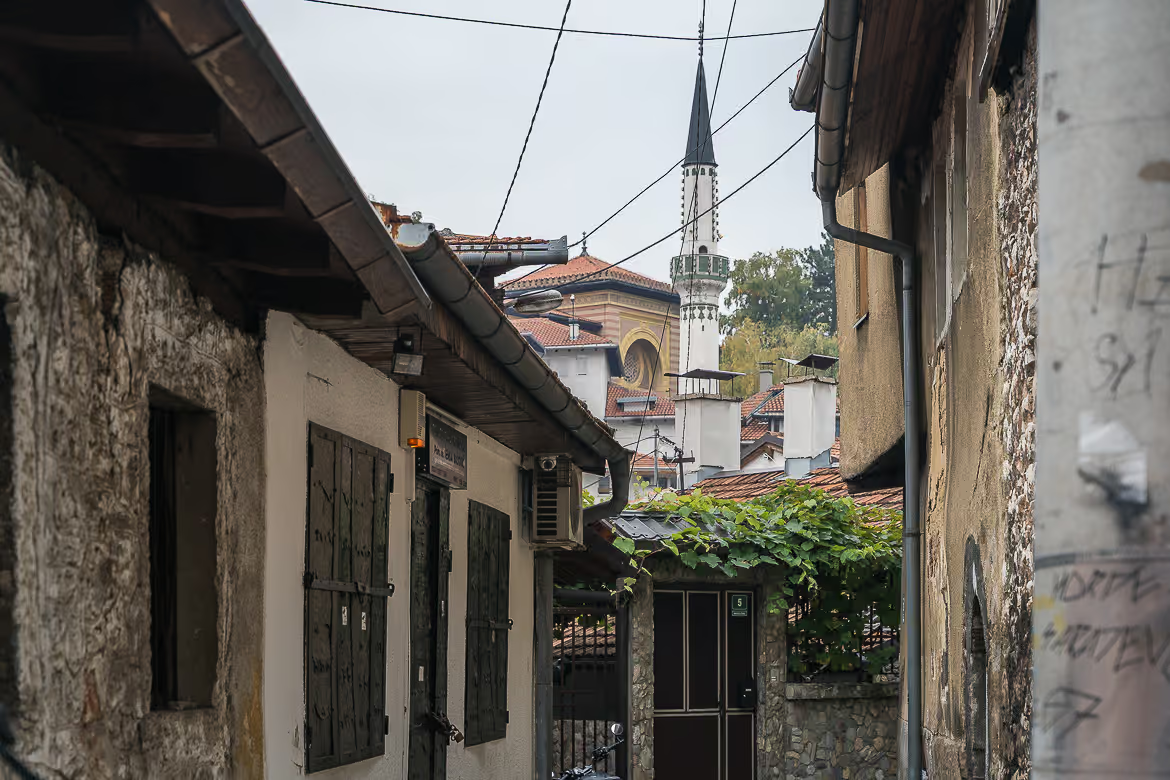
One day could probably be enough to explore Sarajevo’s historic centre and delve into the city’s dark recent past and the events of the Bosnian War.
However, despite the city’s small size, you shouldn’t stick to sightseeing alone.
Add a second day simply to take your time, mingle with locals and enjoy fantastic local coffee and delicious food in a city that remains authentic to its core.
Moreover, we recommend adding a third day to your Sarajevo itinerary to take a day trip to Srebrenica, near the border with Serbia, to learn more about the war’s most tragic chapter.
If you’re considering a trip to Bosnia & Herzegovina soon, we’re here to answer all your questions.
Click here to book a 60-minute video call with us or purchase a travel planning bundle that consists of a video call and a Bosnia & Herzegovina itinerary, customised to your travel needs and desires.
Learn more about our travel planning services.
How To Get To Sarajevo
By Air
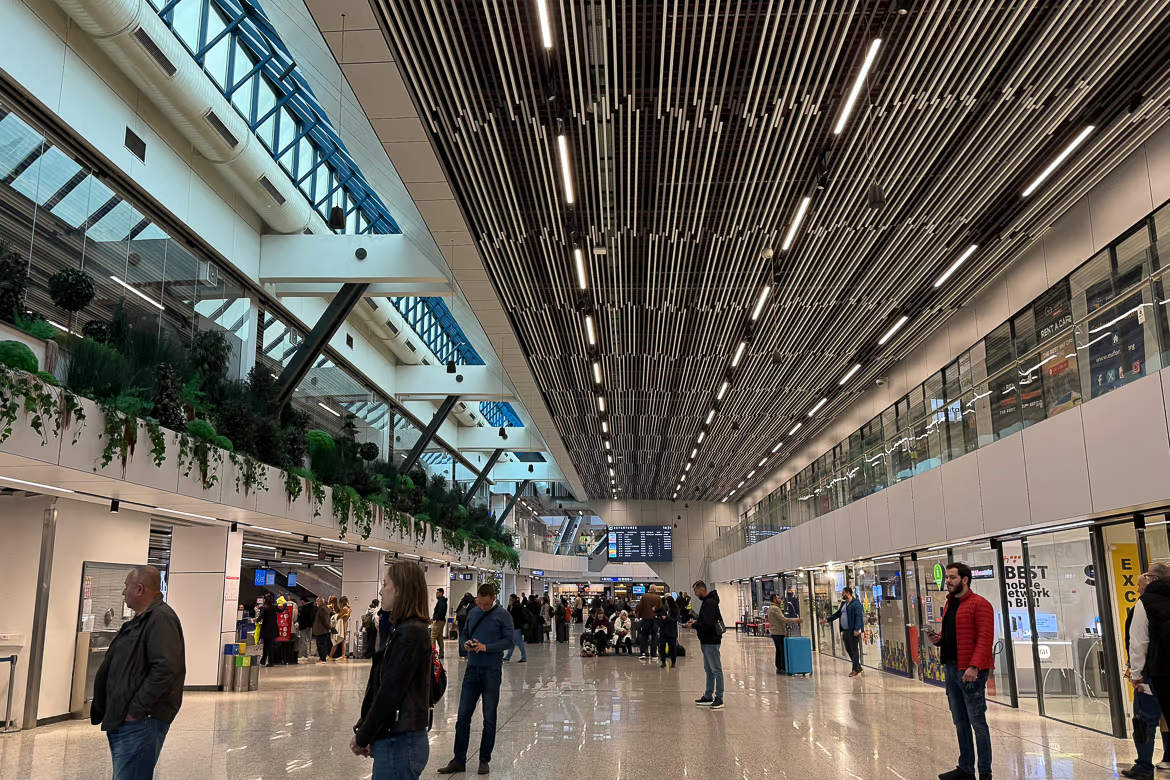
Sarajevo has a small international airport with brand new facilities, but only a few daily flights.
Sarajevo International Airport is near the city centre. Driving to and from the airport takes between 15 and 45 minutes, depending on traffic.
There is a bus from the airport going directly to Bascarsija, the city centre. However, if your flight is in the early morning hours, between 5 AM and 8 AM, for instance, the bus timetables won’t work for you.
This is why we recommend booking a private transfer to get directly to your accommodation at any time of the day – or night.
This way, you won’t have to worry about long distances or dragging your luggage up the occasional uphill street either.
By Bus
If you are on a Balkan trip, Sarajevo connects to the neighbouring countries by bus.
However, the road network is not yet fully developed with motorways. That means that a trip to Belgrade, Zagreb, Dubrovnik or Podgorica can take from five to nine hours.
Check out bus routes and timetables from Sarajevo here.
By Train
Getting to Sarajevo from another country by train isn’t ideal, as international routes are limited.
The most popular train route is a domestic one, between Sarajevo and Mostar, with scenic views along the Neretva River.
Check out train routes and timetables from Sarajevo here.
By Car
If you plan to add Sarajevo to your Balkan road trip, the journey takes about five hours by car from Belgrade, four and a half hours from Podgorica, and about five hours from Dubrovnik or Zagreb.
Where To Stay in Sarajevo
To easily explore the main attractions, the best place to stay in Sarajevo is Bascarsija, the city’s historic centre.
Before booking your hotel, research well if its location is uphill. Book a hotel in the flat part of the city near the river, as some uphill streets can be challenging.
We stayed at the fantastic 4-star Hotel Baskuca, a slightly uphill walk from the Sebilj Fountain in the heart of Old Sarajevo.
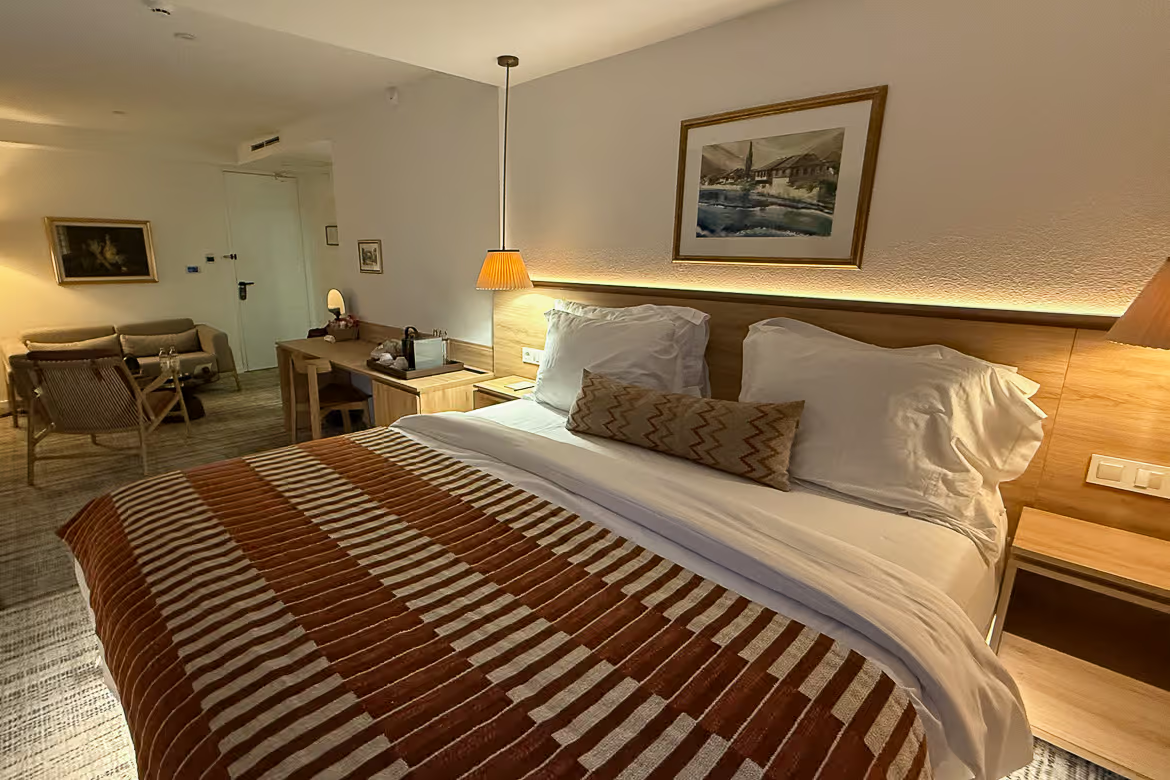
Hotel Baskuca offers stylish, utterly comfortable and spotlessly clean rooms in a central yet quiet location.
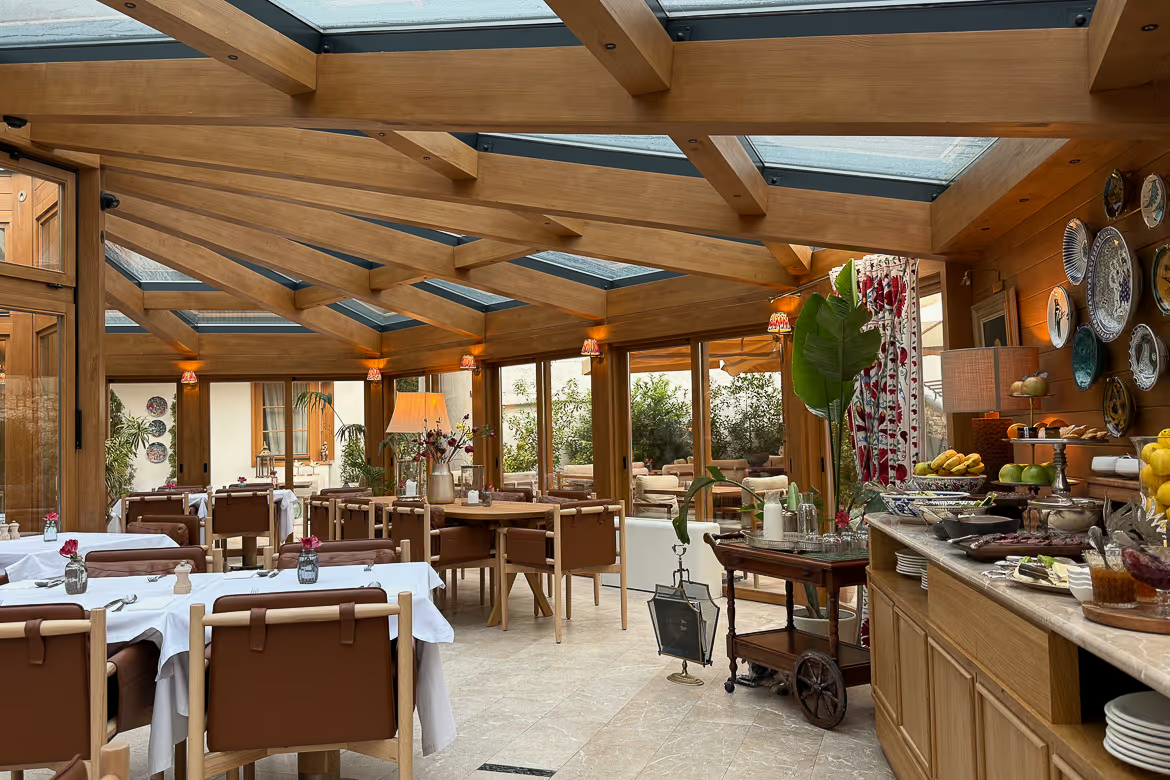
A delicious breakfast buffet awaits in an airy space, resplendent in natural light, while cute cats and kittens hang around everywhere. If you’re lucky, you’ll get a cuddle, or, worst-case scenario, a purr.
Watch our YouTube video about the best places to visit in Bosnia & Herzegovina
Travel Resources To Help You Plan Your Trip To Sarajevo
The Perfect 3-Day Sarajevo Itinerary
Day 1
There’s no better way to start your Sarajevo itinerary than an overview of the city and its many layers of history.
If you’re short on time or if you enjoy exploring a new destination in the company of a local, as we always like to do, you can visit most of the sights on Day 1 by joining a small group on this guided walking tour.
Alternatively, you can check out this free walking tour if you don’t mind large groups of people.
After the tour, take your time revisiting the city’s hidden corners until you find your favourite spots.
Bascarsija
Start your first day in Sarajevo from Bascarsija, the heart of the city.
Bascarsija, the historic centre of Sarajevo, was built in the 15th century when Bosnia was part of the Ottoman Empire. It flourished in the 16th century, under the rule of Gazi Husrev Bey.
Nowadays, you can see important buildings from that period, such as the Old Covered Market and the Gazi-Husrev Mosque.
All these buildings belong to the Gazi-Husrev trust, which is responsible for funding and preserving the Ottoman Governor’s legacy for the last 500 years.
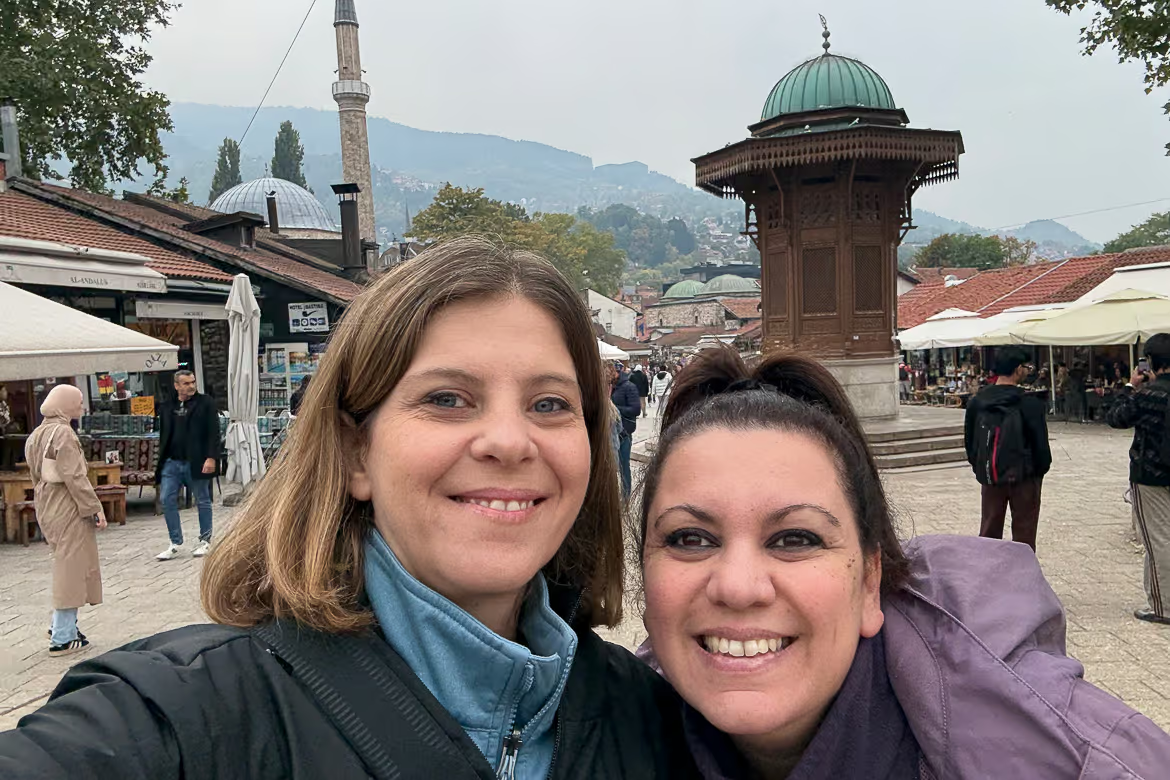
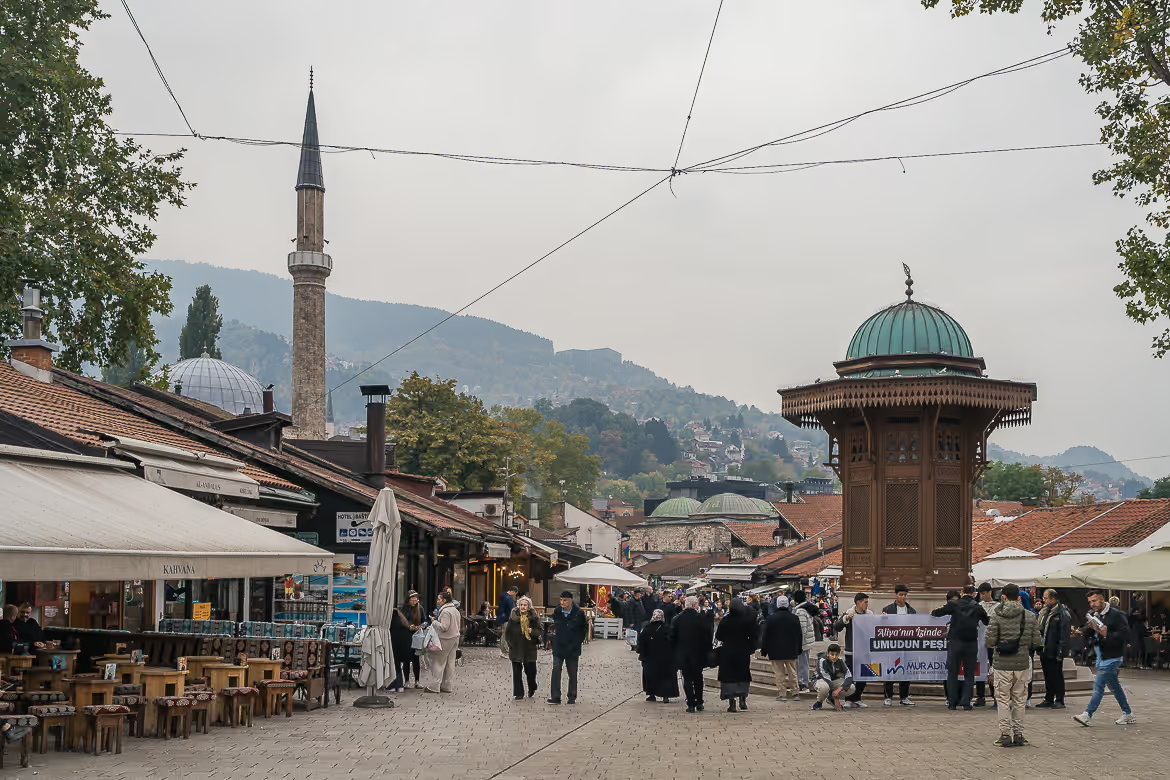
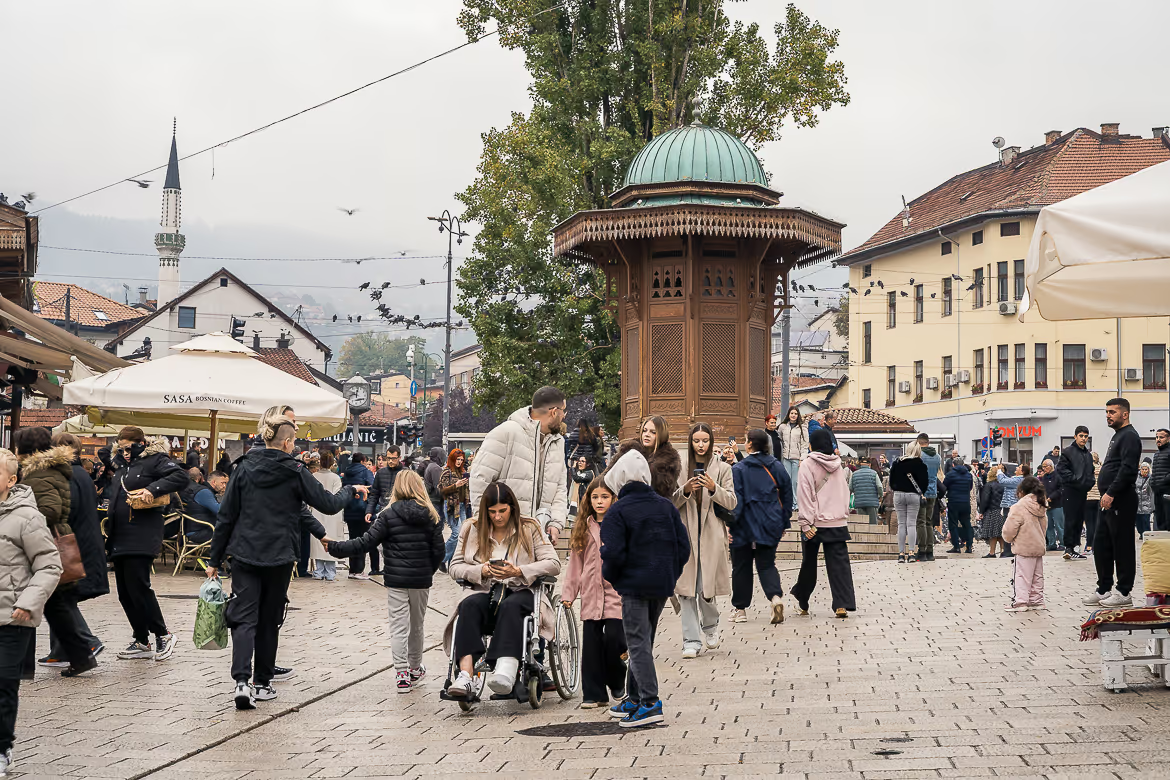
Make your first stop at the central square, which is dominated by the gorgeous Sebilj Fountain.
The iconic wooden fountain was built in the 18th century. At the end of the 19th century, the Austro-Hungarians reconstructed it.
However, for many, the square’s highlight is the hundreds of pigeons that have set up camp there.
Kazandziluk Street
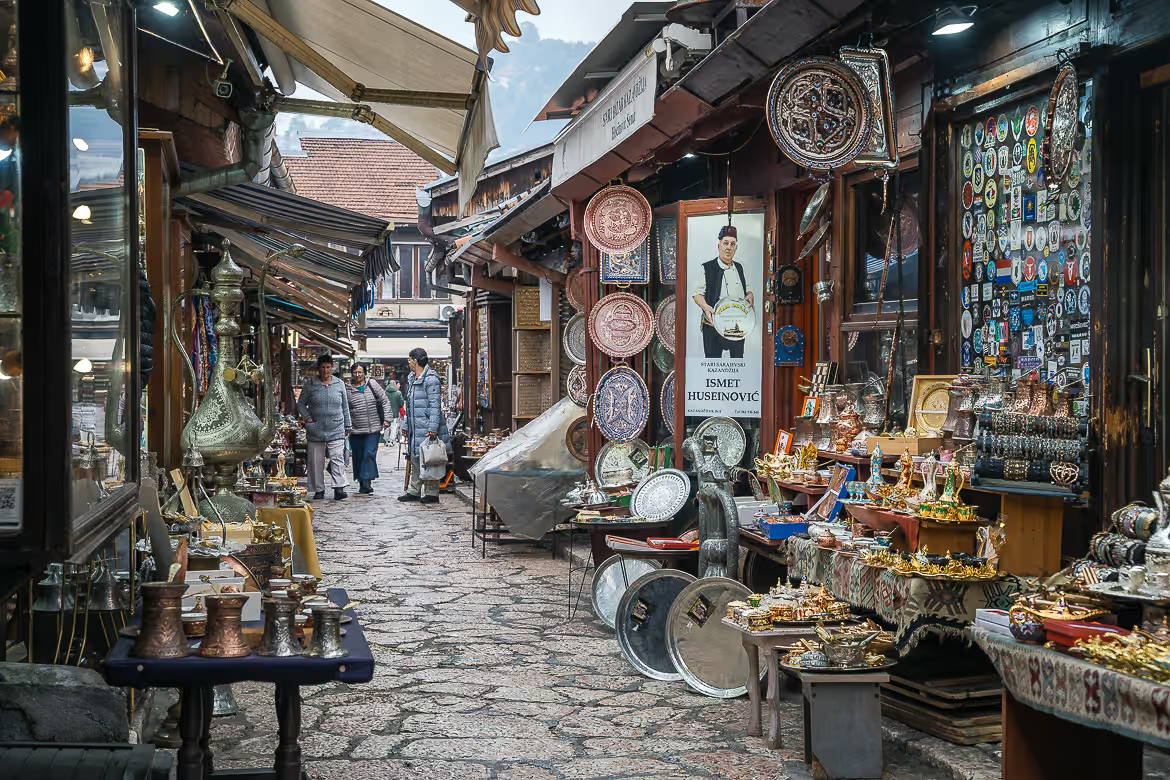
A few steps from Sebilj Fountain is Kazandziluk Street, the street of the coppersmiths.
Walking along this narrow street feels like travelling back to the 16th century. Back then, craftsmen would create copper masterpieces in the depths of their small shops.
Not much has changed since then, as Kazandziluk Street preserves its authentic character and original function.
The art of turning copper into unique artefacts, such as dishes and traditional coffee pots, has been passed on from generation to generation, creating a strong bond between past, present and future.
Step inside any of these shops to see a craftsman creating copper items on the spot. Don’t forget to buy your handmade souvenirs there to help preserve this ancient craft.
Morica Han
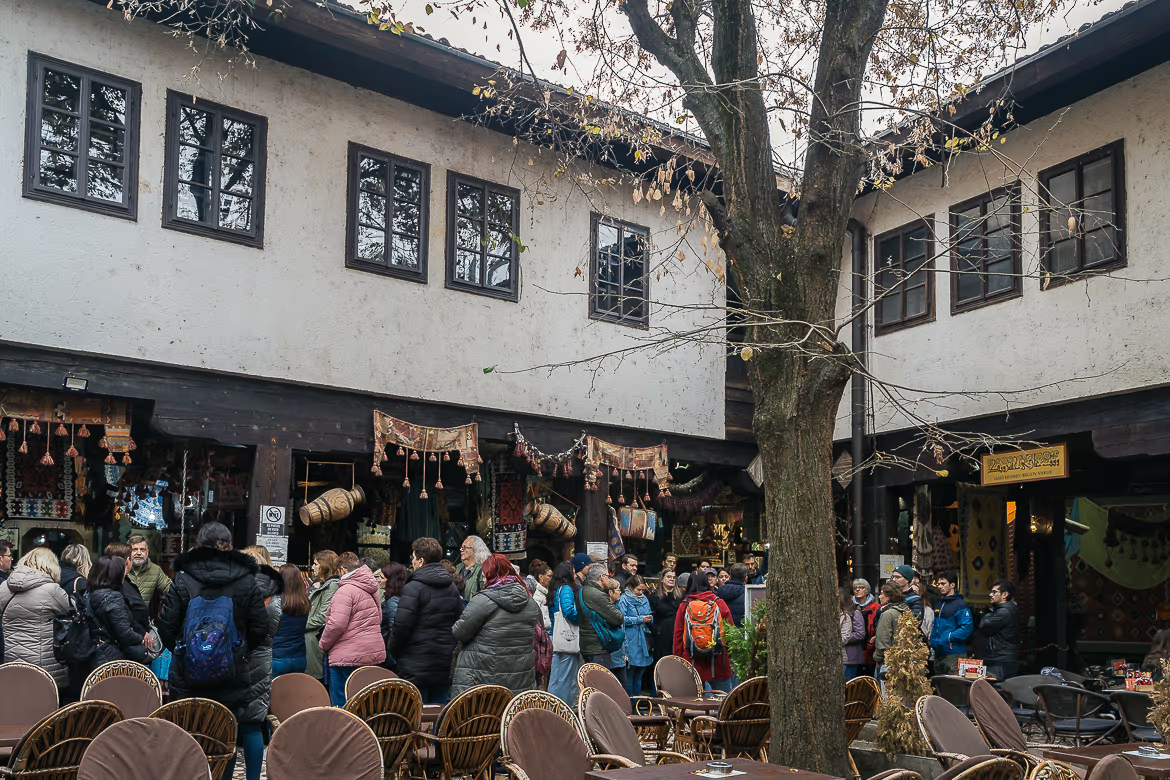
On the main street, Saraci, there’s a small passage that leads to Morica Han, the only surviving caravanserai in Sarajevo.
Sarajevo was home to several caravanserai in the past. These were road inns for merchants travelling along the Silk Road and other trade routes.
Nowadays, shops and cafés dot the inner courtyard of the once-caravanserai, ideal if you want to have a break like a merchant of the past.
Gazi-Husrev Mosque
Continue on the main street to see the largest historic mosque in Bosnia and Herzegovina. The 16th-century mosque is named after Gazi Husrev Bey, the same prominent governor of Bosnia we mentioned earlier.
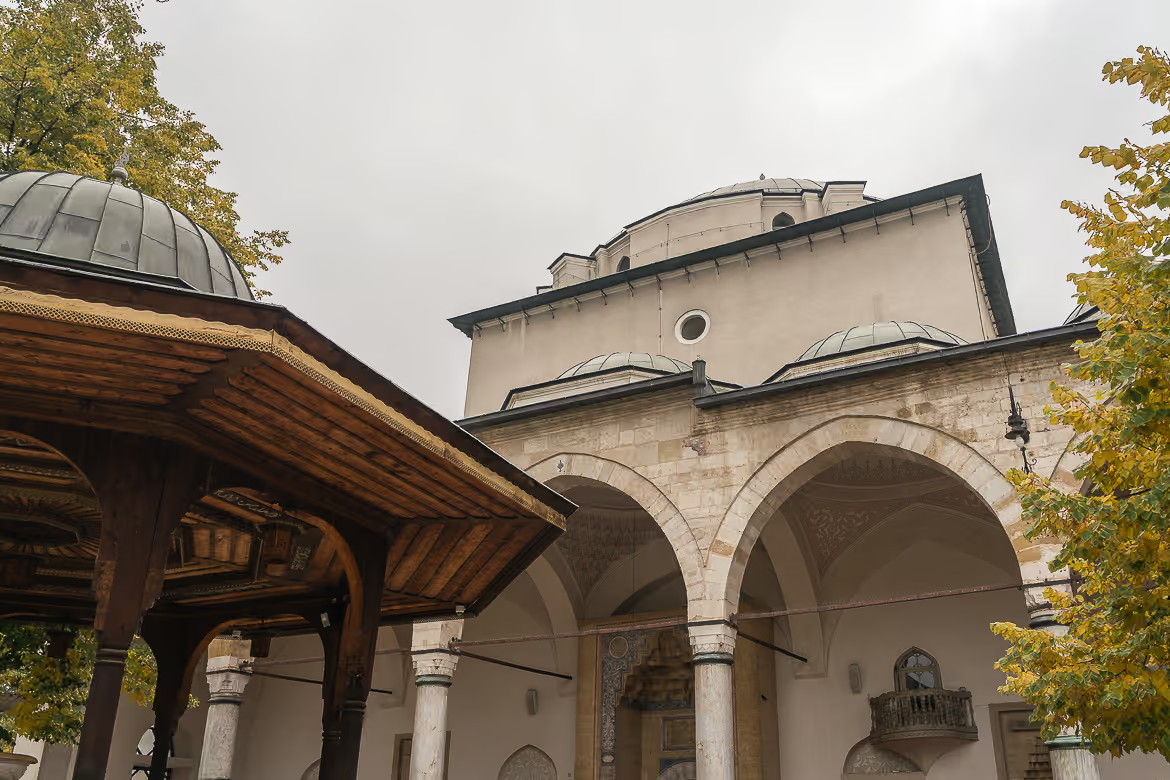
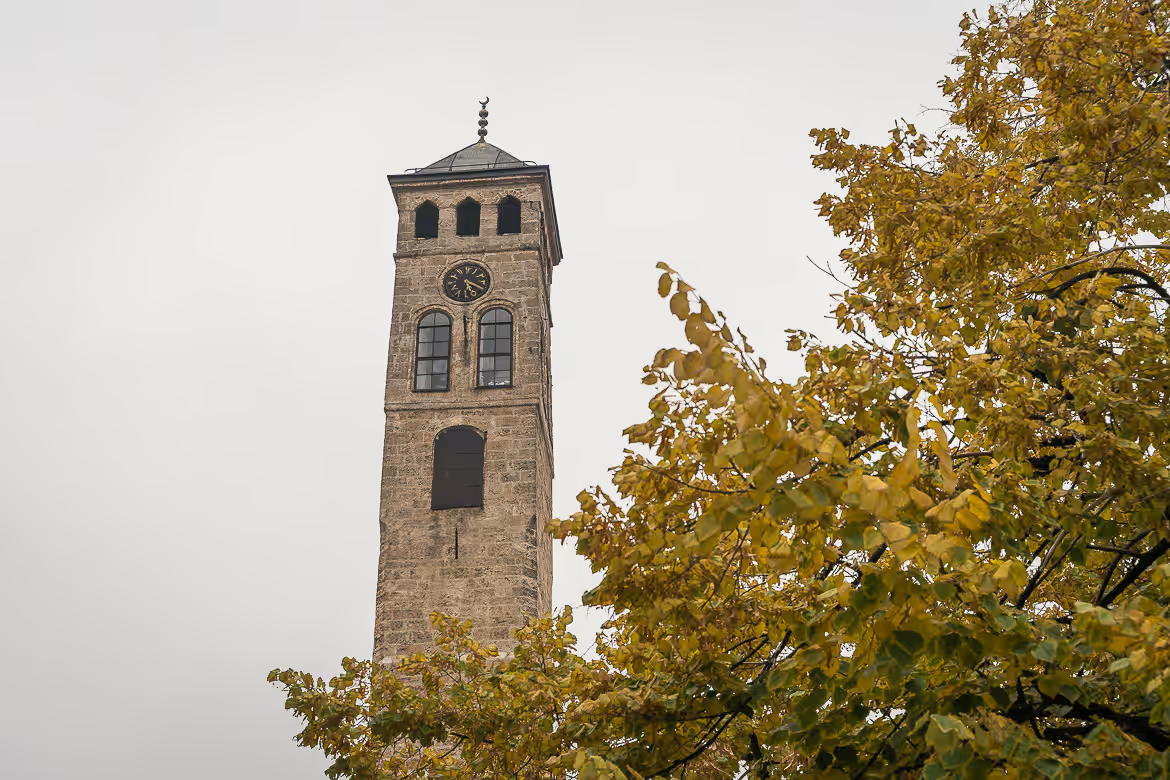
From its courtyard, see Bosnia’s tallest clock tower. It works as a lunar clock, with its hands pointing to 12 at sunset.
Gazi-Husrev Museum
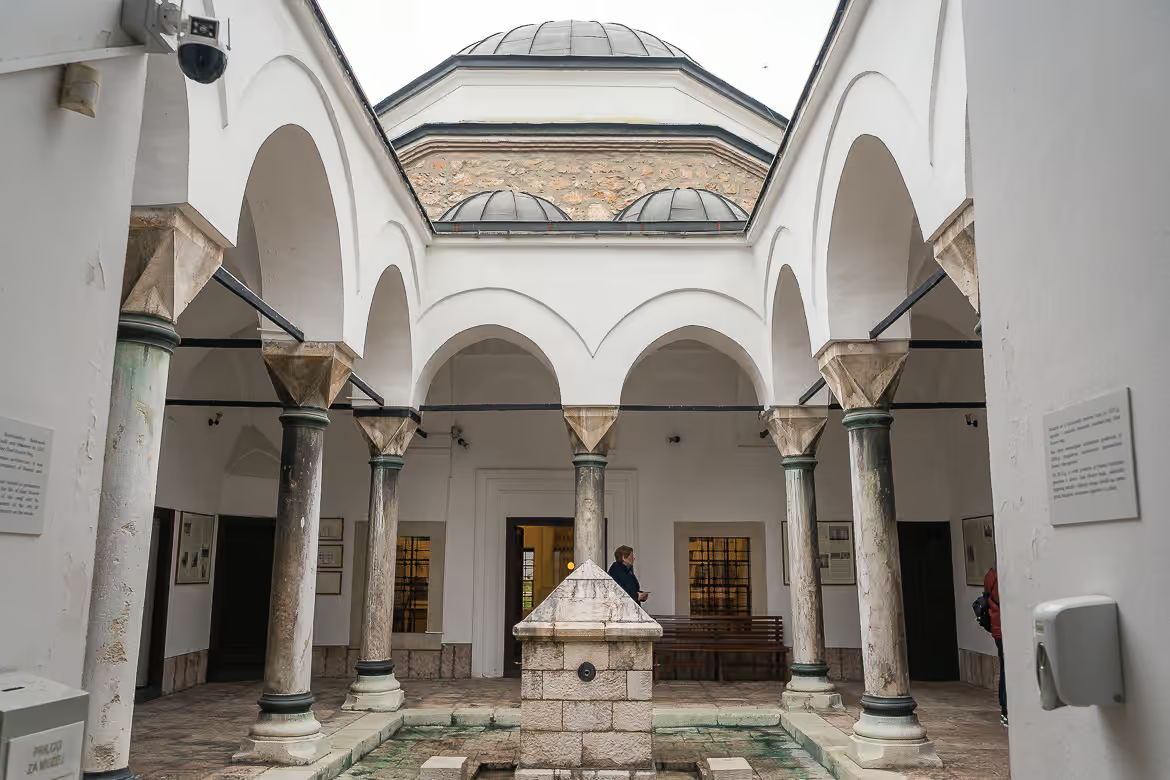
Right across Gazi-Husrev Mosque is the Gazi-Husrev Museum, housed in the 16th-century madrasa, Sarajevo’s historic school.
The small museum highlights the life of Gazi-Husrev Bey and the impact of his legacy on the Bosniak community.
Gazi-Husrev Bezistan
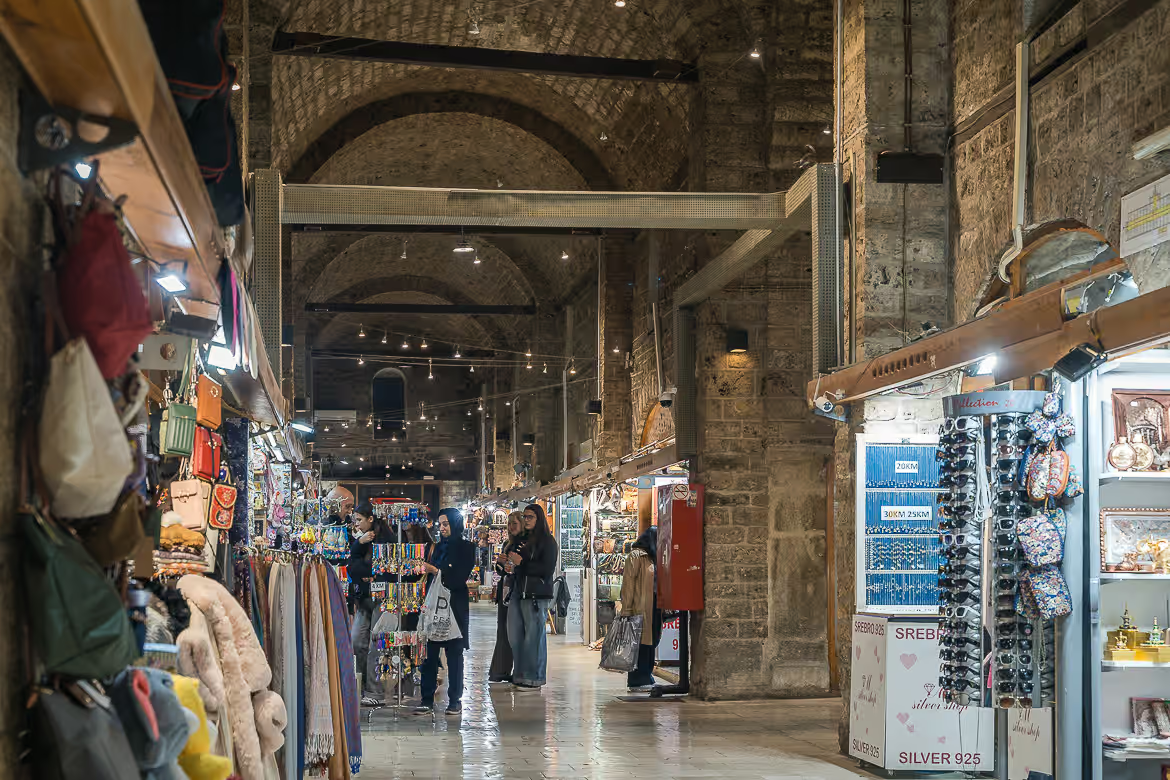
A few steps from the Gazi-Husrev Mosque, you can visit the 16th-century Gazi-Husrev Bezistan. This is a historic covered market where you can buy local souvenirs to bring back home.
One of the best things to buy from Sarajevo is traditional filigree jewellery at the jewellery shops around the market.
For your sweet tooth, enjoy a local dessert at one of the shops outside the market’s main entrance after shopping.
Meeting of Cultures
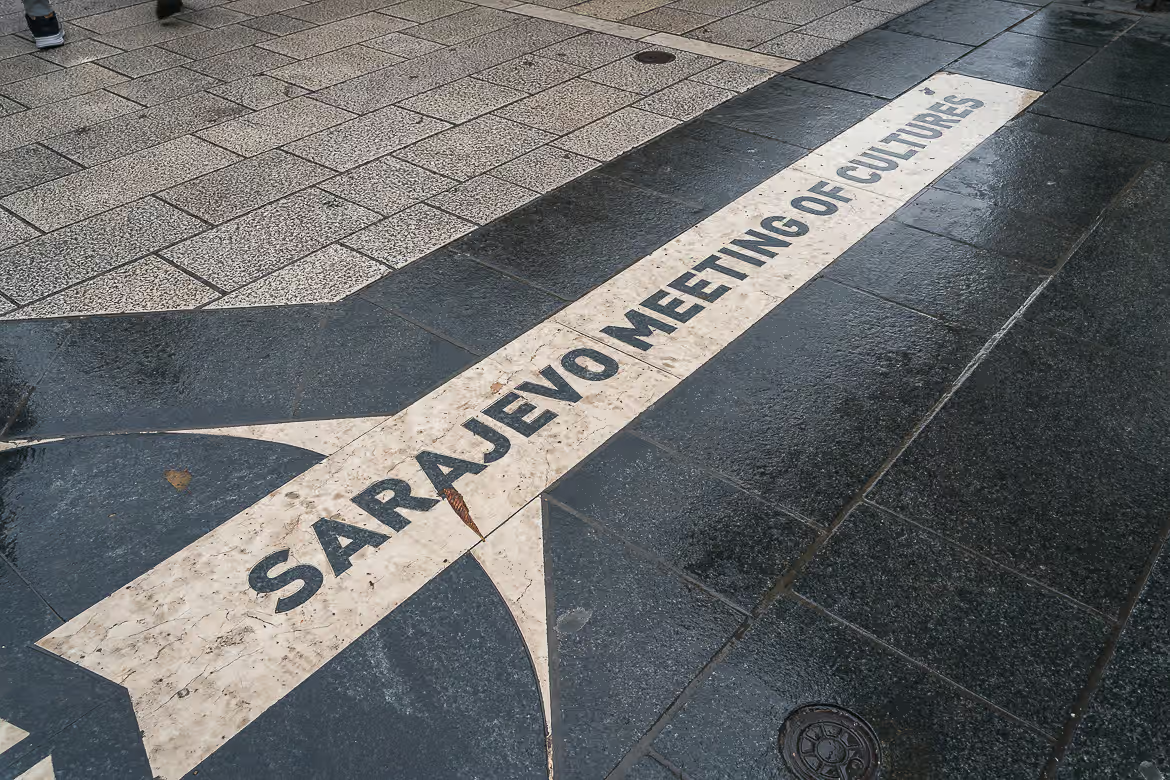
Right next to Gazi-Husrev Bezistan, you’ll see a border line with a compass on the pavement.
Named the Sarajevo Meeting of Cultures, this line is the visual separator between Ottoman and Austro-Hungarian architecture and history. Or, better still, the point where the two cultures meet.
Sarajevo’s nickname is the Jerusalem of Europe and for good reason.
From the Ottoman period to the Austro-Hungarian era to Yugoslav times, people from different ethnic and religious groups, like Christians, Muslims and Jews, lived together in such a small city, all leaving their mark on Sarajevo’s history.
Very close to this spot is the Jewish quarter. While there, you can visit the Museum of the Jews of Bosnia and Herzegovina, housed in an old synagogue.
Sacred Heart Cathedral
Continue your walk along Ferhadija Street until you reach Sarajevo’s Cathedral.
The 19th-century Sacred Heart Cathedral is the largest in Bosnia and Herzegovina. It was one of the most magnificent buildings to be constructed during the Austro-Hungarian period.
Sarajevo Roses
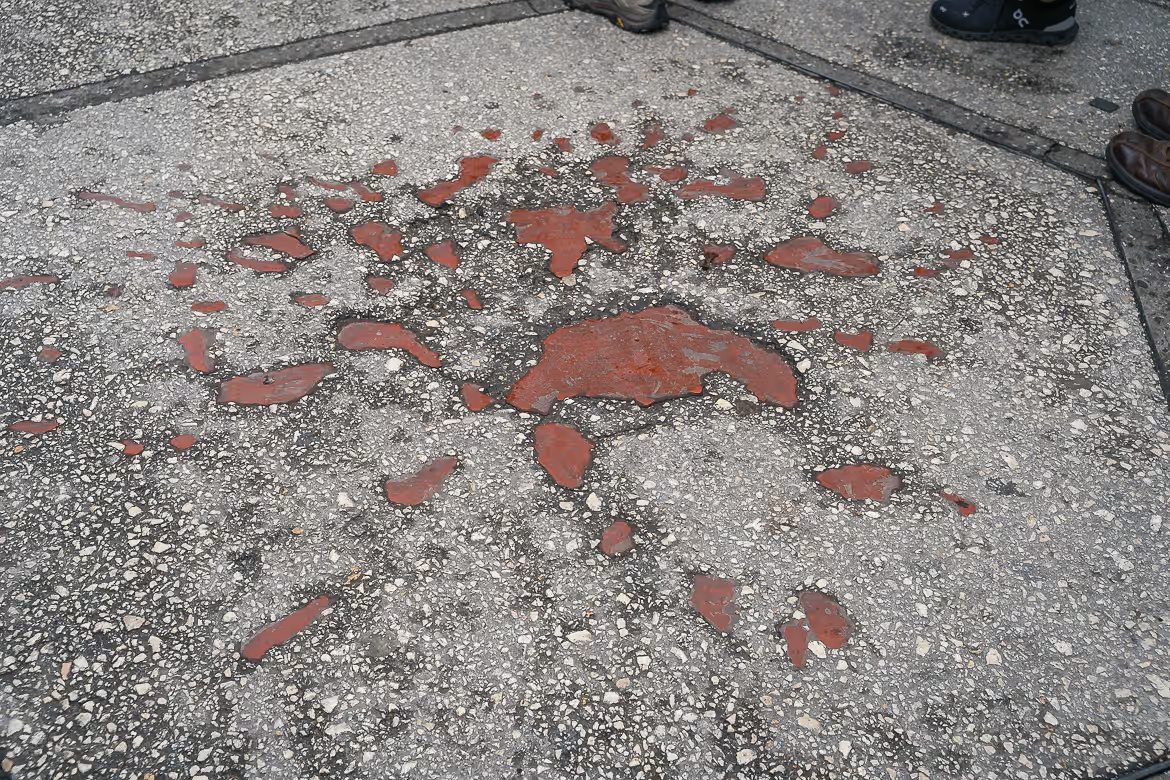
In front of the Sarajevo Cathedral, you’ll see a red mark on the ground. It’s one of many similar marks you’ll see scattered across the streets of Sarajevo.
These marks are called Sarajevo Roses and they’re related to the Siege of Sarajevo.
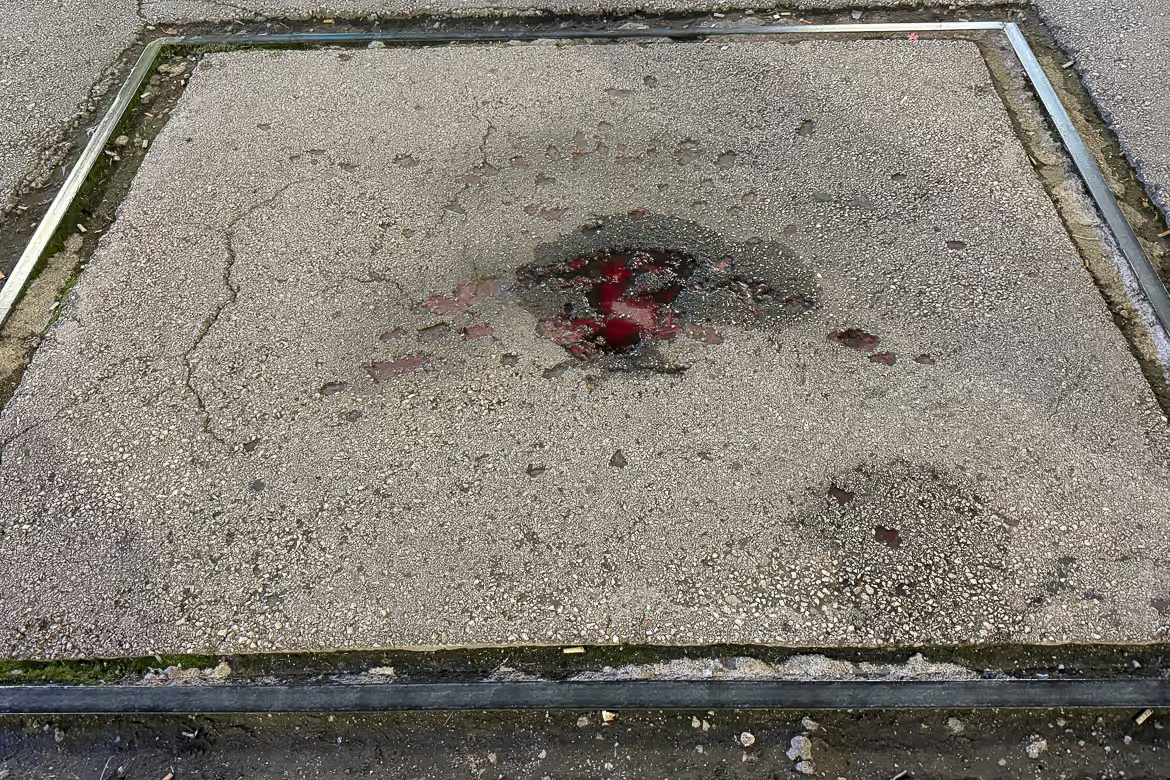
Sarajevo Roses mark the spots where mortar shells exploded, claiming the lives of several civilians and leaving floral-like patterns behind.
The scars were later filled with red paint to commemorate the lives of civilians lost during the siege. There are about 200 of these solemn memorials in various locations across the city.
Latin Bridge – Assassination of Franz Ferdinand Spot
Take a short walk along the river until you reach the Latin Bridge, a quaint stone bridge from the Ottoman period.
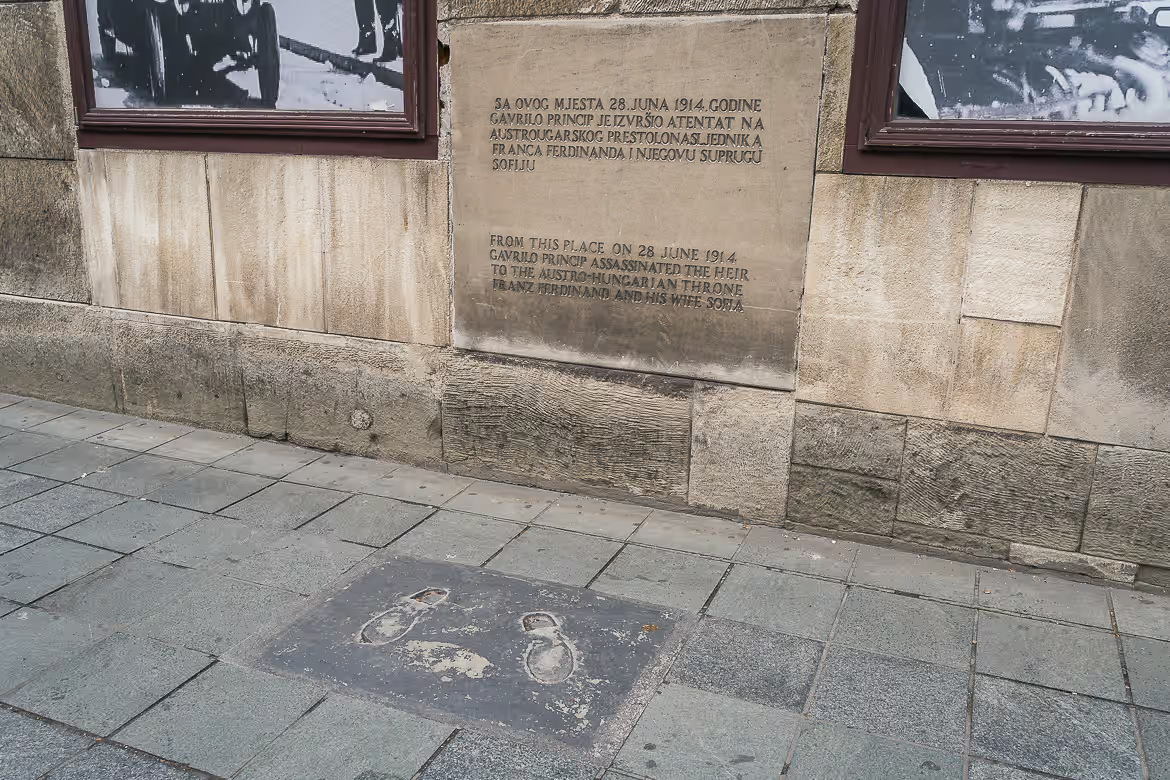
The Latin Bridge is famous for being the backdrop for one of Sarajevo’s most critical historic events. Near the bridge’s north end, Archduke Franz Ferdinand and his wife, Sophia, were assassinated.
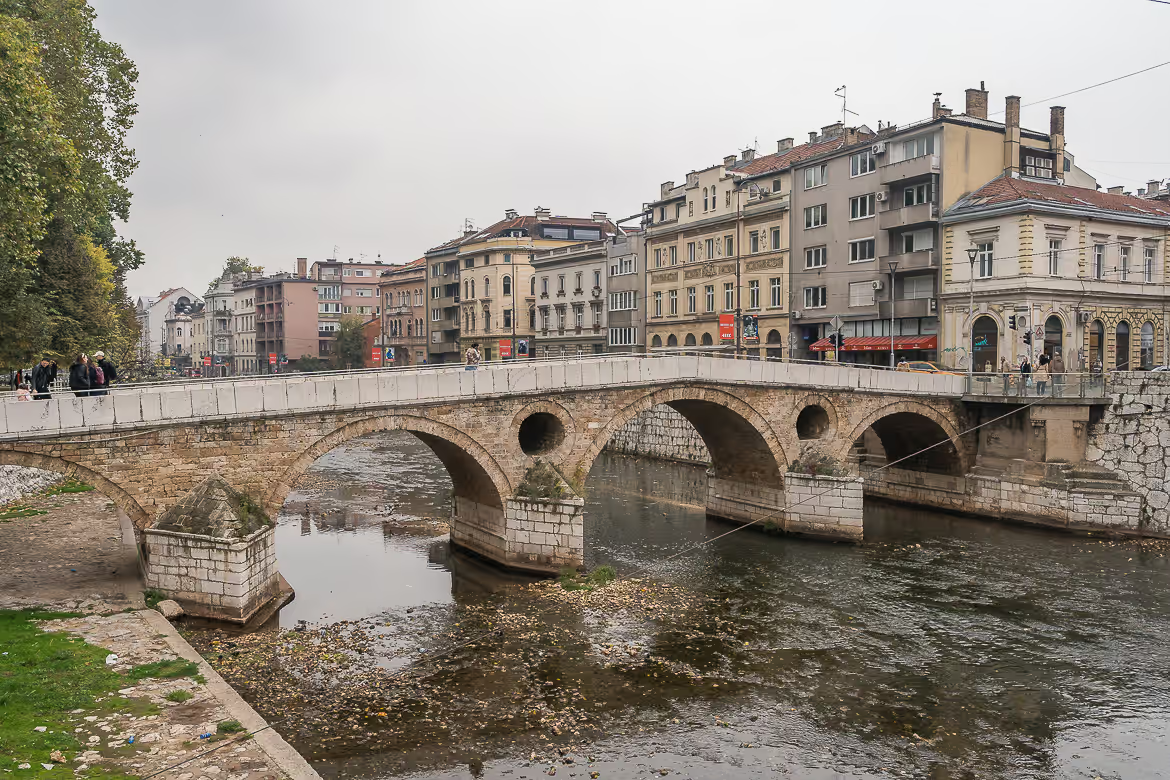
Archduke Franz Ferdinand was the heir to the Austro-Hungarian throne. During that time, Bosnia was annexed to the Austro-Hungarian Empire. This caused great unrest among the local population.
With the help of Black Hand, a Serbian nationalist group, Gavrilo Princip, a Bosnian Serb student, shot the royal couple at this spot while they were driven through the city in a car.
This assassination in 1914 triggered the outbreak of the First World War.
Sarajevo City Hall
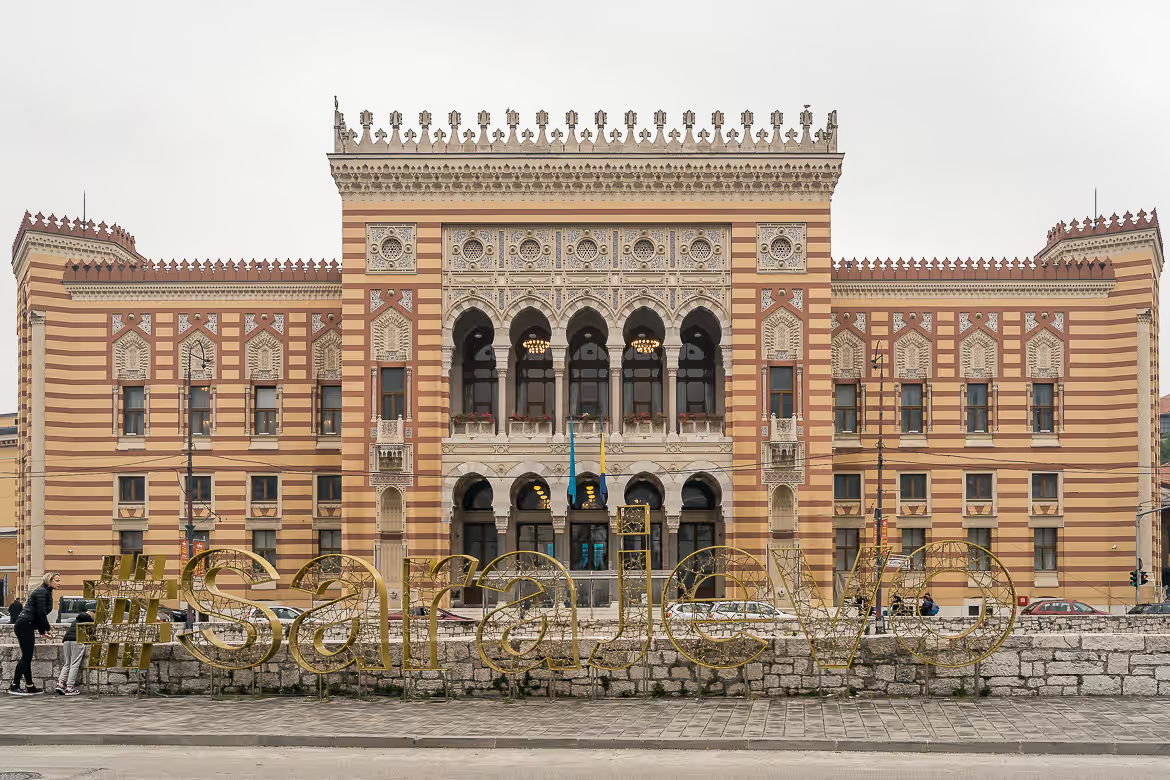
Cross the Latin Bridge and walk along the other side of the river for a perfect view of the gorgeous Sarajevo City Hall.
Although its Moorish style might deceive you, the City Hall dates back to the Austro-Hungarian period.
For decades, it housed the National & University Library of Bosnia and Herzegovina until bombings during the Sarajevo Siege entirely destroyed it.
In the building’s ruins, Vedran Smailovic, a Bosnian musician, played his cello. Today, it houses the City Hall of Sarajevo.
Day 2
Your second day on this Sarajevo itinerary is all about the city’s dark past. But not before spending a relaxing morning among locals.
Slow Morning in The Old Town
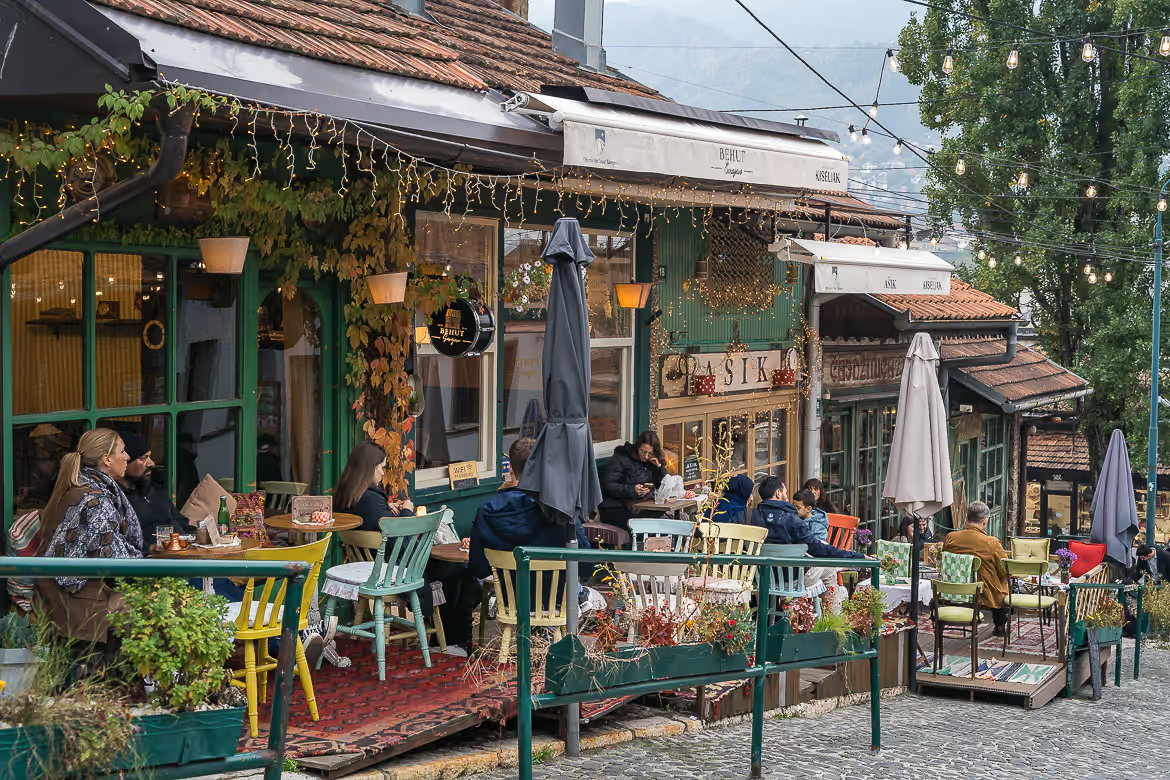
On your second day in Sarajevo, enjoy a slow morning with a rich breakfast at your hotel or a burek place in the Old Town.
Feel the slow-paced life of locals with an aromatic Bosnian coffee at the traditional cafés of Bascarsija, before delving into Sarajevo’s modern history.
Fall of Yugoslavia Tour
Learning about the Siege of Sarajevo is one of the reasons many people visit Sarajevo in the first place. It’s probably the reason you’re planning to visit Bosnia’s capital, too.
The Siege of Sarajevo started in 1992. It all started when Bosnia declared its independence from Yugoslavia after holding a referendum where mainly Bosniaks and Bosnian Croats voted for independence.
However, Bosnian Serbs boycotted the referendum and, backed by the Yugoslav army, laid siege to the city until 1996.
Throughout the siege, many civilians lost their lives to bombs or snipers. Those who survived suffered from starvation as Serbian forces blocked all access to food, fresh water and electricity.
The Bosnian War stopped with the Dayton Peace Agreement, which established two autonomous entities within the same state: the Federation of Bosnia and Herzegovina and the Republika Srpska.
Each entity has its own president, police, education and justice systems.
Nowadays, when you visit Sarajevo, you can still see the scars the almost 4-year Sarajevo Siege left on streets, buildings and every Bosniak’s heart.
War memories are still fresh and, as a tourist, you can feel them lurking at every turn.
The best way to learn everything about the Sarajevo Siege and how the 1990s Bosnian War stopped is to choose the same Fall of Yugoslavia tour we were lucky enough to join during our recent trip.
Not only was this the most insightful tour we could ever dream of, but it was also a very comfortable one. That’s because most war attractions are in the surroundings of the city and you need a car to reach them.
Our tour guide drove us through the city, generously offering us one of the most important history lessons we have ever had, sprinkling it with personal tales that only added to the overall effect this tour had on us.
Along the way, he shared with us first-hand stories about the infamous Sniper Alley, the horrible truth behind the Sarajevo Safari, the Markale Market massacre and the countless cemeteries across the city.
Yellow Fortress
The first stop on this Fall of Yugoslavia Tour is the Yellow Fortress, a panoramic spot overlooking Sarajevo.
From there, you can understand how the Serbian forces besieged Sarajevo, using the surrounding hills as their base.
Tunnel of Hope
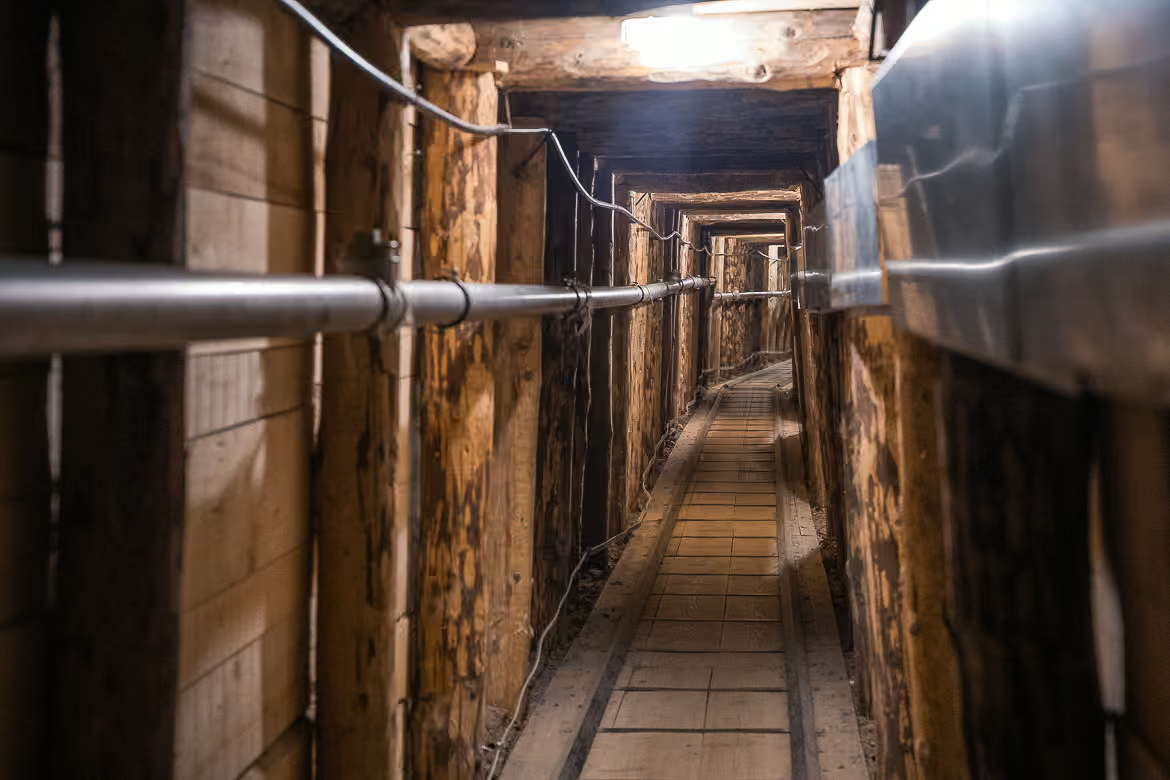
One of the most emotional stops during the war tour is the Tunnel of Hope.
During the Siege of Sarajevo, this underground passage was the only way for Bosniaks to reach free territory near the Sarajevo Airport and bring food, medicine, and supplies back home.
Only part of the original tunnel remains, but you can walk along a similar tunnel built for exhibition purposes. At the small museum, you can watch wartime footage and an outdoor exhibition with photos from that time.
Olympic Bobsleigh Track
One thing we haven’t mentioned about Sarajevo yet is the city’s strong bond with its Olympic Games legacy.
Before the war, when Bosnia was still part of Yugoslavia, Sarajevo hosted the 1984 Winter Olympics. This event still makes locals proud, as this was the first time a socialist country hosted this major sports event.
Throughout the city, you’ll see remnants of this happy moment in Sarajevo’s history. Yet, most of the Olympic Games infrastructure would be used for the dark purposes of the siege in the years that followed.
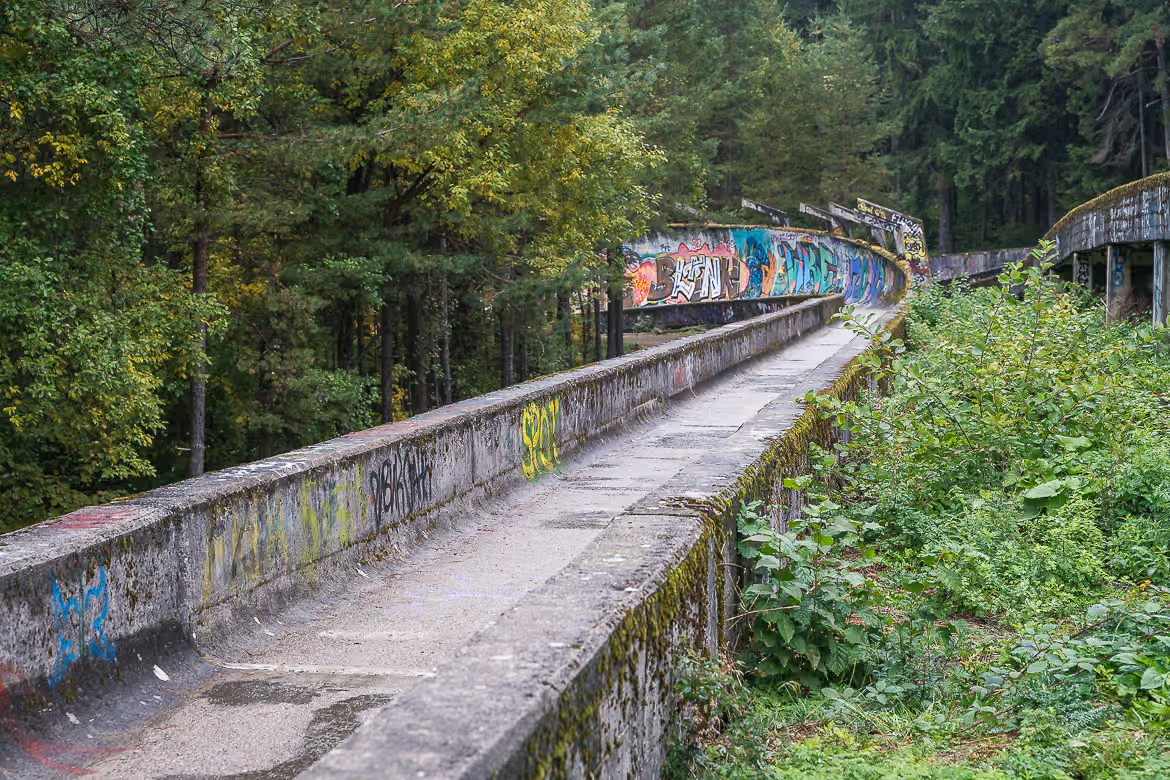
Among them, the bobsleigh track that was built for the Winter Olympics stands out. This is why it’s the last stop on this tour.
Situated on Trebevice Mountain, once the frontline of the Sarajevo Siege, the now covered in graffiti bobsleigh was used as an artillery position by the Bosnian Serbs
Day 3
Many people recommend visiting Mostar on a day trip from Sarajevo on your third day.
However, we’d never agree to that, as we believe that Mostar isn’t day-trip material. It’s worth staying in Mostar for a couple of nights, as it’s a good base to explore some of the best places in Bosnia and Herzegovina.
So, our recommendation for your last day on this Sarajevo itinerary is to plan a full-day trip to Srebrenica, where the worst war crime after World War II took place.
The Srebrenica Memorial Centre, like the Auschwitz Birkenau Death Camp in Poland and so many other locations defined by horror, is a mandatory stop for anyone planning a trip to Bosnia & Herzegovina.
Reading the darkest chapter of the Bosnian War is no easy task. Yet, it’s of utmost importance, as knowledge, understanding and memory are the safest ways to prevent history’s darkest moments from repeating themselves.
Srebrenica Tour
The best and most hassle-free way to get to the Srebrenica Memorial Centre is on a guided tour, as the drive is long, the roads wind through mountains and there isn’t any public transport to get there.
Keep in mind the Srebrenica day tour is deeply emotional and one of these experiences that leave their mark forever.
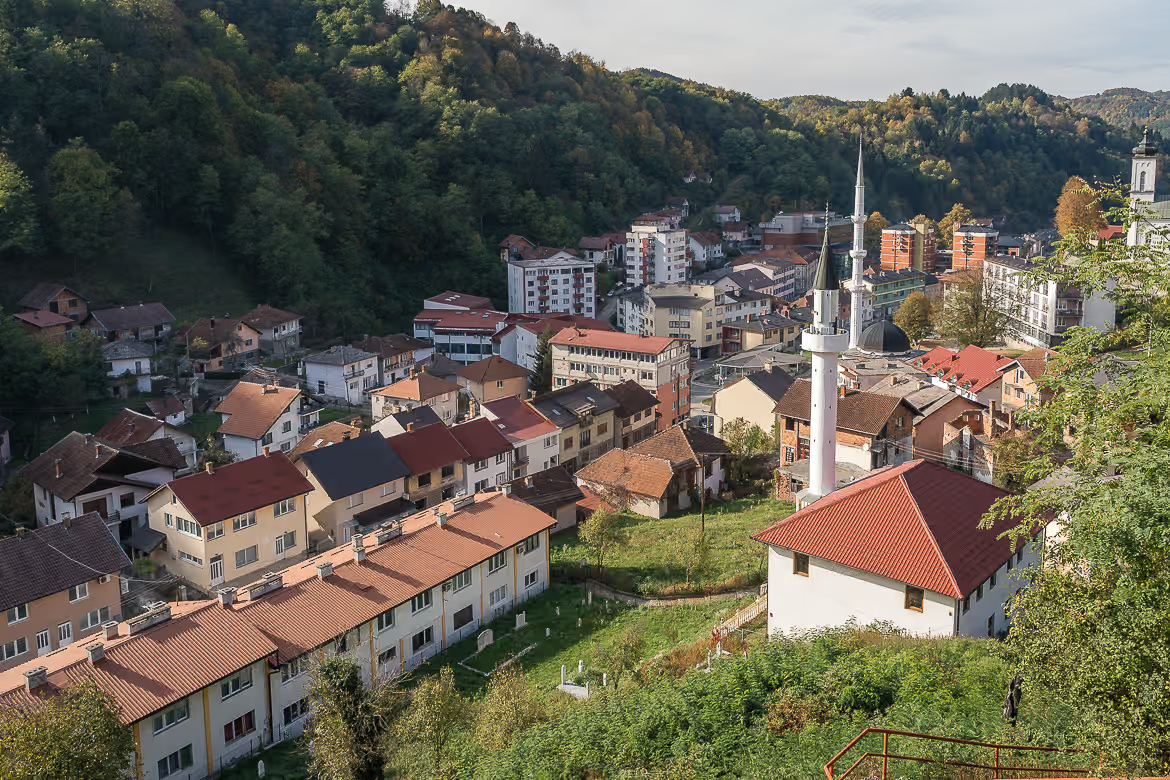
Srebrenica is a small town near Bosnia’s border with Serbia. It was there that the most tragic page of the Bosnian War was written in July 1995.
Although the United Nations declared Srebrenica a safe zone during the war, the UN army failed to protect over 8,000 civilian men and boys, who were killed on their watch.
The large battery factory that housed the United Nations’ headquarters is now a Memorial Centre for the Srebrenica Genocide.
You can only visit the Memorial Centre on a guided tour that also allows a bit of free time to wander around on your own.
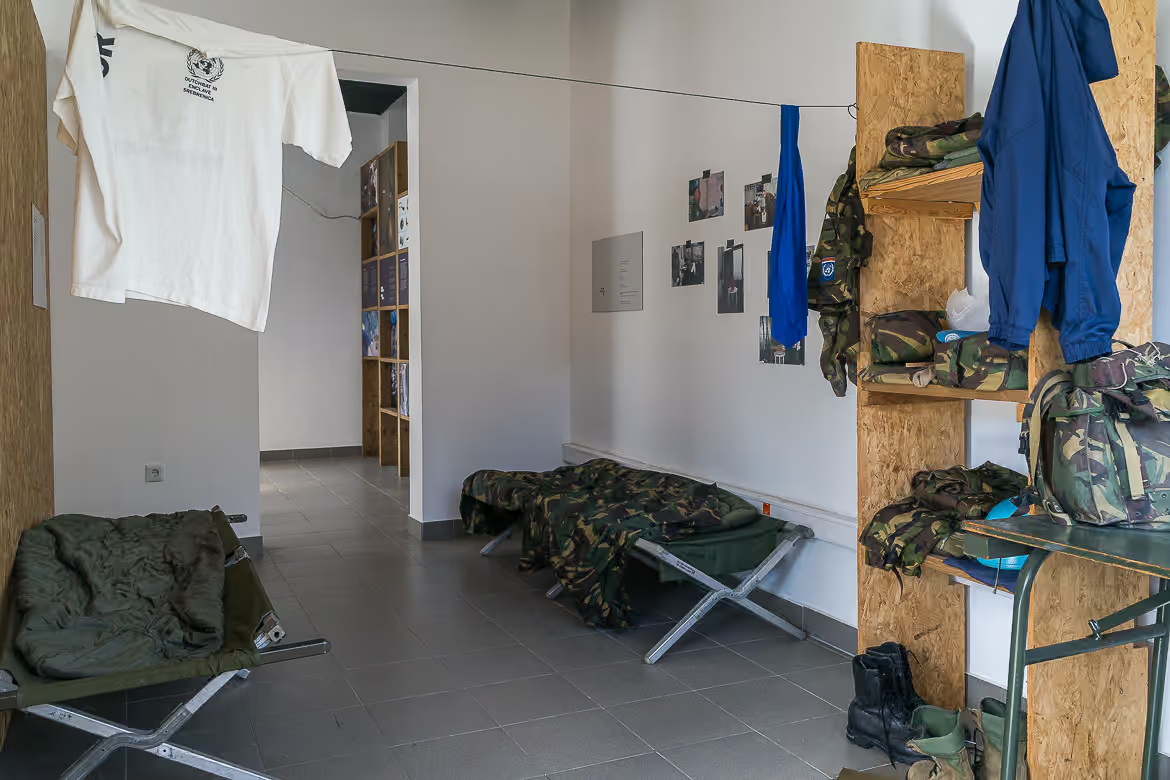
At the beginning of the tour, you’ll watch a heartbreaking 30-minute video explaining the series of events that led to the genocide.
Then, you can walk through the buildings of the former factory that house several exhibitions with information and visuals related to the genocide, before you continue with the guided part of the tour.
Right across the Memorial Centre is the Cemetery for the Victims of the 1995 Genocide. Its vastness speaks volumes about the massive scale of this atrocity.
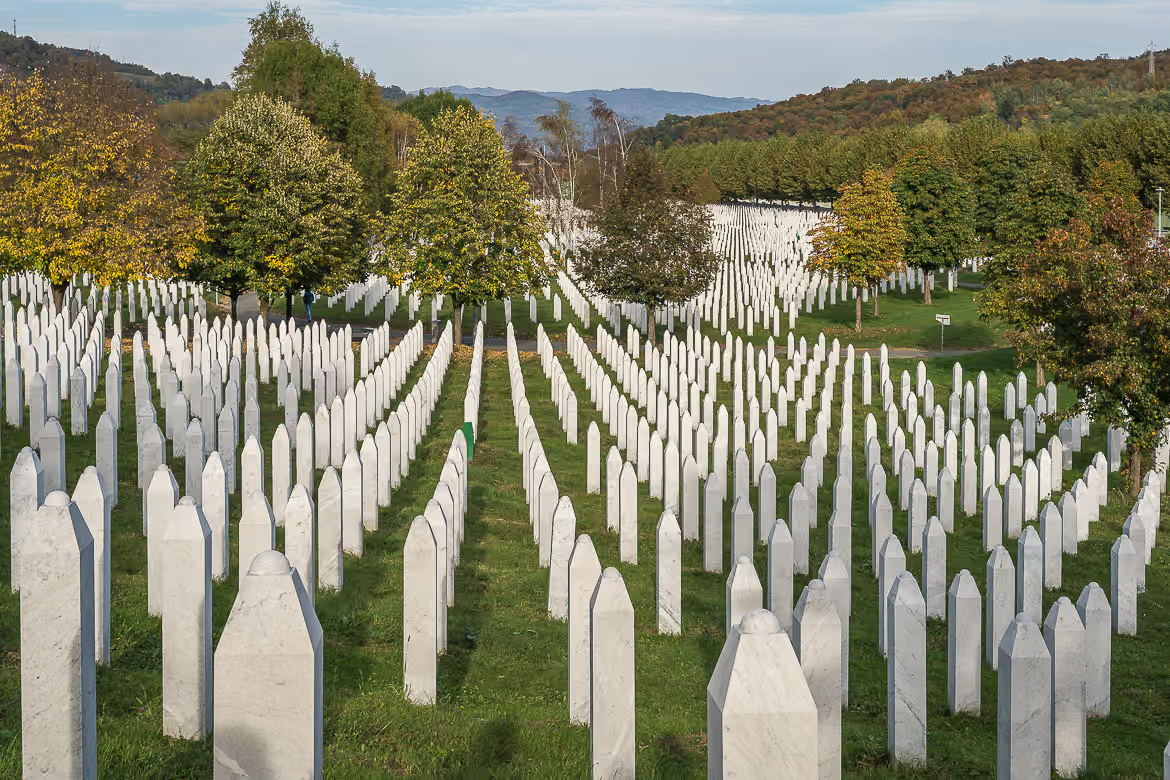
During the tour, you’ll also catch a quick glimpse of the town of Srebrenica, where your guide will show you the locations where some of the genocide events happened.
Frequently Asked Questions About Visiting Sarajevo
Is Sarajevo safe for tourists?
Sarajevo is safe for tourists. Other than pickpocketing in crowded places, there’s nothing else to worry about. Moreover, as women wandering around the Old Town, we never felt unsafe during our stay in Sarajevo.
Is Sarajevo walkable?
Yes, Sarajevo is walkable, as it’s a compact city with a small historic centre. Most tourist attractions are in the flat part of the city near the river, which means you don’t need to worry about walking uphill.
Just keep in mind to choose your accommodation wisely, away from the hilly streets of the city.
Is Sarajevo vegetarian and vegan-friendly?
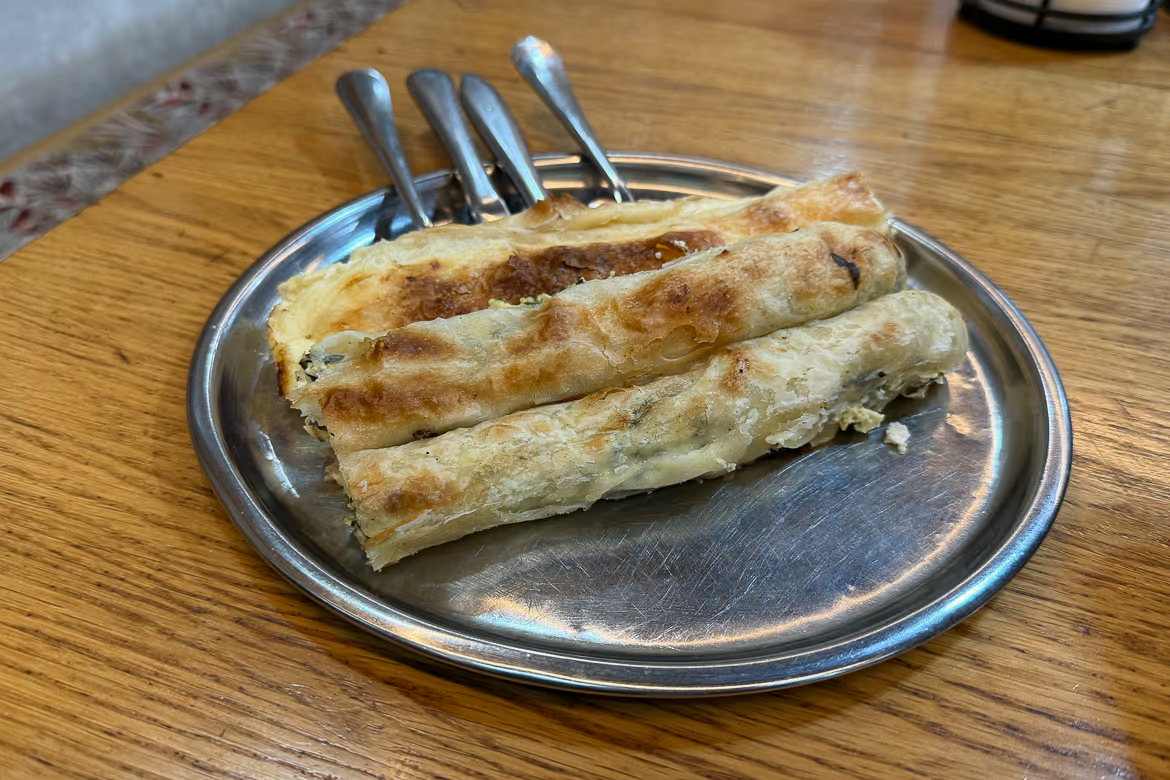
Bosnian cuisine is heavily meat-based. Traditional vegetarian food consists of cheese pie or spinach pie, the go-to options for vegetarians at local burek shops.
Furthermore, some local restaurants include vegan (side) dishes on their menus, like falafels or grilled vegetables. Lately, vegan restaurants, such as Veganer, have started popping up in town, though.
Do they speak English in Sarajevo?
Yes, everyone speaks good English in Sarajevo. We didn’t have any communication problems during our trip to Sarajevo.
Do they accept Euros in Sarajevo?
As Bosnia & Herzegovina isn’t part of the European Union, the official currency is the convertible mark (BAM).
The latter has a fixed exchange rate of approximately two BAM for one EUR. This eliminates the risk of any bureau de change across the city scamming you.
Some tourist places in Sarajevo may accept EUR, but it’s better to have BAM for most transactions.
Few cities have left their mark on us the way Sarajevo has. We were touched by the recent history of Sarajevo and how it still shapes the locals’ lives.
Listening to people of all ages, even younger than us, sharing their vivid memories from the war, made us feel grateful for what we’re used to taking for granted: peace.
But, most of all, it made us feel humbled by the locals’ resilience and incredible strength. And, also, very proud of our newly acquired friends in this underrated, hidden gem in Europe.
WORDS & IMAGES: Katerina
EDITING: Maria
Disclosure: We produced this article about the best Sarajevo itinerary in partnership with Meet Bosnia Tours. All opinions are our own, as always.


