Our website uses affiliate links. If you click through any of these affiliate links in this article to make a purchase, we may earn a small commission at no extra cost to you. As Amazon Associates, we earn from qualifying purchases. Read our Disclosure for more. Thanks for your support!
Athens in 5 days? Isn’t that way too long to spend in Athens? It’s just a stopover, after all; climb up the Acropolis and then run straight to the islands.
Sadly, that’s how most people see our home town. But there’s so much more to Athens than just the Acropolis; and it’s definitely not a city to just stop for one night.
Is Athens the prettiest capital in Europe? No, it’s not. But it has a unique character, shaped by blending old and new in a fascinating way. Seeing Athens in 5 days, at a slow pace, is the best way to appreciate the magic of this diverse city.
As a city of many faces, it would take a lifetime to see and do everything that Athens offers. So, in this guide, we decided to focus mainly on its history and how it’s still evident at every turn.
Known as the Birthplace of Democracy and the Cradle of Western Civilisation, Athens is one of the oldest cities in the world and this ancient history-oriented itinerary is curated by yours truly, two Athenians born and raised in the Greek capital.
In this slow Athens 5-day itinerary, we’ll show you where to go to learn our home town’s rich ancient history. But we won’t stop there. We’ll guide you to the city’s best-kept secrets, and even recommend a day trip to round off a memorable trip to Athens.
Get ready to see Athens in 5 days through our eyes during a longer stay you won’t regret.
If you’re considering a trip to our home country soon, we’re here to answer all your questions.
Click here to book a 60-minute video call with us or purchase a travel planning bundle that consists of a video call and a Greece itinerary, customised to your travel needs and desires.
Learn more about our travel planning services.
Where Is Athens?
Athens is the capital city of Greece in Southeastern Europe. It’s also the capital of the historical region of Attica in Central Greece.
Athens is the largest city in Greece and one of the biggest cities in Europe. However, its historical centre is compact. Once there, you can easily visit most of the main attractions on foot.
Best Time To Visit Athens
As a rule of thumb, the best time to visit Greece is from April to October. However, in Athens, avoid July and August, as high temperatures, including heatwaves, will ruin your experience.
April, May, September, October, and even November are the best months to enjoy the bustling Greek capital.
That doesn’t mean you should avoid visiting Athens in winter. In fact, that’s the best time to visit Athens if you’re interested in sustainable travel to Greece during the off-season.

How Many Days in Athens
For a quick overview of Athens, three full days is the minimum time to spend in the Greek capital.
But for a full experience that includes the main historical sites, bits of the vibrant Athenian life, and a day trip to the seaside, we recommend 5 days in Athens.
How To Get To Athens
As train and bus connections between Athens and other European cities are poor, the best way to reach the city is by plane.
Athens is well-connected to several European cities, as well as to the US and Canada, with direct flights available in the high season.
Athens International Airport is about a 40-minute drive from the city centre, depending on traffic conditions.
Public transport is a good way to reach the historic centre and the port of Piraeus, as the metro and the bus go straight to Syntagma Square and the port.
For a hassle-free way to go directly to your hotel, though, it’s best to book a private transfer in advance.
How To Get Around Athens
Although Athens as a whole is vast, its historical centre is rather compact.
All major historic sites in Plaka, Monastiraki, Syntagma and Omonoia are within walking distance of each other. However, if you need to cover a distance quickly or explore a neighbourhood outside the city centre, public transportation is quite handy.
Our travel guide to Athens includes more details on getting around the Greek capital, as well as several tips to help you plan your trip perfectly.

Where To Stay in Athens
Athens is a city plagued by the Airbnb effect. Therefore, we recommend picking a boutique hotel in the historic centre of Athens.
Syntagma, Monastiraki, Plaka and Psirri are the best areas to stay in Athens. These neighbourhoods offer easy access to the top sights, public transportation, and a variety of dining and drinking options.
Travel Resources To Help You See Athens in 5 Days
Athens in 5 Days: The Best Itinerary For History Lovers
Day 1
The Acropolis of Athens
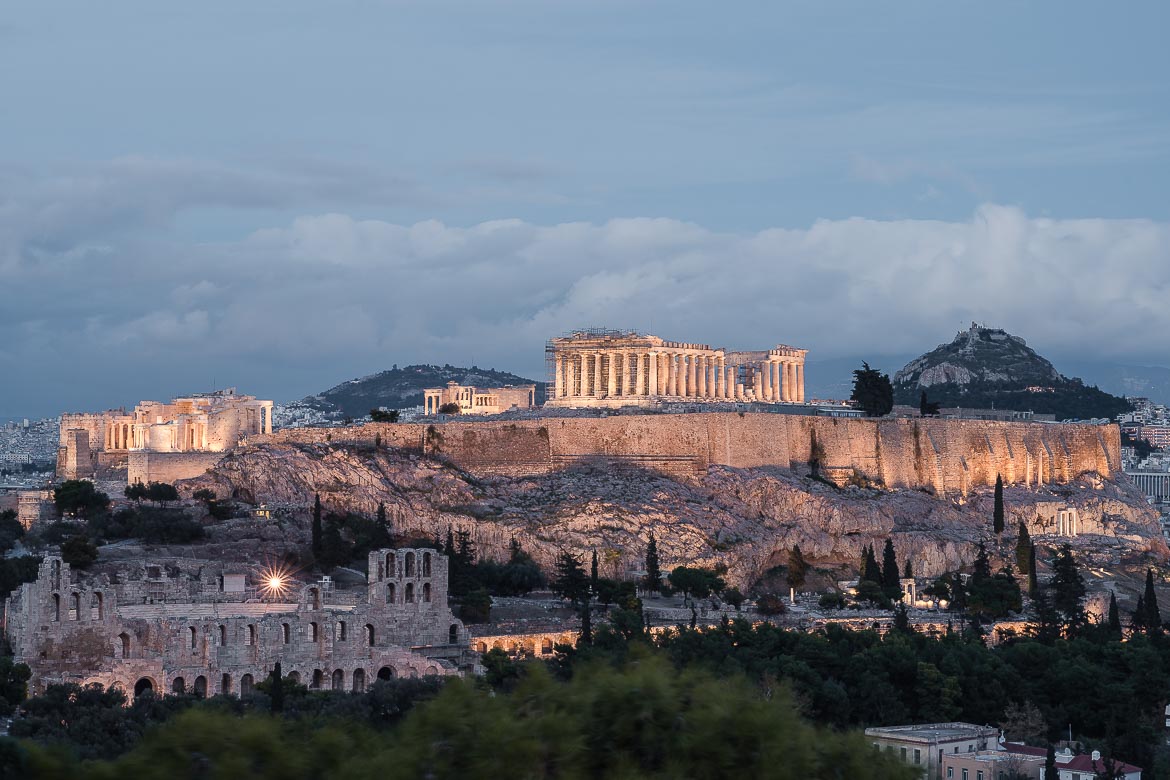
Start your first day in Athens from the city’s indisputable highlight, the iconic Acropolis.
A UNESCO World Heritage Site since 1987, the Acropolis of Athens is the ultimate icon of the Ancient Greek civilisation, but also the most powerful symbol of modern Greek identity.
It represents panhuman ideals that transcend natural borders, as it has laid the foundations for democracy, philosophy, politics and the entire Western Civilisation.

The Acropolis is built on a rock in the heart of Athens. Even though the area was inhabited since prehistoric times, the grand buildings that survive to this day were constructed during the 5th century BC, the so-called Golden Age of Athens.
The most impressive of all the buildings in the Acropolis of Athens is the Parthenon, the ultimate symbol of Classical Greece and one of the world’s greatest cultural monuments.

We recommend starting as early as possible in the morning to avoid crowds and high temperatures if you’re visiting in the summer. There are two entrances to the Acropolis of Athens.
Follow our detailed Acropolis itinerary, starting from the south entrance to see the ancient Theatre of Dionysus, the Odeon of Herodes Atticus and then all the majestic buildings atop the rock of the Acropolis.
Exit the Acropolis from the main entrance on Theorias Street to climb Areopagus Hill and then stroll along the pedestrianised Dionysiou Areopagitou Street.
Areopagus Hill
A short walk from the main entrance of the Acropolis is Areopagus Hill, affectionately called Vrahakia (Little Rocks) by locals.
The rocky hill offers breathtaking views of the Acropolis of Athens. It’s extremely popular with locals and visitors alike as it’s a great spot to watch the sunset in Athens.
If Areopagus Hill is busy, you can skip it, as we have a better viewpoint for you later.
Areopagus Hill was where trials for serious offences took place in Ancient Athens. It’s also where Saint Paul delivered his famous Areopagus Sermon in 51 AD, which resulted in the conversion of several Athenians to Christianity.

Dionysiou Areopagitou Street
Walk along Dionysiou Areopagitou Street until you reach the Acropolis Museum. The street is named after Dionysius the Areopagite, the first Athenian to convert to Christianity.
With its superb neoclassical mansions and unobstructed views of the Acropolis, Dionysiou Areopagitou is without a doubt the prettiest street in Athens.

The Acropolis Museum
The Acropolis Museum opened its gates to the public in 2009. Yet for us Greeks, it will always be the New Acropolis Museum. The old one was up there on the sacred rock, next to the Parthenon.
The Acropolis Museum houses findings from the Acropolis of Athens. In a total area of 14,000 square metres, more than 4,250 objects from various historical periods are on display.

The modern museum enjoys a prime location on Dionysiou Areopagitou Street with jaw-dropping views of the Acropolis.
The building itself is of great interest as it makes reference to the ancient site in various ways. For instance, the building’s top level has the same orientation as the Parthenon.
Moreover, there are many glass floors, allowing visitors to marvel at the excavation area below, one of the highlights of the Acropolis Museum.
Filopappou Hill
The best way to enjoy your first evening in Athens is to stroll around the loveliest green space in Athens.
Filopappou Hill (also spelt Philopappos or Philopappou) got its name from the Monument of Filopappou, a marble burial monument that stands at the top of the hill since the 2nd century AD.
However, its official name is Hill of the Muses. Alongside the adjacent Hill of the Nymphs and Pnyx (Pnyka) Hill, this green area in the heart of Athens is collectively known as Filopappou Hill.

Start your walk from the foot of Filopappou Hill, where Agios Dimitrios Loumbardiaris, a 16th-century church with amazing frescoes, is located.
Climb to Filopappou Hill first to see the Monument of Filopappou and enjoy breathtaking views of the Acropolis. Then walk down to Agios Dimitrios Loumbardiaris again and take the path that leads to Pnyx Hill.
The small rocky hill of Pnyx is where Ancient Athenians met for their public assemblies. This is why Pnyx Hill is often regarded as the actual birthplace of democracy.
Nowadays, Pnyx Hill is probably the best viewpoint of the Acropolis of Athens.

A short walk from the Pnyx, the top of the Hill of the Nymphs is adorned by the impressive Sinas Building. The latter houses the National Observatory of Athens.
There are guided tours of the Observatory, followed by night-sky observation using the historic Doridis Telescope. For more information, check out their website.

Thisseio
End your first day in Athens in Thisseio (also spelt Thissio, Thisio or Thiseio), one of the most picturesque neighbourhoods in Athens.
Its main thoroughfare is the pedestrianised Apostolou Pavlou Street, which is lined with grand neoclassical mansions. Most of them are now turned into high-end restaurants and cafés.
Apostolou Pavlou is one of the liveliest streets in Athens, with street vendors selling everything from souvenirs to jewellery at their colourful stalls and street performers filling the Athenian sky with their voices and live music.

Along Apostolou Pavlou Street, you can check out the world’s most enjoyable movie theatre according to CNN Travel. Built in 1935, Cine Thisio is one of the oldest, prettiest and most nostalgic open-air cinemas in Athens.
It’s usually open between April and October (depending on weather conditions).

Day 2
Ancient Agora of Athens
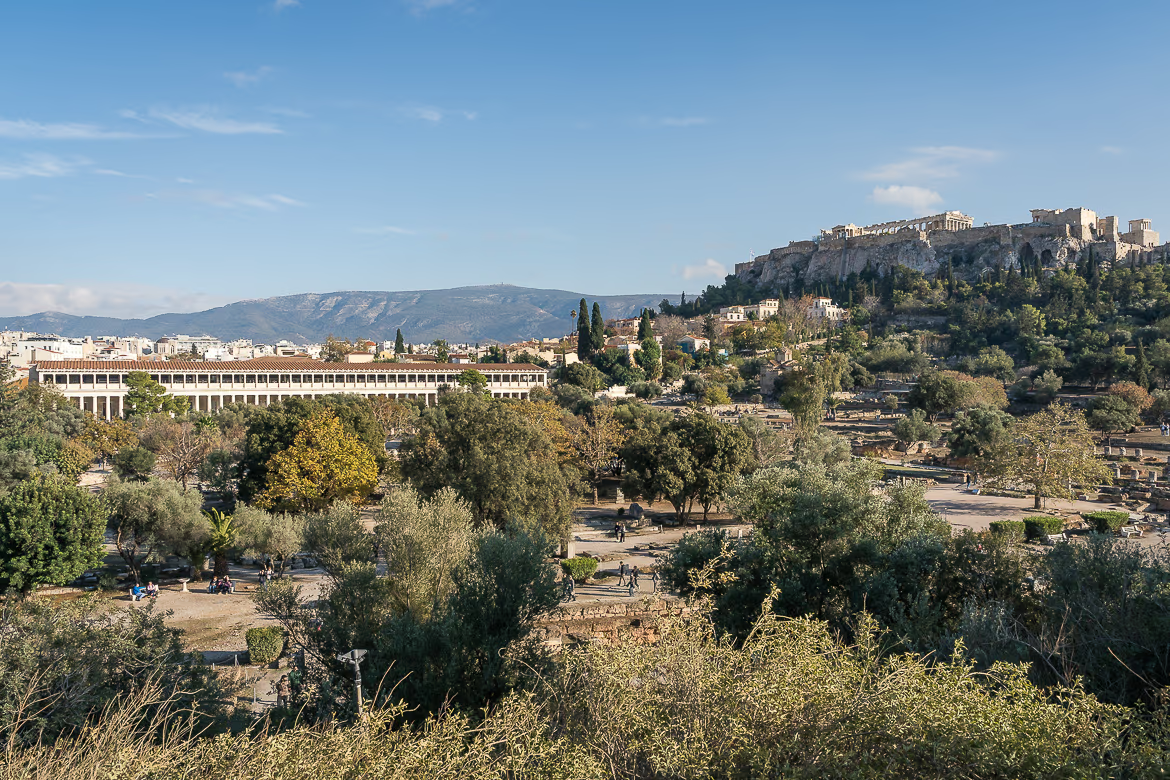
On your second day in Athens, visit the Ancient Agora, the heart of the ancient city of Athens. It was a major commercial, social, political, religious and cultural hub.
One of the most impressive buildings in the Ancient Agora of Athens is the Temple of Hephaestus.
The 5th-century BC temple was dedicated to Hephaestus, the Ancient Greek God of fire. Nowadays, it’s the best-preserved temple of Ancient Greece.
What dominates the Ancient Agora of Athens, though, is the imposing Stoa of Attalos, reconstructed in the 1950s. Nowadays, it houses the Museum of the Ancient Agora of Athens.
Our detailed guide to the Ancient Agora of Athens will walk you through all the ancient monuments scattered across this vast archaeological site.
Monastiraki Square & Monastiraki Market
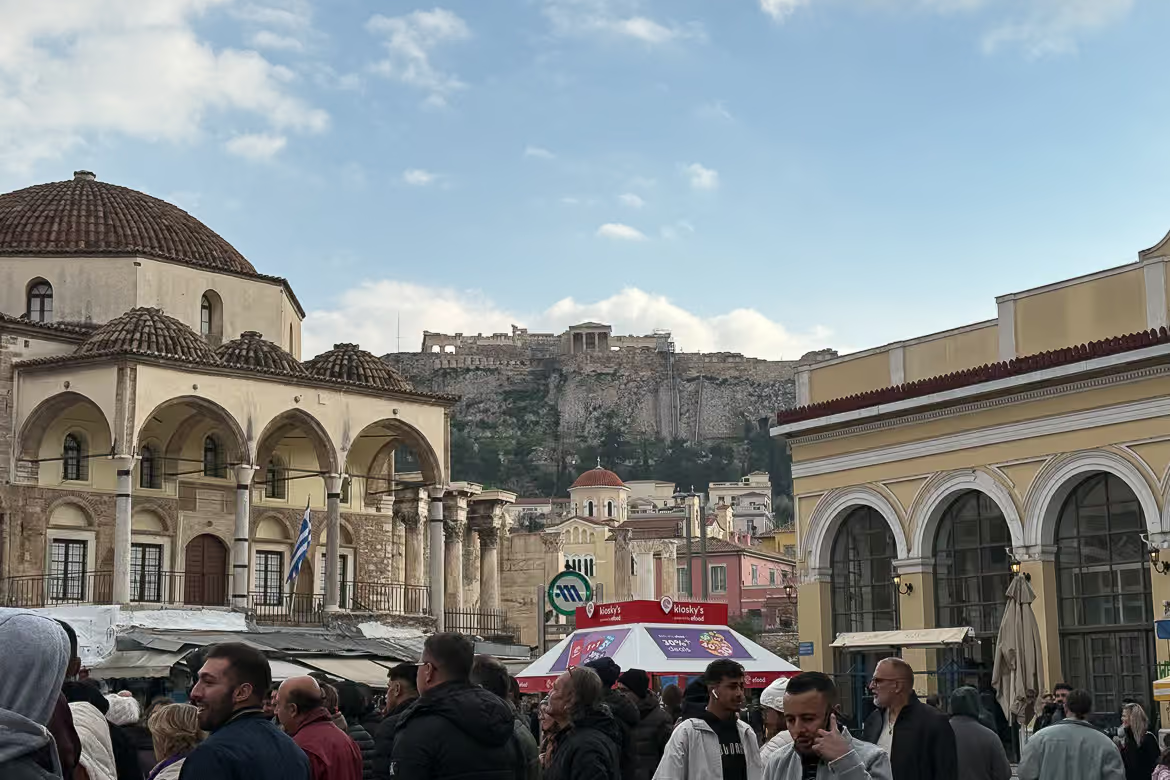
A few steps from the Ancient Agora is the vibrant Monastiraki Square. A favourite meeting place for locals and visitors alike, Monastiraki Square is buzzing with life all day and night long.
One of the best things to do in Monastiraki is to pick your spot at one of the rooftop bars located on or near the square and try to take your eyes off the beauty of the Acropolis.
Some of our favourite rooftop bars for their Acropolis view are Couleur Locale, Buena Vista Social Bar and Anglais.
As far as sightseeing in Monastiraki goes, a short visit to Hadrian’s Library is a good idea.
Don’t miss a walk along Ifaistou Street, the main thoroughfare of the Monastiraki Flea Market, where you can find some of the best Greek souvenirs.
On Sundays, make sure you check out the movie-like Avissinias Square where the Athens Antique Market takes place.

Plaka
It’s time to take in the charms of the city’s indisputable jewel: Plaka, the so-called Neighbourhood of the Gods.
Leaving Hadrian’s Library behind, pass the Roman Agora of Athens and head uphill to the Athens University History Museum and the Church of Metamorphosis.

From there, get ready to pinch yourselves to make sure you’re not dreaming. You’ve arrived in Anafiotika, a proper Greek Island in the heart of Athens.

Back in the 19th century, when it was time for King Otto to build his official residence in Athens, he asked for the country’s best builders and craftsmen. At the time, builders from the Greek Islands, and especially Anafi, were famous for their skills.
Therefore, they came to Athens to take part in the construction of a shiny new European capital. But they had to live somewhere, too.
The craftsmen of Anafi chose to build their new homes under the shadow of the Acropolis in the architectural style of their homeland. Hence, the name Anafiotika, which translates to of Anafi or from Anafi.
As a result, this small neighbourhood in Athens was transformed into a slice of heaven dotted with whitewashed cubic buildings and narrow streets.

Two of our favourite places in the Plaka neighbourhood are Dioskouroi, an all-day café and bar, right below the sacred rock of the Acropolis, and Vryssaki, a quaint café near the Ancient Agora of Athens.
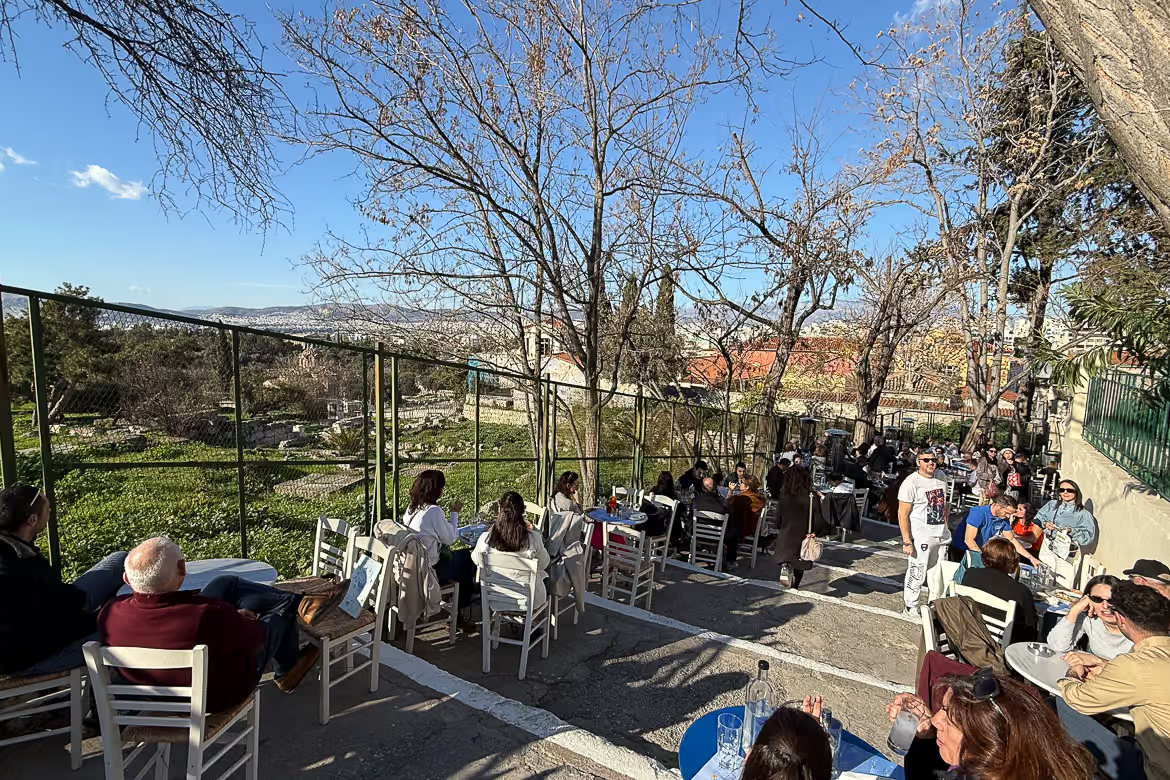
For delicious Greek cuisine in Plaka, head to To Kafeneio or Taverna Saita, where you can also find some of the best meat-free Greek specialities.
However, if there’s one place not to miss in Plaka, it’s the fairytale-like setting at the famous Plaka Stairs on Mnisikleous Street.

Day 3
The Athenian Trilogy
Start your third day in Athens from the glorious buildings of the Athenian Trilogy on Panepistimiou Street.
The Athenian Trilogy comprises the buildings of the National Library, the University of Athens and the Academy. This complex of superb buildings is often referred to as the epitome of neoclassical architecture in Greece.
The Athenian Trilogy was commissioned by King Otto as part of his scheme to turn modest Athens into a lush European capital by highlighting the city’s connection to its grand classical past.
The architects of these three buildings were the elite of their time: Christian Hansen, his brother Theophil Hansen and the latter’s student Ernst Ziller.

All three buildings are made of fine marble from Mount Penteli near Athens (Pentelic marble). They feature superb interiors with wood-carved details and beautiful frescoes.
The Academy in particular is inspired by the Propylaea of the Acropolis and it’s often considered the finest example of neoclassical architecture in the world.

The only one of the three buildings that was open to the public until recently was the National Library.
However, since its precious archive was moved to new premises at the Stavros Niarchos Foundation Cultural Centre, the National Library is no longer open to visitors.
The University of Athens houses some administrative services and it’s also where graduation and other ceremonies take place. Therefore, you can only admire the Athenian Trilogy from the outside.

The Commercial Triangle of Athens
Walk through the Commercial Triangle of Athens, the area between Omonia, Syntagma and Monastiraki squares.
Over the last few decades, the Commercial Triangle has been revived and transformed into one of the liveliest parts of Athens.
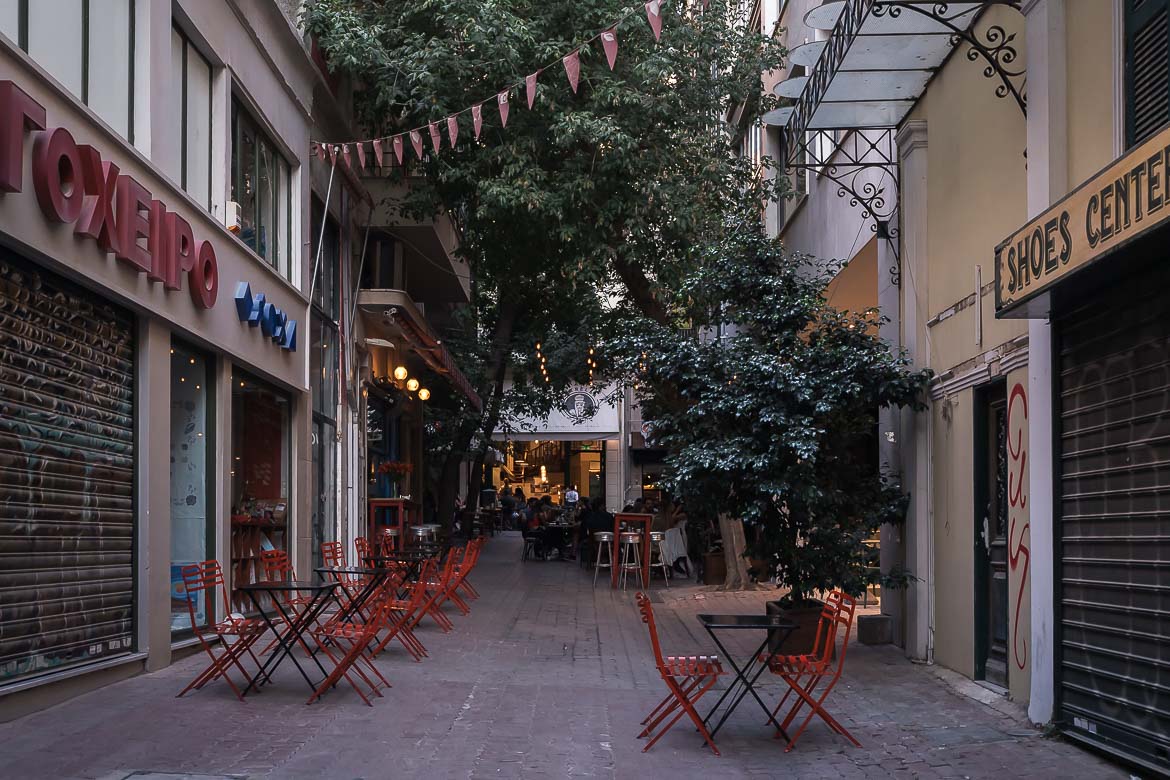
Now you can visit the Athens Central Market, enjoy shopping, dining, or drinking, or simply stroll and people-watch. The heart of the Commercial Triangle beats at the vibrant Agia Irini Square.
Psirri Neighbourhood
Then, head to Psirri, a vintage neighbourhood with a modern-day, alternative ambience.
Small shops selling old gems and quaint cafés that remind of times past co-exist with art galleries, impressive street art and the inevitably tacky shisha bars.
Equally tacky but worth a very quick photo stop is the famous Little Kook café. Psirri is one of the city’s nightlife hubs with numerous options for lunch, dinner, cafés and bars.
This seemingly impossible blend makes Psirri a worthwhile neighbourhood to visit during your Athens in 5 days trip.

Archaeological Site of Kerameikos
Leaving Psirri behind, walk along the pedestrianised part of Ermou Street until you reach the gate to the Archaeological Site of Kerameikos, one of the best things to do in Athens in 5 days.
Kerameikos was initially the district in Ancient Athens where potters lived. Later, it became the site of one of antiquity’s most important cemeteries.
There are many impressive things to see in Kerameikos, such as the remnants of the Themistoclean Wall. The latter enclosed the entire city of Athens and divided Kerameikos into two parts.
Inner Kerameikos was the residential area, whereas Outer Kerameikos was where the cemetery was located.
Other things not to miss in Kerameikos are the Dipylon and the Sacred Gate, two of the most important gates in Ancient Athens.
Both of these gates are related to grand events in the life of Ancient Greeks in Athens, namely the Panathenaic Procession and the Eleusinian Mysteries, respectively.
Last but not least, the ancient road of Iera Odos – the Sacred Way – is yet another thing to admire in Kerameikos.

Gazi Neighbourhood
Just a stone’s throw from Ancient Kerameikos, you can visit a site that’s related to the modern history of Athens. Gazi took its name from the old gas power plant that dominates the neighbourhood (gazi is the Greek word for gas).
The former gas power plant is now known as the Technopolis of Athens. The latter is a major cultural venue where concerts, festivals and other events take place.
Gazi is an essential stop for anyone seeking a taste of the Greek capital’s vibrant nightlife scene. Before the night falls, though, you can visit the Gas Museum.

Metaxourgeio
But if you’re not into nightclubs, we have another recommendation, more to our liking. End your third day in Athens with dinner at Metaxourgeio, one of the once-neglected neighbourhoods of Athens.
Initially, the plan was to build King Otto’s palace in this area. However, this idea was dropped and a silk factory (metaxourgeio in Greek) was established there instead.
In the late 19th century, Metaxourgeio became a thriving working-class district. But from the 1970s onwards, people started abandoning Metaxourgeio.
As with many other Athens neighbourhoods, Metaxourgeio started coming back to life in the early 2000s when it was transformed into an artistic hub. It now features masterpieces of street art.
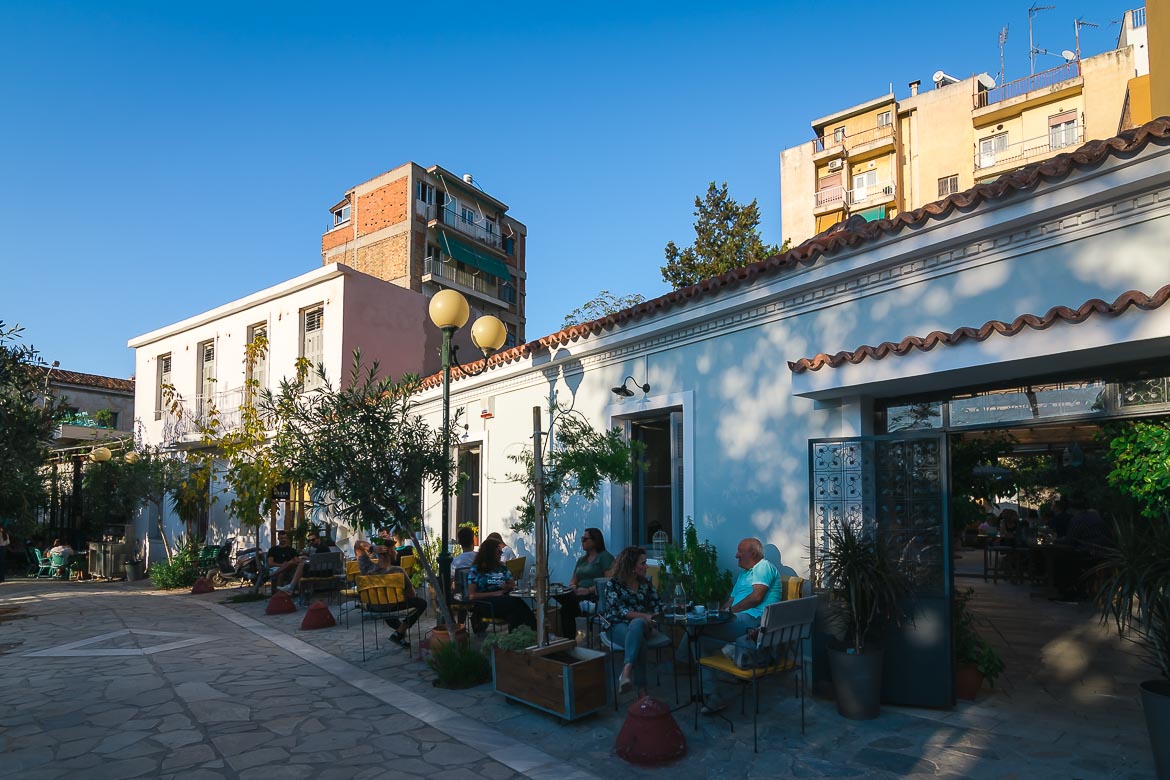
Avdi Square is the perfect place to have dinner and pre- or post-dinner drinks in Metaxourgeio.
For dinner, we’d recommend Seychelles, an amazing restaurant that locals swear by.
For drinks, try the stylish Ble Papagalos (Greek for blue parrot) or the nearby Cabezon, where you can have a beer with a few meze dishes at one of the prettiest courtyards in Athens.
Day 4
National Archaeological Museum
Start early in the morning from the National Archaeological Museum of Athens, which houses the largest collection of Ancient Greek artefacts in the world. It’s the largest museum in Greece with more than 20,000 exhibits.
There are many invaluable items to see in the National Archaeological Museum, such as the Mask of Agamemnon and the Marathon Boy.
Yet the ultimate thing to admire in the museum is the Antikythera Mechanism, an engineering wonder that dates back to ancient times.

National Technical University of Athens
After this fascinating look into Ancient Greece, it’s time to get a glimpse at one of the most significant instances in the country’s recent history.
The National Archaeological Museum is right next door to the grand neoclassical mansion that houses the National Technical University of Athens, also known as the Athens Polytechnic.
This is where the Athens Polytechnic Uprising took place in November 1973, when students massively protested against the military regime that had been imposed on Greece since 1967.
That was the beginning of the end for the Greek military junta. This is why November 17th is observed as a national holiday for all educational institutions in Greece.

Exarchia
Εxplore the bohemian side of Athens in the neighbourhood of Exarchia. Often referred to as the anarchist neighbourhood of Athens, Exarchia is an anti-fascist and intellectual hub with many bookstores and fair trade stores.
Exarchia used to be the most notorious neighbourhood in Athens, a part of the city to avoid, especially at night.
Nowadays, there are still sketchy areas in Exarchia that you should indeed avoid, but for the most part, the area is filled with lovely cafés and restaurants and it’s safe to roam around any time of day.
That said, avoid visiting Exarchia altogether on November 17th and December 6th and the days immediately preceding and following these dates.
November 17th commemorates the 1973 Athens Polytechnic Uprising. December 6th is the anniversary of the 2008 Greek riots that were ignited by the murder of 15-year-old Alexandros Grigoropoulos by the police.
Every year on both dates, Exarchia witnesses clashes between rioters and the police. You don’t want to get caught in the middle of this chaos.
Kolonaki
Right next to Exarchia, one of the wealthiest neighbourhoods in Athens awaits. Kolonaki is abundant in shiny designer brand stores and high-end restaurants and bars.
The area’s main square is Kolonaki Square, one of the best places in Athens to people-watch, even though it is currently under construction due to the Athens Metro works.
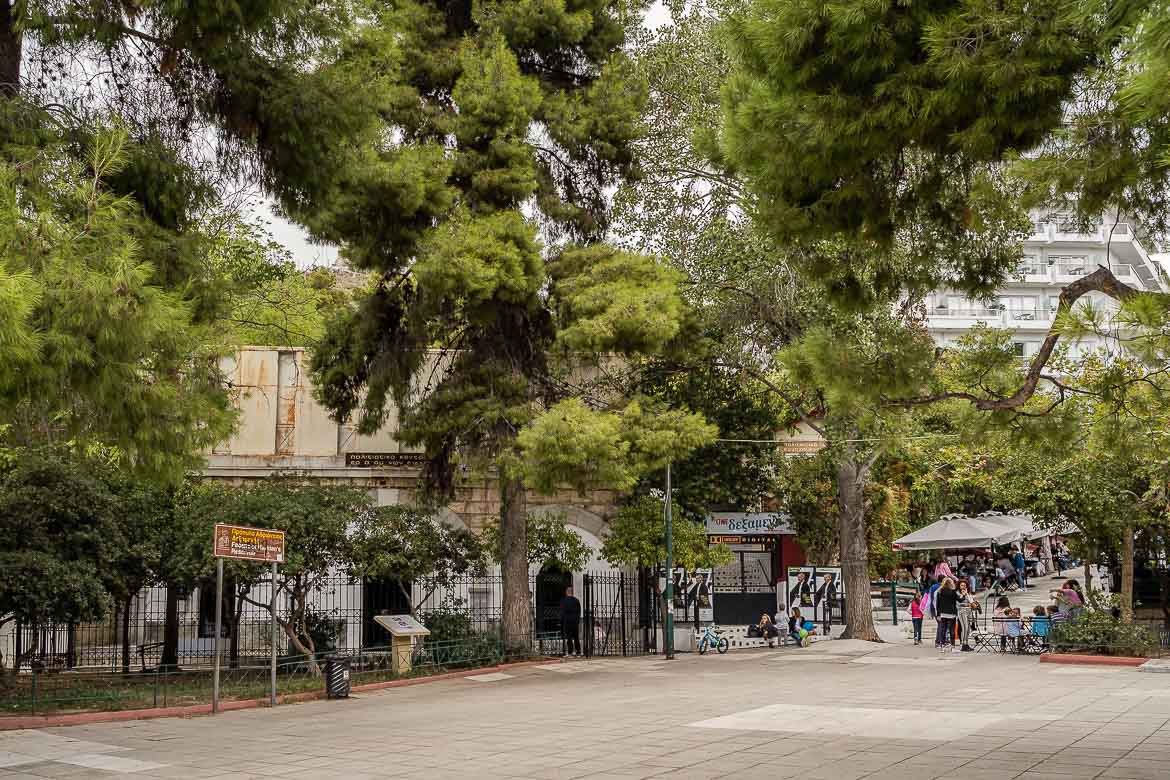
Yet Dexameni Square is what steals the show in Kolonaki if you ask us. Dexameni is the Greek word for a cistern. The square got its name from the cistern that was constructed there during the reign of Emperor Hadrian.
Lycabettus Hill
To wrap up your fourth day in Athens, how about some of the most breathtaking views of the Greek capital and beyond? One of the best viewpoints in Athens is Lycabettus Hill, the highest point in the city.
To get to Lycabettus Hill, you can either walk the winding uphill path or take a taxi.
In the latter case, keep in mind that the taxi can get you as far as the large parking lot outside the Theatre of Lycabettus. You’ll still have to climb a considerable number of steps to get to the top.

An alternative way to get to Lycabettus Hill, though, is to ride the Lycabettus Funicular. It starts from Aristippou Street in Kolonaki and ends near the top of the hill.
Once on Lycabettus Hill, head to the whitewashed Church of Saint George at the top of the hill for the best panoramic views of Athens. Whether you’re up there around sunset or after it’s already dark, you’re in for a unique experience.

Day 5
Syntagma Square & The Changing of The Guard
Before heading to Sounio for a day trip, spend the morning walking around Syntagma Square, one of the two central squares in Athens.
The 19th-century Syntagma Square was originally called Palace Square after the Old Royal Palace that was built there. The latter was the official residence of King Otto, the first king of the modern Greek State.
The Old Royal Palace dominates the upper part of the square and today houses the Greek Parliament.
The lower part of Syntagma Square comprises an open space made of marble, decorated with fountains and trees.

Once in Syntagma Square, check out the Tomb of the Unknown Soldier, an open-air war memorial dedicated to Greek soldiers who lost their lives during wars.
The Tomb of Τhe Unknown Soldier is where the Changing of the Presidential Guard ceremony takes place every hour, daily. The latter is a rather simple procession.
If you want to watch the fancy version, it takes place every Sunday at 11 in the morning.

National Garden
Right next to the Old Royal Palace, you can stroll around the former Royal Garden.
Commissioned by Queen Amalia (King Otto’s wife) in the 19th century, the now-called National Gardens offer a refuge from the concrete jungle of Athens.
Complete with a duck pond and a row of palm trees that the Queen herself planted, the National Garden feels rather rough around the edges. Yet it’s still a great place to have a break from sightseeing.

Zappeion
Situated next to the National Garden, Zappeion was a building commissioned for the first modern Olympic Games, held in 1896. In particular, Zappeion was the main fencing hall during the 1896 Olympic Games.
Nowadays, Zappeion hosts special ceremonies and exhibitions. Even if you can’t get inside, it’s worth seeing Zappeion from the outside to admire its splendid architecture.
Zappeion is a work of Theophil Hansen, a famous architect who designed many of the prettiest buildings in Athens.

Panathenaic Stadium
Continue your walk to see from the outside or even visit the Panathenaic Stadium. Also known as the Kallimarmaro (Greek for beautiful marble), the Panathenaic Stadium is the only stadium in the world built entirely of marble.
Nestled in the green embrace of Ardettos Hill, the stadium is built in a former natural ravine.
Throughout its history, the Panathenaic Stadium was abandoned, destroyed and reconstructed many times.
It was in 1896, before the first modern Olympic Games, that the Panathenaic Stadium was rebuilt for the last time, taking the form it has today.

Sounio Day Trip
Complete your Athens 5-day itinerary with a half-day trip to Sounio to enjoy the ancient ruins and a mesmerising sunset over the Aegean Sea.
There are many ways to get to Sounion, but the easiest is to join a guided tour that starts in the afternoon and returns after sunset. With this tour, you’ll be able to enjoy the scenic Athenian Riviera.
Cape Sounion is famous for its archaeological site and the well-preserved 5th-century BC Temple of Poseidon. Our guide to the archaeological site of Sounion will help you see the most important monuments of the ancient site.
Thank you for making it to the end of our 5-Day Athens Itinerary. It means a lot. It’s an article we compiled with a lot of love for the city we know better than any other place in the world.
Now you know what to see in Athens in 5 days at a slow pace, taking in the essence of the Greek capital without rushing it. This is the best way to get to know our home city, learn its history and follow in the locals’ footsteps.