Our website uses affiliate links. If you click through any of these affiliate links in this article to make a purchase, we may earn a small commission at no extra cost to you. As Amazon Associates, we earn from qualifying purchases. Read our Disclosure for more. Thanks for your support!
The allure of the Ionian Sea is indisputable and our comprehensive Kefalonia Travel Guide is all you need to plan the perfect vacation to the largest of the Ionian Islands.
From recommendations for the best places to stay in Kefalonia, historical facts about the island, to the best beaches and top things to do in Kefalonia, this Kefalonia travel guide has everything you need to know in one place.
Not to mention that our knowledge of Kefalonia is an almost-local one. Blessed with dear friends and their open invitation to visit them in their summer home in Kefalonia, we know the island pretty well.
Welcome to our ultimate Kefalonia travel guide!
If you’re considering a trip to our home country soon, we’re here to answer all your questions.
Click here to book a 60-minute video call with us or purchase a travel planning bundle that consists of a video call and a Greece itinerary, customised to your travel needs and desires.
Learn more about our travel planning services.
Where Is Kefalonia?
Kefalonia, or Cephalonia, is one of the largest Greek islands and the largest of the Ionian Islands. It’s in the heart of the Ionian Sea, off the coast of the Peloponnese and Western Greece.
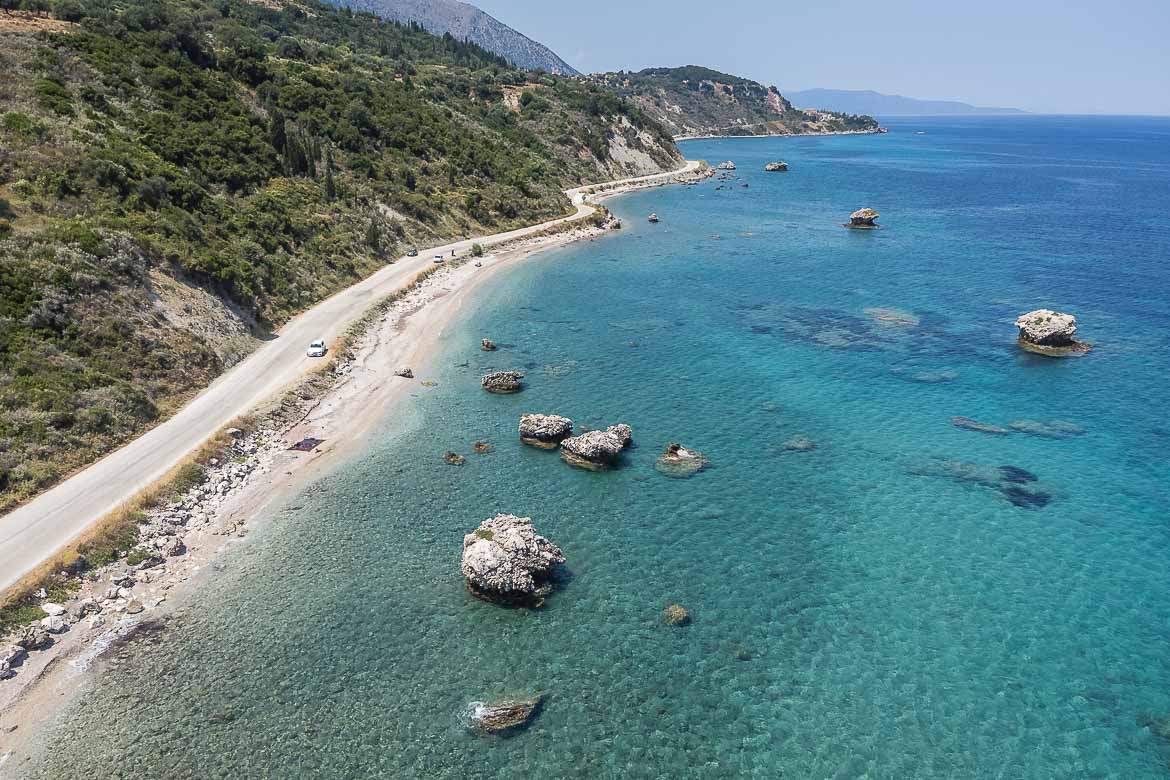
Like the rest of the Ionian Islands, Kefalonia is well known for its gorgeous beaches with crystal-clear water, lush vegetation, and marvellous mountainous scenery.
Argostoli is Kefalonia’s capital and largest town. West of Argostoli, on the other side of the bay, is Lixouri, the main town on the Paliki Peninsula.
Poros and Sami, on the eastern side of the island, are Kefalonia’s two main ports, connecting the island to mainland Greece.

Best Time To Visit Kefalonia
Like most places in Greece, Kefalonia enjoys warm weather throughout the year. Despite its mild temperatures, the island of Kefalonia experiences heavy rainfall for much of the year.
The best time to visit Kefalonia to enjoy more sunshine and avoid rain is during the summer months.
When planning a trip to Greece, unlike other destinations, Kefalonia doesn’t feel crowded in the high season, from June to September.

How Many Days in Kefalonia
If you have experience with the smaller Greek Islands you visited before, expect the exact opposite in Kefalonia.
Long distances leave you less time relaxing on the beach, as the main Kefalonia attractions are scattered all over the island.
Therefore, we recommend staying at least one week in Kefalonia to explore some of the best things to do and have some free time, too.
If you’re not sure how many days to spend in Kefalonia and the Greek islands, book a 60-minute call with us to answer all your questions or order a tailor-made itinerary for your trip to Greece.
How To Get To Kefalonia
By Plane
The best way to get to Kefalonia is by plane. There are plenty of direct flights from major European cities in the summer. Kefalonia’s airport is a 15-minute drive from Argostoli, the island’s capital.
During the high season, there is public bus service connecting Kefalonia airport to the island’s main towns.
If you can’t find a direct flight to Kefalonia International Airport, the next best option is to book a flight to Athens and then continue to Kefalonia either by car or KTEL bus.
By Car & Ferry From Athens
If you fly to Athens, pick up your rental car at Athens airport and drive directly to Kyllini Port in the Peloponnese, where the ferries to Kefalonia depart from.
The drive from Athens Airport to Kyllini Port takes about three and a half hours via the E94 and A8 Motorways, while the ferry ride from Kyllini to Poros Port on Kefalonia Island lasts about one hour and a half.
By Bus & Ferry From Athens
Alternatively, from Athens Airport, take Bus X93 to the Athens KTEL Bus Station, where the long-distance bus to Kefalonia departs.
The KTEL bus ticket includes the Kyllini to Poros ferry ride. Check out the Kefalonia KTEL Bus schedule here.
By Ferry
Like the other Ionian Islands, Kefalonia is no longer connected to Piraeus, Greece’s largest port.
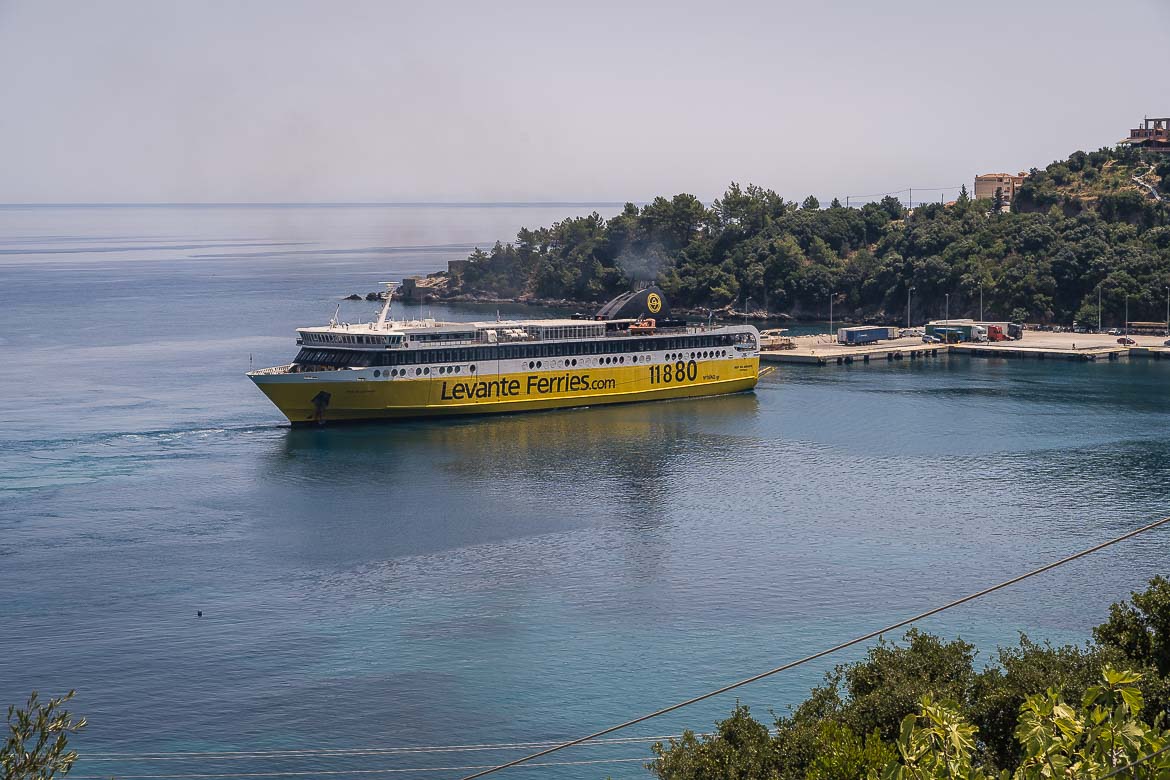
By ferry, you can reach Kefalonia from the Greek mainland ports of Kyllini and Patras in Western Peloponnese or other Ionian Islands, like Zante (or Zakynthos).
Ferries from Kyllini Port go to Poros Port in Kefalonia all year round, while ferries from Patras Port go to Sami Port in Kefalonia in the summer months.
From Patras, you can continue your trip to Italy, with daily ferries to Bari or Ancona.
Sami Port in Kefalonia is well-connected to Ithaca Island in the summer, too.
In the peak season, you can also reach Kefalonia from Lefkada Island after a short ferry ride to the village of Fiskardo in the northern part of Kefalonia.
The best way to check out ferry routes and timetables, as well as to buy your ferry tickets to Kefalonia, is through Ferryhopper.
How To Get Around Kefalonia
Public Transport
Public transport in Kefalonia is run by the local KTEL bus company. Buses are frequent and connect the island’s main towns and villages. During the peak season, expect to find more itineraries on the timetable.
Although not the best way to get around the island, if driving is not an option for you, public buses will take you to most of the island’s highlights.
Check out the KTEL Bus timetable for local routes here.
Local Ferry
A local ferry connects Kefalonia’s two main towns, Argostoli and Lixouri, throughout the year.
This is the best way to commute between the two towns, especially if you’re not driving. Check out the local ferry itineraries here.

Rental Car
From fantastic exotic beaches with crystal clear waters to hidden lakes in the forest and abandoned villages in the mountains, Kefalonia boasts unique scenery.
No wonder why Kefalonia is considered one of the best Greek islands to visit on a road trip.
Kefalonia’s main road network is in very good condition. There aren’t any highways, only local roads that make distances look longer when driving from one side of the island to the other.
Be careful of the steep, narrow roads that lead to the beaches. Also, you may come across the occasional dirt road, but nothing too strenuous.
Where To Stay in Kefalonia
Argostoli – Best Area To Stay in Kefalonia For First-Timers
With plenty of fantastic things to do in and around Argostoli, the island’s capital city, is the best place to stay for your first time in Kefalonia.
Featuring an excellent location on Argostoli’s seafront, the 4-star Kefalonia Grand Hotel offers sparklingly clean modern rooms with sea views.
Situated right on Argostoli’s central square, Aenos Hotel features gorgeous, comfortable rooms in a prime location in the heart of Kefalonia’s capital.

Fiskardo – Best Area To Stay in Kefalonia For Couples
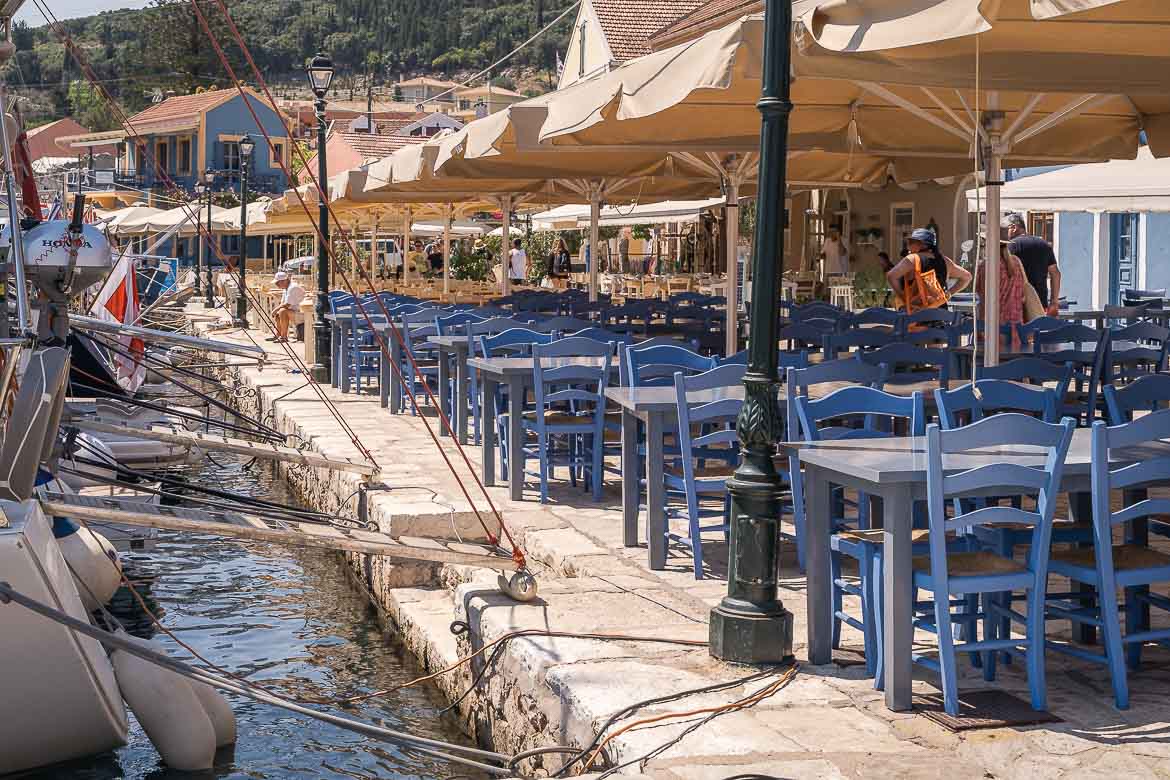
Located in the north of Kefalonia, this renowned, quaint village is home to some of the best hotels for a romantic getaway.
Nestled in the heart of Fiskardo, both Faros Suites and Balhambra Suites are ideal for a romantic laid-back stay, in one of the most beautiful villages in Kefalonia.
Sami – Best Area To Stay in Kefalonia For Exploration
For those who want to explore Kefalonia by car, there is no better place to use as a base than Sami. Thanks to its central location, Sami is easily accessible from the rest of the island.
Some of the best places to visit in Kefalonia, such as the beaches of Myrtos and Antisamos, the villages of Assos and Fiskardo and Melissani Cave, are within easy driving distance from Sami.
On top of that, ferries to Ithaca (or Ithaki) run daily from Sami Port in the summer, making it easy to plan a day trip to the neighbouring island.
Situated in a convenient location with easy parking, Mary’s Studios and Apartment offers fully equipped studios with spacious terraces, ideal for a perfect stay in Kefalonia.
Skala – Best Area To Stay in Kefalonia For Families
Away from the hustle and bustle of the island’s more popular locations, Skala remains a small touristic seaside town ideal for families and relaxing holidays.
Skala is home to many hotels, restaurants, cafés, and beach bars, and is usually frequented by many people.
However, you can always find a great spot on the long beach to enjoy the sun and the sea away from the crowds, even in August.
Situated in the heart of the town, Skala Hotel is a family-run hotel with modern refurbished rooms with sea views.
The comfortable suites are ideal for families, while the sandy beach – a true paradise for the little ones – is only a few steps from the hotel.

The Ultimate Kefalonia Travel Guide: Travel Resources
5 Things To Know Before Visiting Kefalonia
1. The 1953 Great Kefalonia Earthquake
This Kefalonia travel guide wouldn’t be the same without mentioning an event that marked the island’s rich history.
On the 12th of August, 1953, Kefalonia was hit by one of the most devastating earthquakes in the history of modern Greece.
It was the third big earthquake in four consecutive days that flattened Zakynthos, Ithaki and Kefalonia, claiming between 445 and 800 lives.
Fiskardo was the only village in Kefalonia that wasn’t razed to the ground. The 7.2-magnitude earthquake on the Richter scale triggered a large migration to Athens and abroad.
An inevitable economic decline ensued. It took a long time for Kefalonia to stand back on its feet. It wasn’t before the late 1980s that Kefalonia started emerging as one of the main tourist destinations in Greece.
Nowadays, Kefalonia is still hit by earthquakes. Yet, there is nothing to be afraid of anymore, as structural engineering has evolved since and because of the 1953 earthquake.
Most of the buildings are now protected according to modern anti-seismic regulations.

2. The Island’s Mysterious Underground Waters
A short drive from Argostoli, a 19th-century water mill rolls the waters that vanish in the depths of the earth through one of the island’s sinkholes.
In 1963, scientists proved that underground water flows through Kefalonia from west to east. They did so by pouring red paint into the Argostoli Sinkholes.
After two weeks, the water in Melissani Cave and Sami turned red, revealing a unique geological phenomenon that had long been a mystery.

3. The Magic of Ainos Mountain
Considering that Kefalonia is popular for its fantastic beaches, the island’s splendid mountainous landscape comes as a pleasant surprise.
With its highest peak at 1628 metres, Mount Ainos is the tallest mountain in Kefalonia and the Ionian Islands. The most exciting part is that Ainos Mountain is home to a black-pine forest, the natural habitat of wild horses.
In the summer, Mount Ainos National Park is ideal for outdoor activities, especially hiking. You can drive through Mount Ainos and leave your car at the parking next to the Transmitter Station.
From there, follow the trails to explore the island’s national park. If you are lucky, you might catch glimpses of the forest’s beautiful inhabitants.
4. Captain Corelli’s Mandolin Was Filmed in Kefalonia
Starring Nicholas Cage and Penelope Cruz, Captain Corelli’s Mandolin is one of the most popular films set in Greece.
The film, based on a novel by Louis de Bernières, is the love story of a music-lover Italian army captain and a local Greek woman who fell in love in Kefalonia when the island was under Italian and German occupation.
For more inspiration before visiting Greece, you can check out our list of the best novels set in Greece.

5. Kefalonia Has Its Local Dialect
Similar to the other Ionian Islands, Kefalonia’s dialect is influenced by the Italian language.
Occupied by the Venetians for several centuries, the locals have alternated Italian words until today. It’s hard to notice the difference if you don’t speak Greek. That said, you may pick up some words if you speak Italian.
3 Best Places To Visit in Kefalonia
1. Assos
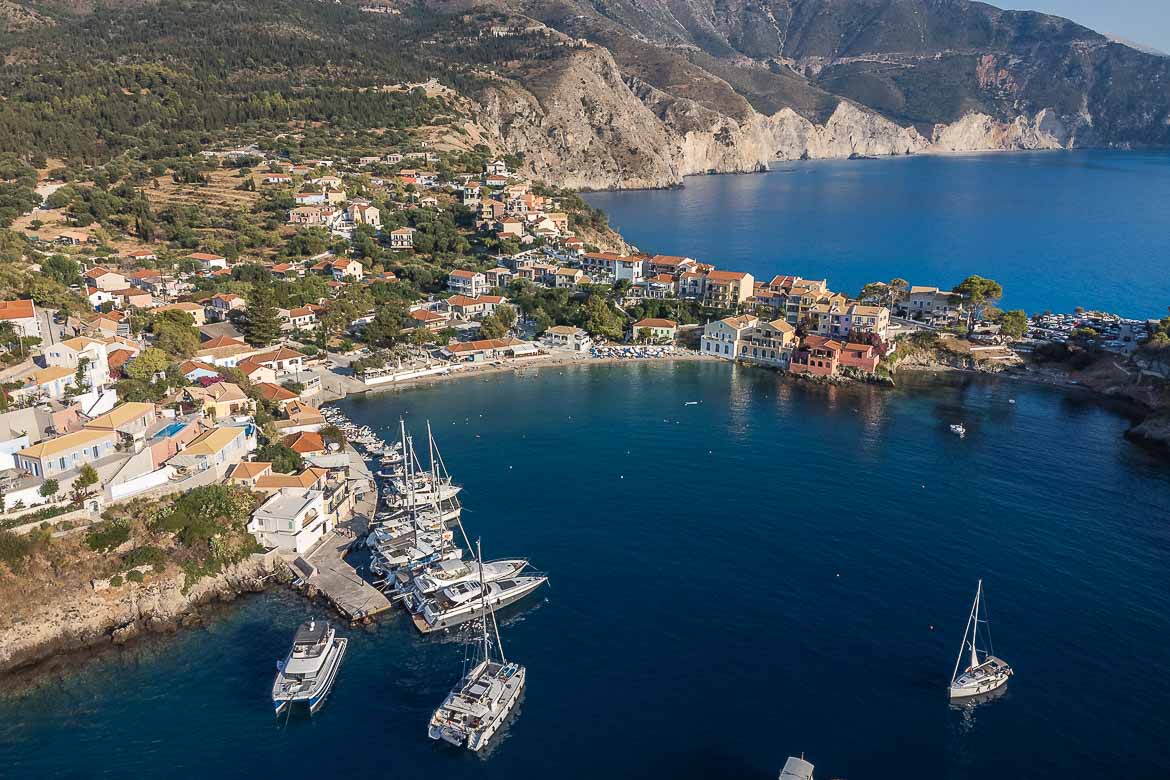
Situated in the northern part of Kefalonia, about an hour’s drive from Argostoli, Assos (or Asos) is the indisputable gem of the island.
This small seaside village is considered one of the most beautiful villages in Greece and for good reason.
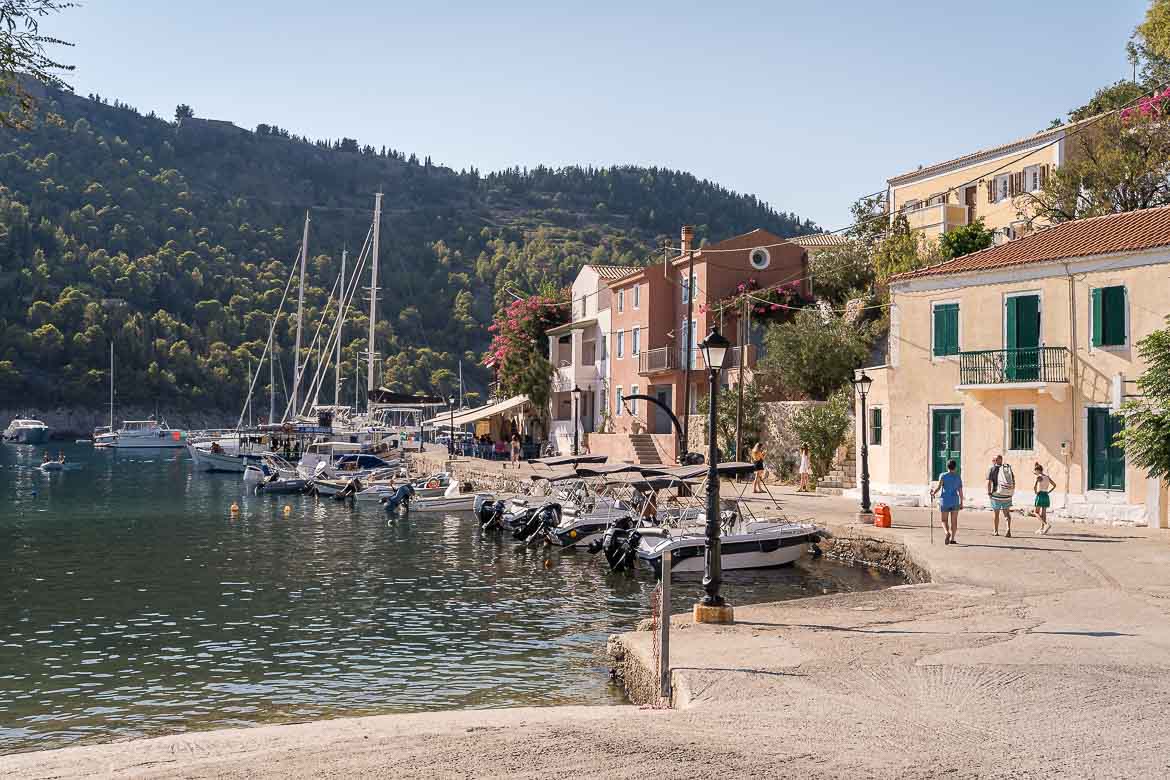
For a perfect day in Assos, leave your car at the small public parking space in the narrowest part of the peninsula.
Spend a relaxing day by the turquoise waters of the village’s beach, taste some of the best vegetarian Greek dishes at one of the seafront restaurants and take a stroll along the quaint harbour.
Before leaving Assos, walk along the scenic path that leads to the 16th-century Venetian Castle for incredible views of the picturesque village.
2. Fiskardo
A 35-minute drive north of Assos, Fiskardo (or Fiscardo) is one of the most beautiful places to visit in Kefalonia.
As Fiskardo was the only village to survive the 1953 Great Kefalonia earthquake, it is the perfect place to see the island’s pre-earthquake traditional architecture, as most buildings in Fiskardo still retain original elements.

Start your walk marvelling at the ancient ruins of a Roman cemetery at the edge of the once sleepy fishing village.

Walk along the promenade that passes through the charming harbour and leads to the trail for the Old Venetian Lighthouse of Fiskardo and the enchanting ruins of an early Christian Basilica.
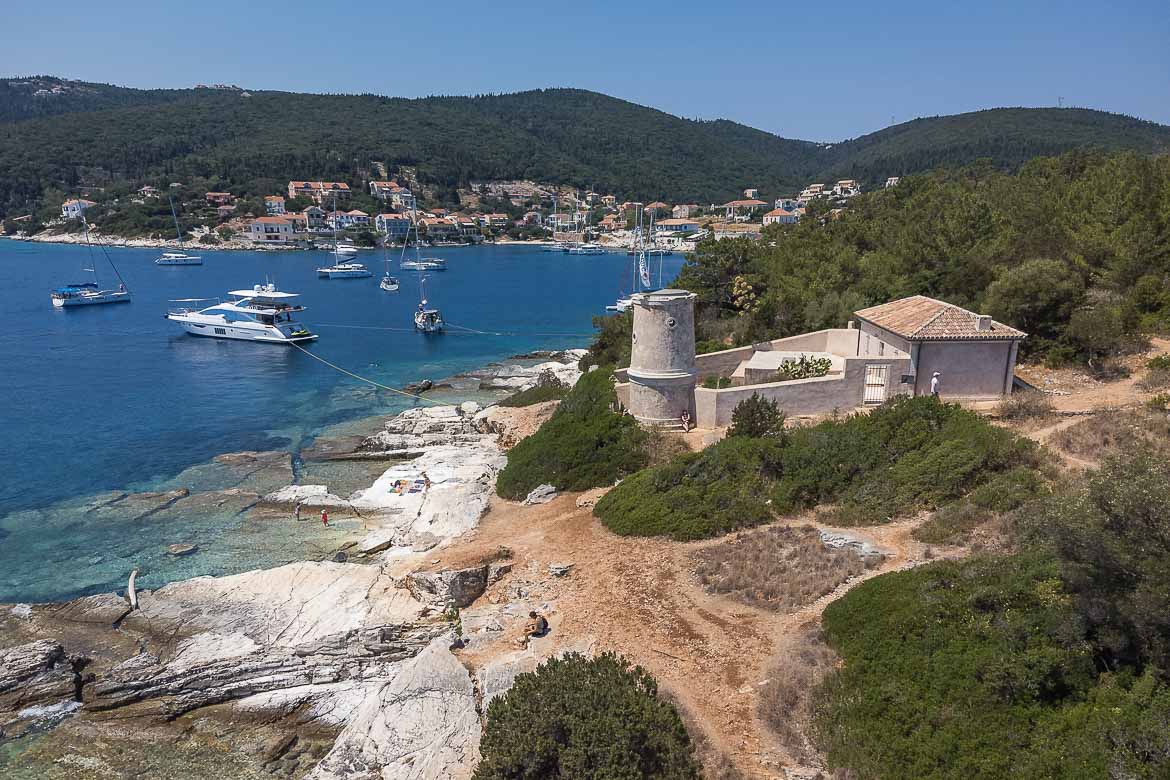
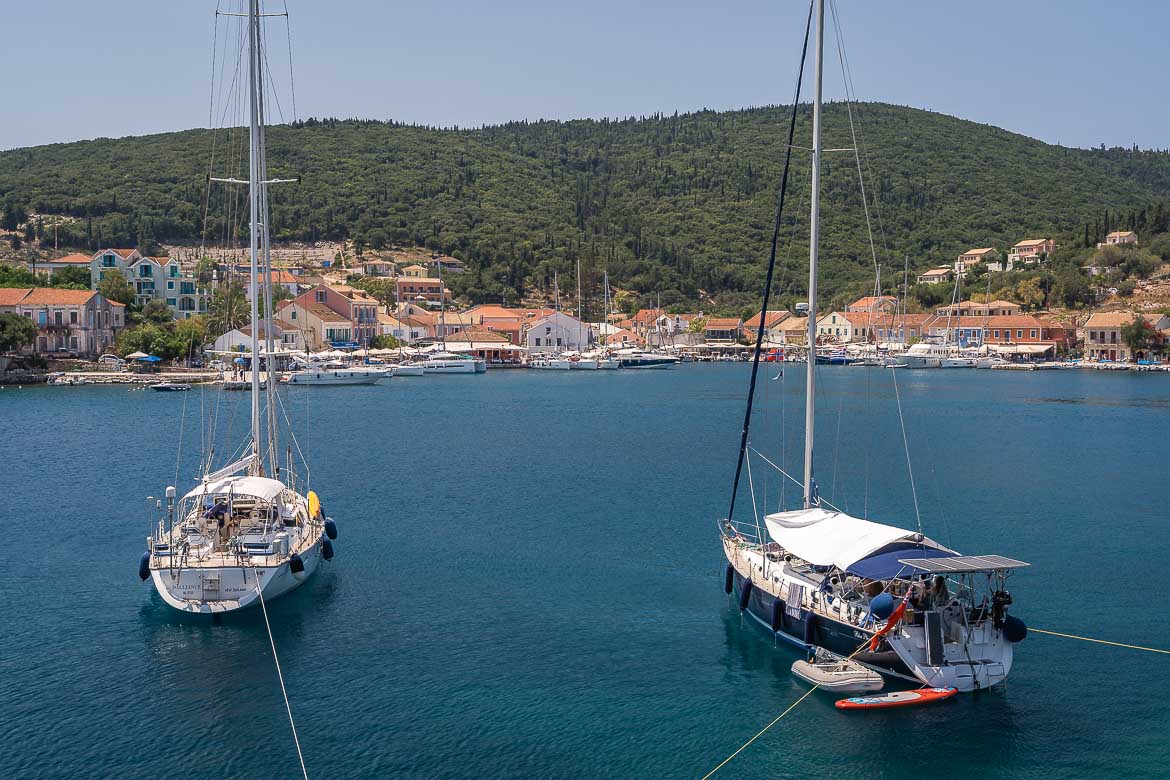
Although the village retains its traditional features, Fiskardo is renowned for its fine dining and cosmopolitan atmosphere. The former hidden gem is now a top destination for the rich and famous.
Therefore, don’t be surprised if there are more luxury yachts than fishing boats at the harbour. Also, taxi boats never stop bringing VIP guests to Fiskardo for a luxury dinner.
3. Argostoli
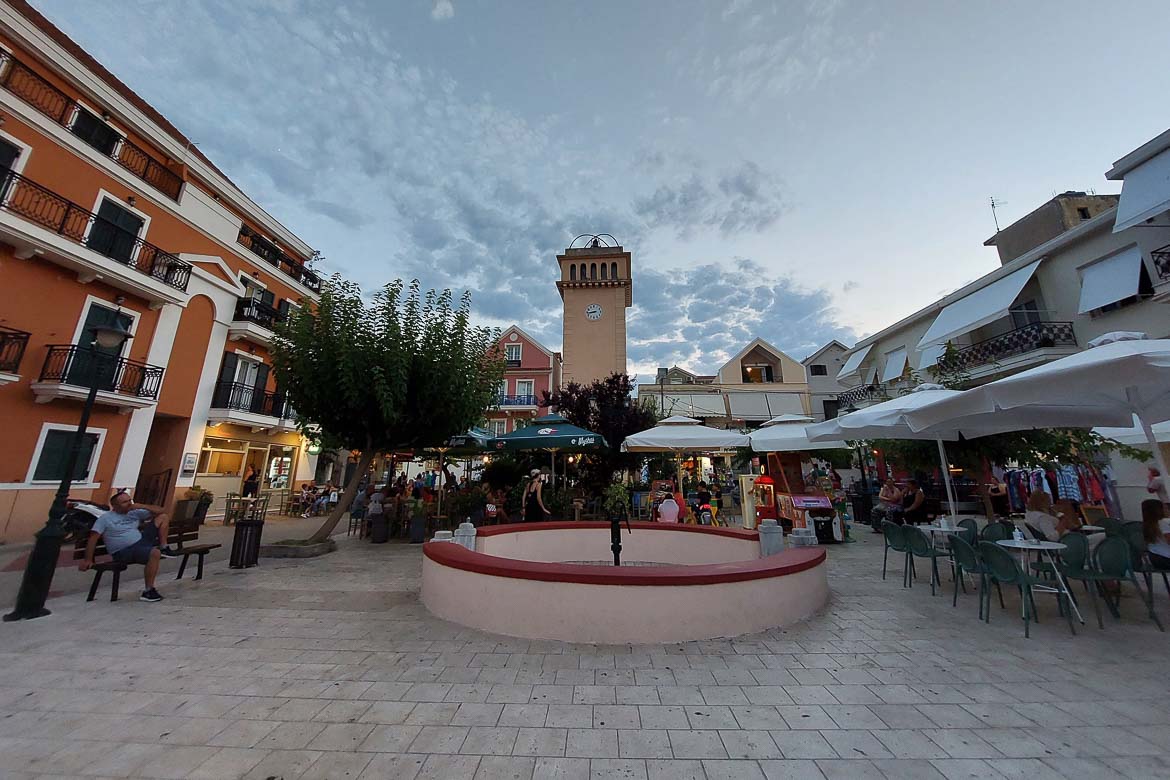
With its beautiful architecture, elegant air and authentic vibes, Argostoli is one of the best places to visit in Kefalonia.
The vibrant capital of the island boasts several squares and pedestrianised streets, ideal for people-watching.
A great way to be immersed in the unique atmosphere of Argostoli is to grab an ice cream and mingle with the locals as you walk along the lively main street.
The indisputable highlight of Argostoli is the seemingly endless De Bosset Bridge, while a special mention should be made to the adorable loggerhead turtles that inhabit the port.
5 Best Beaches in Kefalonia
1. Myrtos Beach
Kefalonia is mostly known for its beaches. This is why we’re starting this section of our Kefalonia travel guide with one of the most beautiful beaches in Greece and certainly the most famous beach in Kefalonia.
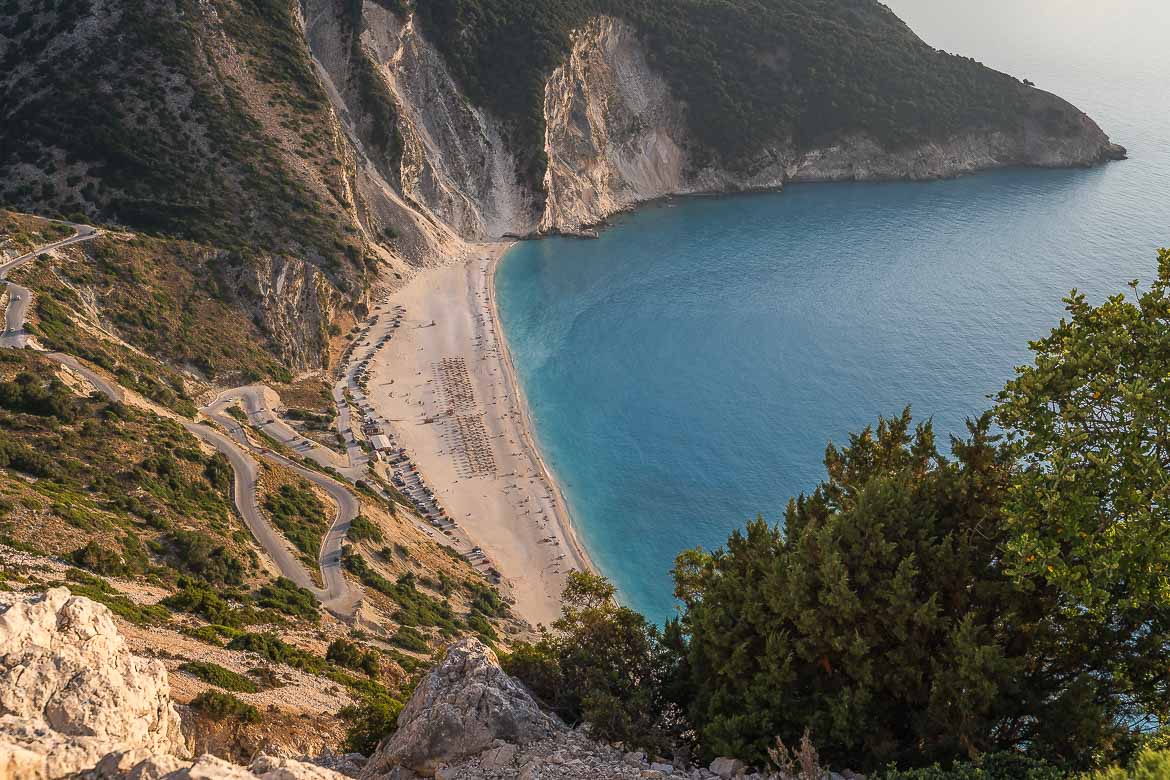
Myrtos will dazzle you with its beauty. It’s one of those places that never fail to astonish, even if you’ve seen a zillion photos of the beach before you actually get there.
First, enjoy panoramic views of Myrtos from this viewpoint. Then drive the downhill road to the beach to swim in mind-blowingly turquoise waters and lie on otherworldly white pebbles.
Thanks to its western orientation, Myrtos is ideal for epic sunsets. Therefore, it’s worth sticking around until the golden hour.
However, if you plan to spend the whole day there, bring a beach tent as those offered by beach bars are hard to come by.
Keep in mind that when the weather is windy, it’s best to refrain from getting into the water as the waves can get pretty high.
Myrtos is also infamous for its strong currents. Therefore, it might be a good idea to check the weather forecast before going to Myrtos Beach to make sure you pick a windless day.

2. Petani Beach
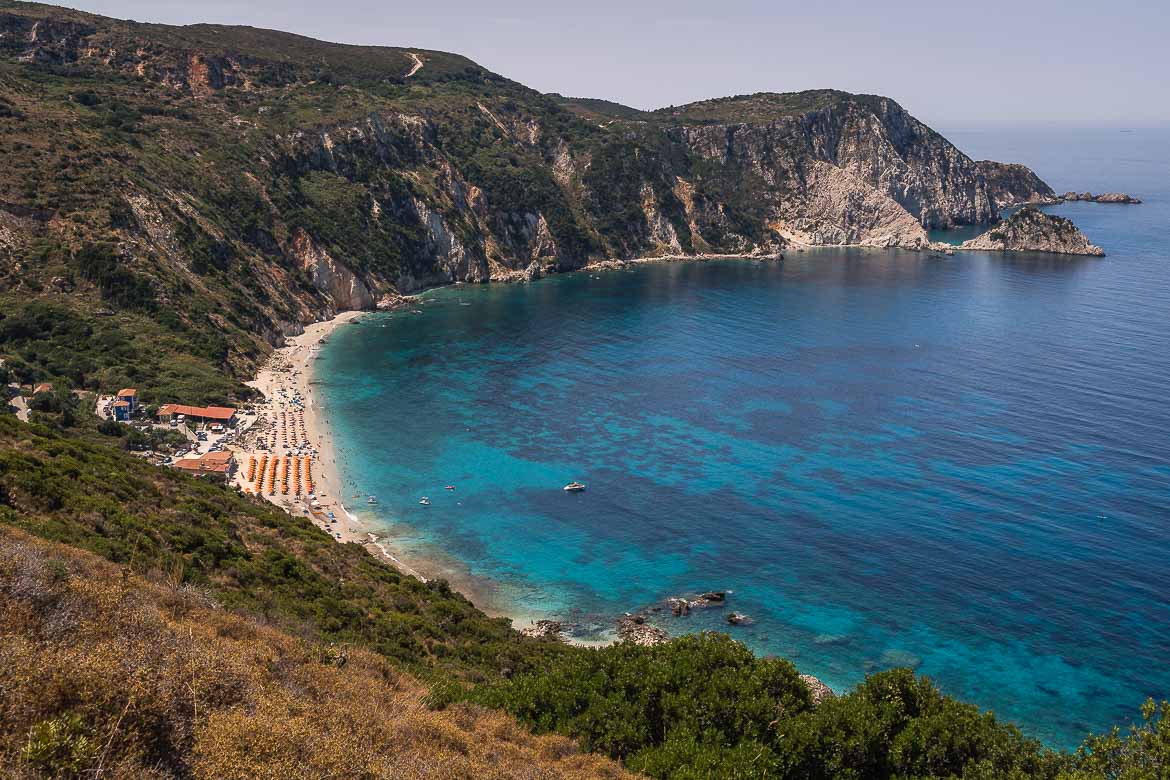
Located on the other side of the island, on the Paliki Peninsula, the smaller Petani Beach has something of Myrtos’ splendour.
The surrounding exotic landscape and the beach’s turquoise waters will take you aback before you even start descending the hill to the beach.
Petani Beach is organised with beach bars and restaurants and it’s perfect for idyllic sunsets.
Like with Myrtos Beach, pick a windless day for your trip to Petani Beach for an unforgettable – and safe – experience.
3. Antisamos Beach
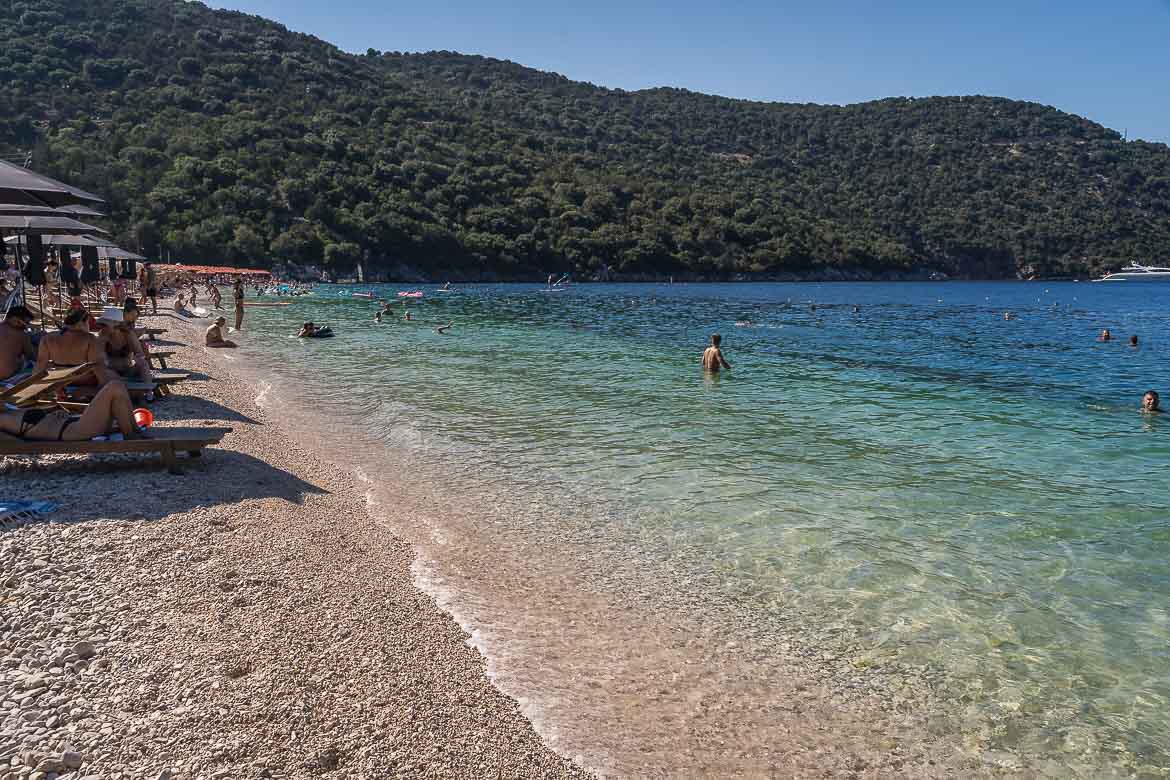
A 10-minute drive from Sami, Antisamos Beach is one of the best beaches in Kefalonia.
Alongside Sami, Antisamos was one of Captain Corelli Mandolin’s filming locations that made the island known to the world. Antisamos stands out for its lush green scenery and somewhat eerily emerald waters.
The beach is fully organised with beach bars, restaurants, showers, sunbeds and umbrellas you can rent for the day. Parking is quite easy, even in the peak season.
For the more adventurous, there are also water sports to try. Antisamos isn’t the best choice for families, as the beach has large pebbles and the water is deep.
4. Xi Beach
Kefalonia has no shortage of unique landscapes and Xi Beach is one of them. With a red-sanded shoreline and crystal clear waters surrounded by clay rock formations, Xi Beach is out of this world.
A short drive from Lixouri, Xi Beach can be overly crowded, especially in the high season. The swallow waters and the amenities make Xi one of the most family-friendly beaches in Kefalonia.

5. Skala Beach
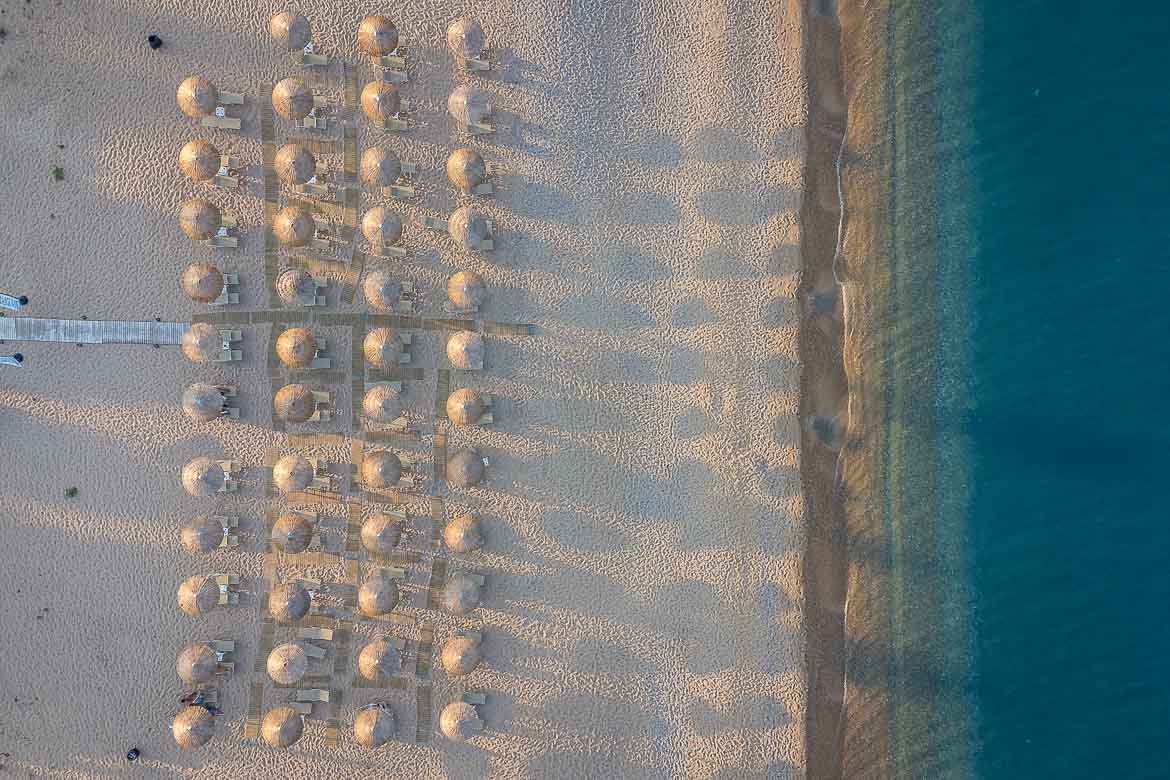
If there’s a happy place for us in Kefalonia, it’s the long sandy Skala Beach.
Maybe it’s because we have so many fond memories of having a great time with our dear friends there, but Skala Beach has won a very special place in our hearts.
Situated in eastern Kefalonia, just a 20-minute drive from Poros Port, laid-back Skala is ideal for everyone.
Families with small kids who can make the most of the facilities offered by beach bars and restaurants, groups of friends eager to do water sports and sip cocktails, couples in love and loners who want to enjoy reading a book at one of many quiet spots on the sand.
7 Best Things To Do in Kefalonia
No Kefalonia travel guide is complete without a mention of the top things to do in Kefalonia. However, in this article, we tried to keep this list short.
For the full list of the best things to do in Kefalonia, watch our Kefalonia YouTube video:
1. Get Into The Depths of Melissani & Drogarati Caves
Situated near Sami and a 10-minute drive from Agia Efimia, Melissani Cave with its underground lake is the ultimate highlight of Kefalonia.
The water of Melissani Lake comes from the Sinkholes in Argostoli as we mentioned above. Unlike Diros Cave in Mani, the roof of Melissani Cave has collapsed, creating an impressive shaft over the lake.
The cave is accessible via an underground tunnel. At the end of the tunnel, you embark on small rowing boats to enjoy a memorable boat ride among stalagmites and stalactites.
Try to visit the Cave of Melissani at noon on a bright sunny day when the sunlight hits the lake and the boats look as if they’re hovering over the deep blue waters.

Often overlooked, the nearby Drogarati Cave is another cave worth visiting in Kefalonia. The 95-metre-deep Drogarati Cave is famous for its excellent acoustics. In the past, it even hosted live performances.
The over 100-million-year-old cave boasts numerous impressive formations of stalagmites and stalactites. If you plan to visit both caves, you can buy a combined ticket, available at either site.

2. Step Inside Agios Gerasimos Monastery
Canonised in 1622, Saint Gerasimos is Kefalonia’s patron saint. Saint Gerasimos was renowned for the miracles he performed for people with mental issues.
Situated in a gorgeous landscape, a 20-minute drive from Argostoli, the sacred Monastery of Saint Gerasimos houses his relics, which have remained intact for centuries.
You can check them out yourselves if you want.
If you happen to be in Kefalonia on the 16th of August, don’t miss the big feast of the Saint in the monastery. Saint Gerasimos is the locals’ beloved Saint.
That explains why almost every male on the island is called Gerasimos or Makis (short for Gerasimos).

3. Visit a Scenic Winery
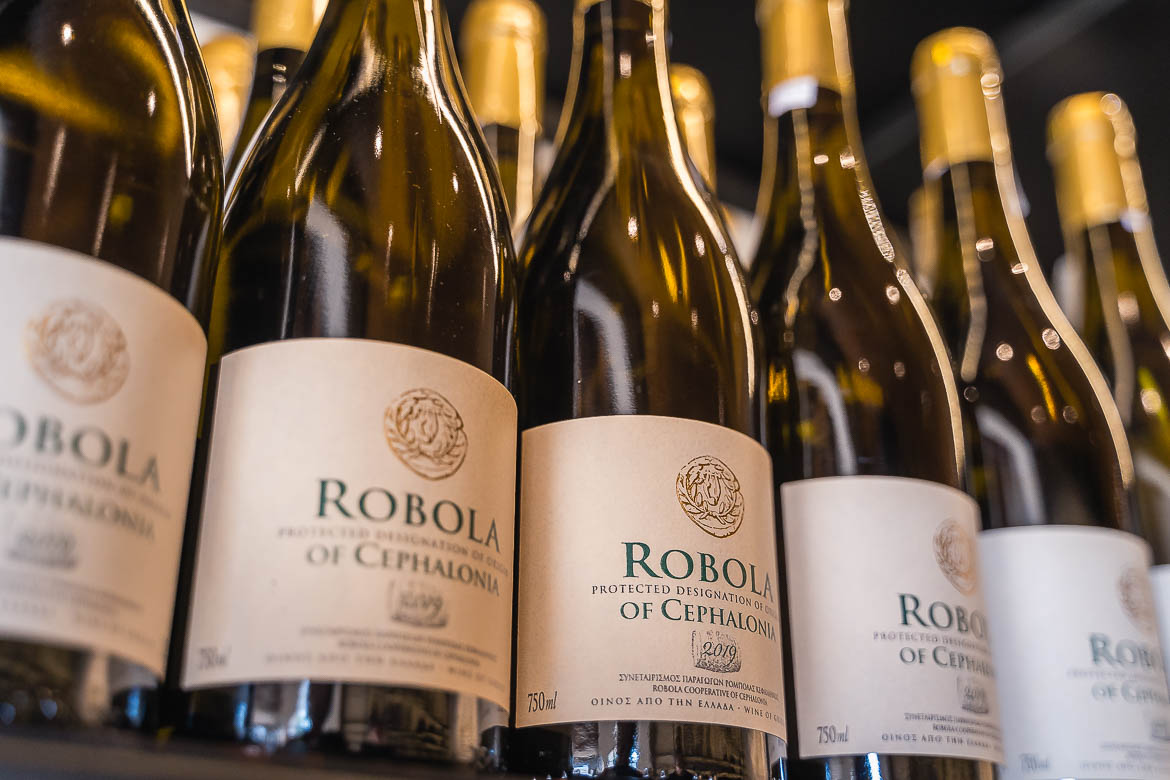
If you’re wondering what to buy from Greece, wine is always a great idea. Kefalonia boasts a favourable morphology that endorses the production of high-quality local wine.
The island’s most famous grape variety is Robola, which produces exquisite dry white wine.
Situated near Saint Gerasimos Monastery, the Robola Wine Cooperative is a great place to indulge in a wine tasting of local wines, paired with delicious food.
4. Wander Around a Ghost Village
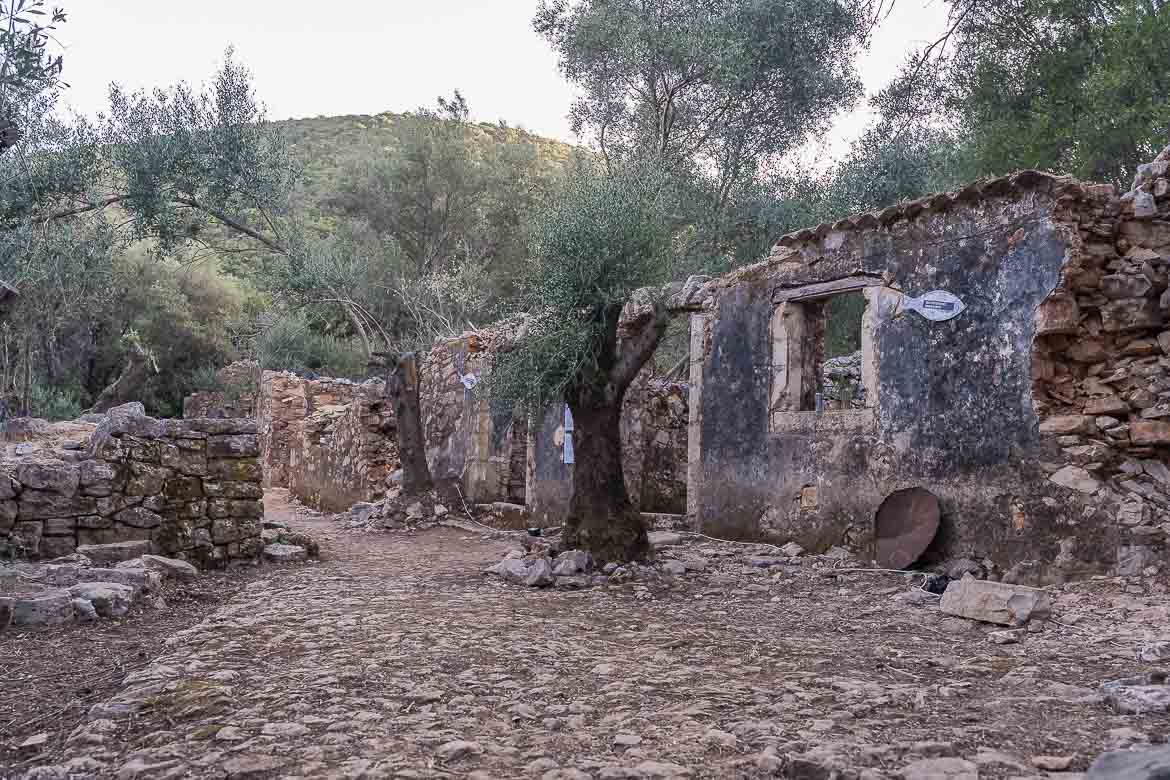
In 1953, the Great Kefalonia Earthquake levelled a big part of the island. Most villages were rebuilt, but others were abandoned forever. Old Vlachata Village near the south coast of Kefalonia is one of the latter.
Nowadays, you can still wander among the ruins of this ghost village, step inside roofless homes and try to imagine how the devastating earthquake changed the locals’ lives forever.
Yet Old Vlachata is brought back to life for three days every August, thanks to the Saristra Festival, a Music and Art Festival that helps reconnect the village with its past through live performances and installations.
5. Take The Trip To Lixouri
One of our favourite things to do in Kefalonia is take the local ferry from Argostoli to Lixouri, the second-largest city.

A popular tourist destination since the 19th century, Lixouri was one of the Greek Royal Family’s favourite summer resorts in the 1950s.
However, the city decayed after the 1953 earthquake and never regained its former glory as a vacation spot. Nowadays, only a few original buildings remain.
Yet, with its authentic vibes and laid-back ambience, the rebuilt Lixouri is worth a visit.

If you’re driving, instead of taking the ferry back to Argostoli, drive along the seaside road from Lixouri to Argostoli for outstanding panoramic views along the way.
This drive is one of the most memorable things to do in Kefalonia in its own right.

6. Walk Along The De Bosset Bridge in Argostoli
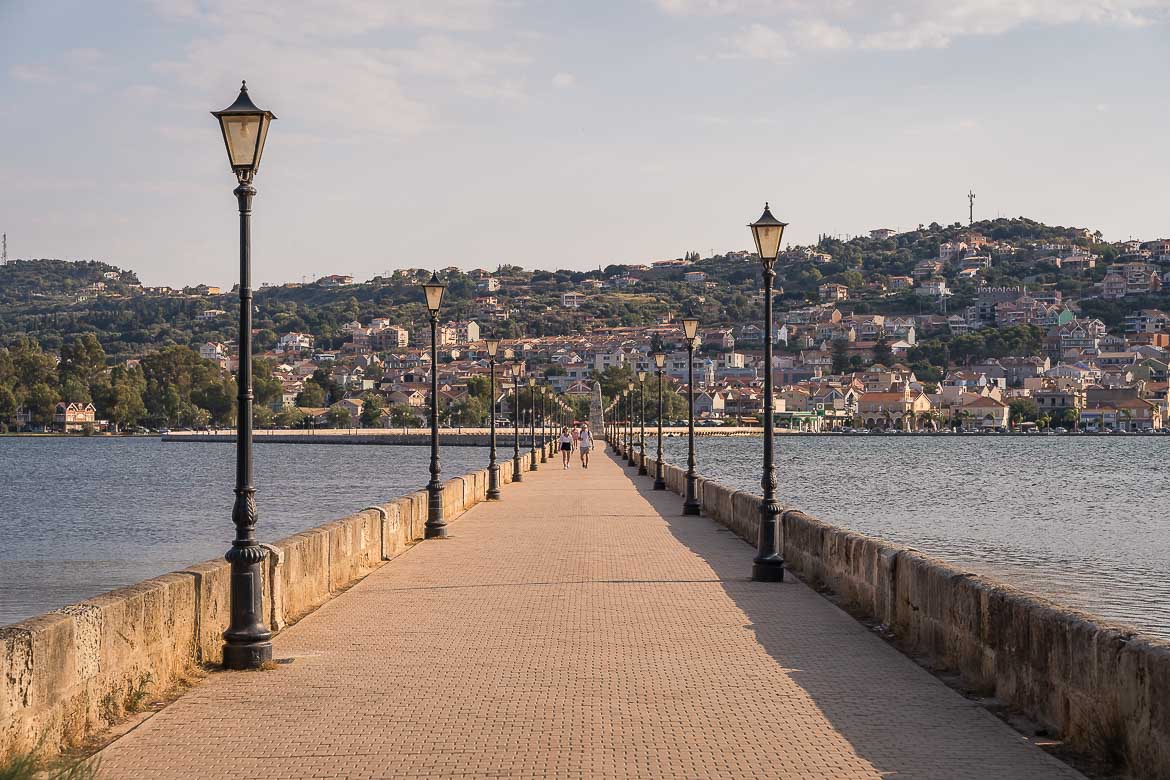
Constructed in 1813 by the Swiss engineer and Kefalonia’s Governor Charles de Bosset, the De Bosset Bridge is the world’s longest stone bridge built over the sea.
The bridge was partially damaged after the 1953 earthquake and closed to vehicles in 2009.
Since 2013, the renovated De Bosset Bridge has been pedestrian-only. It’s ideal for a relaxing long walk with superb views over Koutavos Lagoon and Argostoli Town.
7. Head To an Iconic Lighthouse at Sunset
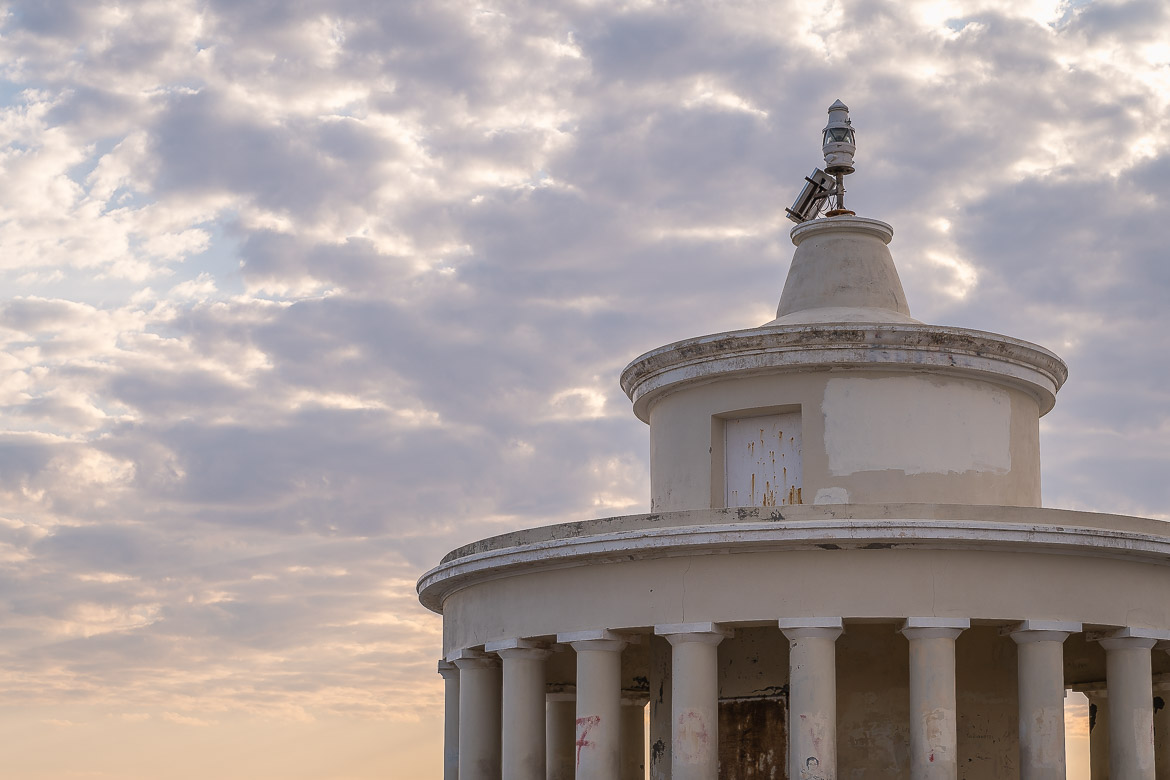
Built on an artificial peninsula, the iconic 19th-century Lighthouse of Agioi Theodoroi is one of the most famous landmarks in Kefalonia.
The Doric-style lighthouse was completely destroyed after the 1953 earthquake and rebuilt according to its original plans.
A short drive from Argostoli, it’s the ultimate romantic place in Kefalonia to enjoy a breathtaking sunset.
Now that you have reached the end of our ultimate travel guide to Kefalonia, we hope it helps you plan your holiday to one of the most remarkable islands in Greece.
We know we’ll never stop going back to Kefalonia and we get the feeling that you’ll want to visit Kefalonia more than once, too. So, make sure you keep this thorough Kefalonia travel guide handy!
WORDS & IMAGES: Katerina
EDITING: Maria