Our website uses affiliate links. If you click through any of these affiliate links in this article to make a purchase, we may earn a small commission at no extra cost to you. As Amazon Associates, we earn from qualifying purchases. Read our Disclosure for more. Thanks for your support!
Budapest is one of the most exciting cities in Central Europe and this Budapest in 4 days itinerary is your ticket to an unforgettable trip to the Hungarian capital.
From its vibrant nightlife and diverse food scene to its extraordinary blend of several architectural styles and unparalleled thermal baths that are among the best in Europe, Budapest has something for everyone.
Although most people consider Budapest the perfect weekend destination, this guide about what to do in Budapest in 4 days will convince you that nothing less than 4 days in Budapest can do this diverse city justice.
Whether it’s your first time in Budapest or you’re planning to revisit the Hungarian capital, this is the only guide you’ll need to plan an unforgettable trip to see Budapest in 4 days.

If you’re considering a trip to Central Europe soon, we’re here to answer all your questions.
Click here to book a 60-minute video call with us or purchase a travel planning bundle that consists of a video call and a Central Europe itinerary, customised to your travel needs and desires.
Learn more about our travel planning services.
Where Is Budapest?
Budapest is the capital city of Hungary. Situated in the northern part of the country, Budapest is near Hungary’s border with Slovakia.
The city of Budapest is divided into two parts. Buda is on the western side and Pest on the eastern side of the Danube River.

How To Get To Budapest
By Air
Budapest is well-connected with direct flights to most European cities. Budapest Airport is a 40-minute drive from the city centre.
An easy way to reach the city centre from the airport is by the 100E Bus. To use the airport bus, you need to buy a ticket that you can purchase on the bus using your bankcard.
A more hassle-free way to get directly to your hotel is to book an airport transfer in advance.
Check out our beginner’s guide to book a flight and find the best deals for your trip to Budapest.
By Train
If you plan to include Budapest in a longer Central Europe itinerary, the train is a comfortable way to traverse Hungary and its neighbouring countries.
Frequent trains connect Budapest to Vienna, Bratislava and Prague. Check out all trains that go to Budapest.
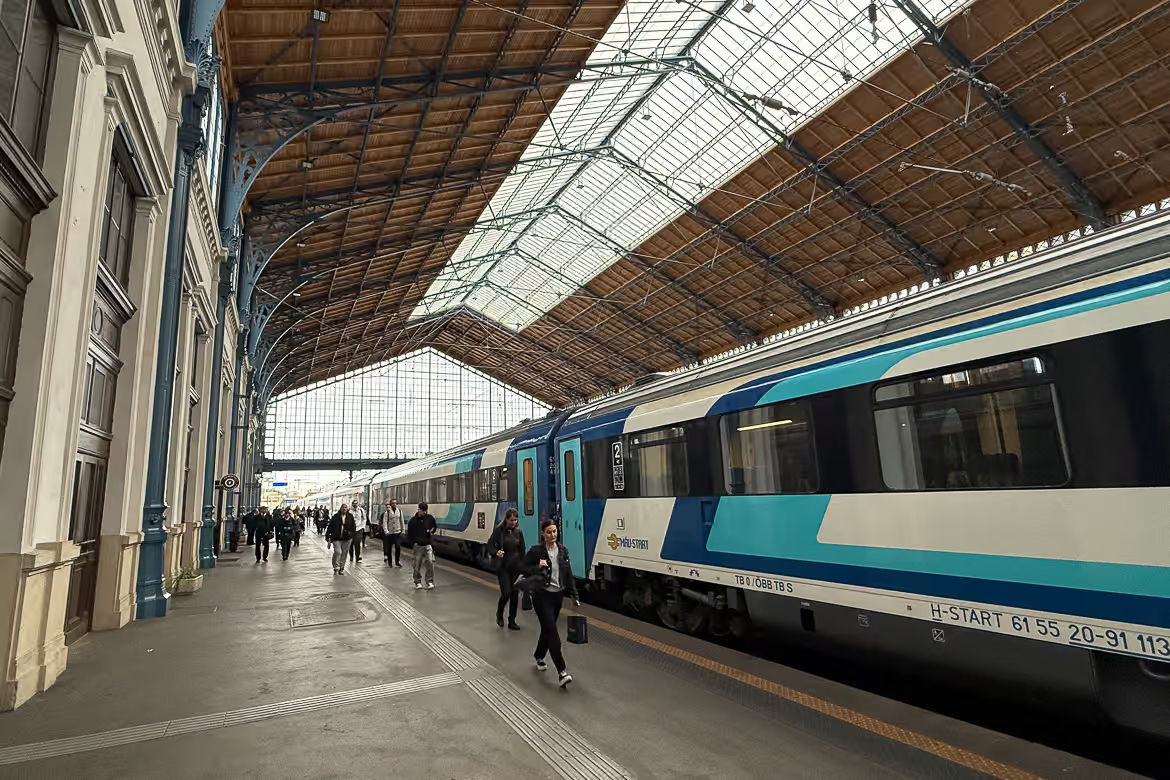
There are three train stations in Budapest: Budapest Keleti Station in the east, Budapest Nyugati Station in the west and Budapest Deli Station in the south.
By Bus
Besides trains, the bus is also a reliable way to reach Budapest from nearby major cities.
Budapest is only a three-hour bus ride from Vienna and Bratislava if you choose one of the bus routes operating across Central Europe.
On our second time to Budapest, we took a bus from Belgrade for a 6-hour smooth bus ride.
Nepliget Bus Station in Budapest is a bit outside the city centre. However, there is a metro station right next to the main bus station for easy access to the city centre.
Where To Stay in Budapest
As we already mentioned, Budapest is split into two parts: Buda and Pest.
Pest is the best area to stay in Budapest for sightseeing. Moreover, Pest is more lively and vibrant at night with a wider variety of options for food and drinks than Buda.
The 4-star Prestige Hotel boasts an excellent location in Pest within walking distance of the main attractions. This luxury hotel offers spacious rooms for a comfortable stay in the heart of Budapest.
For our second trip to Budapest, we chose Collect Residence, a modern boutique hotel with serviced apartments.
Although a bit far from the Danube River and the main sights, this hotel’s location near Andrassy Avenue offers easy access to the city centre by public transportation.
Also, it’s near the Nyugati Train Station, which was very convenient for us, as we wanted to continue our journey to Prague by train.
Watch our YouTube video about what to do in Budapest in 3+1 days
Travel Resources To Help You Plan Your Trip To Budapest
Budapest in 4 Days: The Perfect Itinerary For First-Timers & Repeat Visitors Alike
Day 1: Explore The Buda Side of Budapest
On your first of four days in Budapest, explore Buda. This is the part of the city that’s situated on the western bank of the Danube River.
Buda was the historic capital of the Kingdom of Hungary since 1000, when its first king, Stephen I, was coronated. In 1873, Buda, Obuda and Pest were unified and Budapest, the capital of Hungary, was born.

Szechenyi Chain Bridge
Head to Buda by crossing the iconic Szechenyi Chain Bridge, one of the eight bridges that link Buda and Pest.
Its unofficial name is Chain Bridge. Istvan Szechenyi, a prominent Hungarian politician often referred to as The Greatest Hungarian, commissioned the construction of the bridge.
The Szechenyi Chain Bridge opened in 1849. Back then, it was the first permanent stone bridge in Budapest.
During the Second World War, an explosion destroyed the bridge and only its pillars remained intact. The bridge was reconstructed in 1949.

Buda Castle Funicular
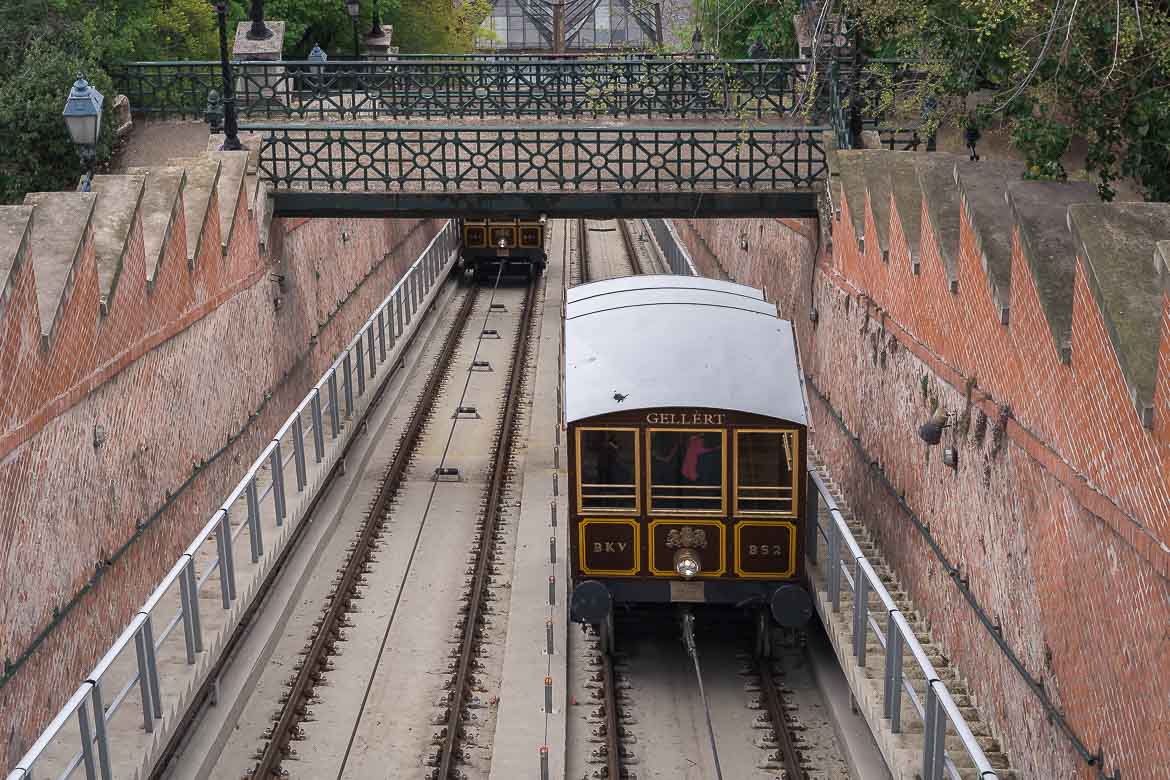
One of the best ways to reach the top of Buda Hill is to take the Buda Castle Funicular near Chain Bridge.
Before hopping on the funicular, don’t miss the Zero Kilometre Stone of Budapest, which is located near the lower station of the Buda Castle Funicular.
The historic Buda Castle Funicular has been operating since 1870. The ride to the top of Castle Hill takes less than two minutes, offering amazing views of Chain Bridge and the Danube River along the way.
Buda Castle
Once at the top of Castle Hill, start your sightseeing from Buda Castle, a UNESCO World Heritage Site, which was the historic palace complex back in the day.
Nowadays, it’s home to the Hungarian National Gallery and the Budapest History Museum.
Another thing to see in Buda Castle is the so-called Trevi Fountain of Budapest. The latter’s real name is Matthias Fountain and you can see it inside Hunyadi Court, a beautiful terrace in the heart of Buda Castle.
The huge historic Baroque Palace was built in the 18th century. As happened with Chain Bridge, the Palace was also ruined during the Second World War.
Today, the Presidential Palace is housed in another building, right next to Buda Castle.
If you want to explore Buda Castle from a different perspective, join this tour of its network of underground tunnels and caves.
Alternatively, you can delve into Budapest’s rich history during a tour of the Buda Castle grounds in the company of a historian.

Fisherman’s Bastion
After visiting Buda Castle, it’s time to head to the most popular attraction in Budapest.
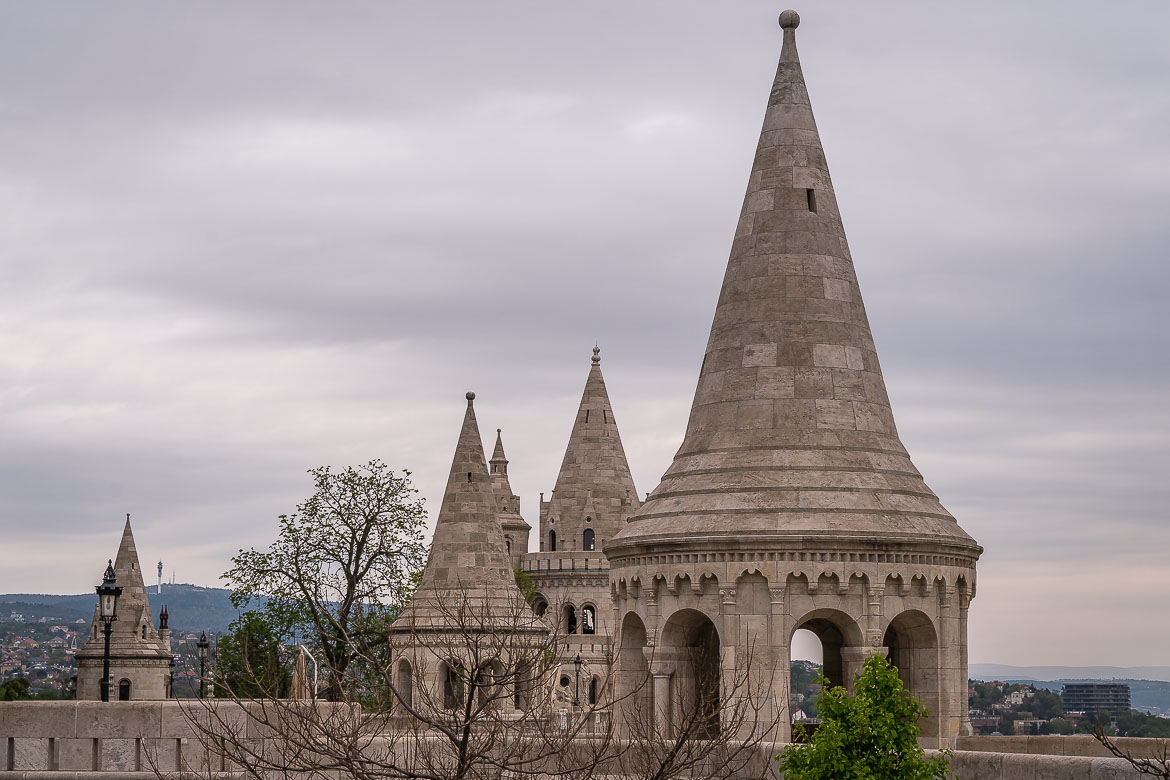
Undoubtedly the most photogenic spot in the city, Fisherman’s Bastion offers splendid uninterrupted views of the Danube River, Pest and, of course, the iconic Hungarian Parliament building from its terraces.
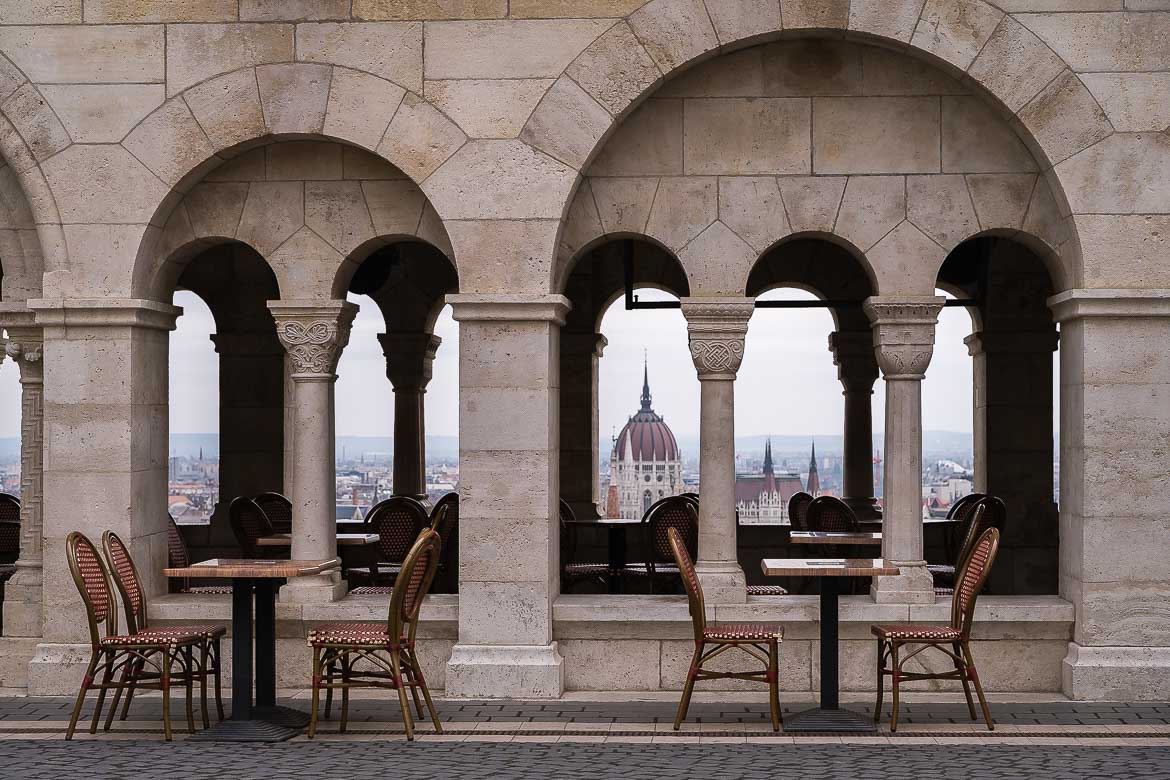
The bastion’s seven towers represent the seven tribes that founded Hungary at the end of the 9th century.
Its name comes from Fishtown, a settlement along the Danube River, where the fishermen’s guild used to live in the Middle Ages.
Most of the terraces are free to visit. That said, you have to pay a small fee to access the top terraces. Expect crowds, as Fisherman’s Bastion is the most visited attraction in Budapest.
Matthias Church
Right next to Fisherman’s Bastion is the impressive Matthias Church. Colourful tiles and intricate details adorn its imposing Gothic-style exterior.
In its elaborate interior, you can marvel at gorgeous frescoes and eye-catching stained-glass windows.
Two of Hungary’s kings were crowned in Matthias Church. Nowadays, it’s a magnificent venue for concerts and celebrations.
You can check out the events calendar on the official website if you want to enjoy a unique experience like this.

Buda Tower
Your next stop is Buda Tower. It used to be the bell tower of Mary Magdalene Church, which was built between the 13th and 15th centuries.
Nowadays, the 130-meter-high Buda Tower is the only surviving part of the church. It offers panoramic views of the Castle District, the Hungarian Parliament and Matthias Church.

Hospital in The Rock
After a leisurely walk through the quaint streets of Castle Hill, admiring the gorgeous architecture as you go, your next stop is the Hospital in The Rock.
On your way there, make sure you walk along the gorgeous Toth Arpad promenade.
In the spring, this street feels like a painting coming to life with its enchanting cherry blossoms. To reach the Hospital in The Rock, go down the nostalgic wooden staircase.
The Hospital in the Rock is a bunker constructed below the Buda Castle district.
Initially, the existing tunnel network was converted into an emergency hospital for treating civilians and soldiers during the Second World War and the Siege of Budapest between 1944 and 1945.
During the Hungarian Revolution in 1956, it was used as a bomb shelter and a prison. Later, it served as a bunker in the event of a nuclear attack during the Cold War.
You can visit the Hospital in the Rock only with a tour guide and photos are not allowed.

Gellert Baths
The perfect way to end your first day in Budapest is to unwind at the stunning Gellert Baths.
Built in Art Nouveau style, the Gellert Baths complex is the perfect place to spend your evening in the most relaxing way. For more details, you can check our guide to the best spas in Budapest.
Book your tickets to the Gellert Baths here.
Day 2: Explore The Pest Side of Budapest (Part I)
Continue your Budapest itinerary by exploring Pest, the part of Budapest that lies east of the Danube River. Pest was an independent city until the unification of Buda, Obuda and Pest in 1873.
Hungarian Parliament Building
Start your second day in Budapest at the city’s most popular attraction, the Hungarian Parliament building.
After Budapest became the capital of Hungary in 1873, it was time for the country to acquire a new Parliament building.
Completed in 1904 in Neo-Gothic style by the architect Imre Steindl, the Hungarian Parliament building is the third-largest Parliament building in the world.
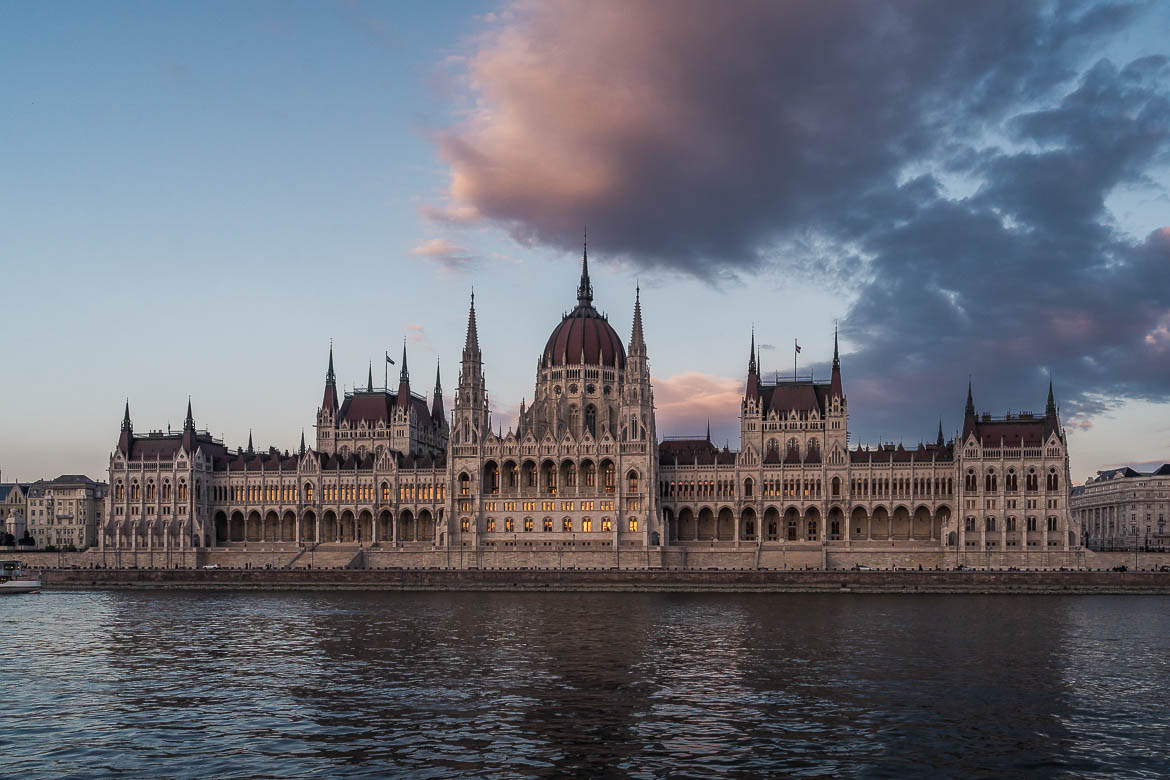
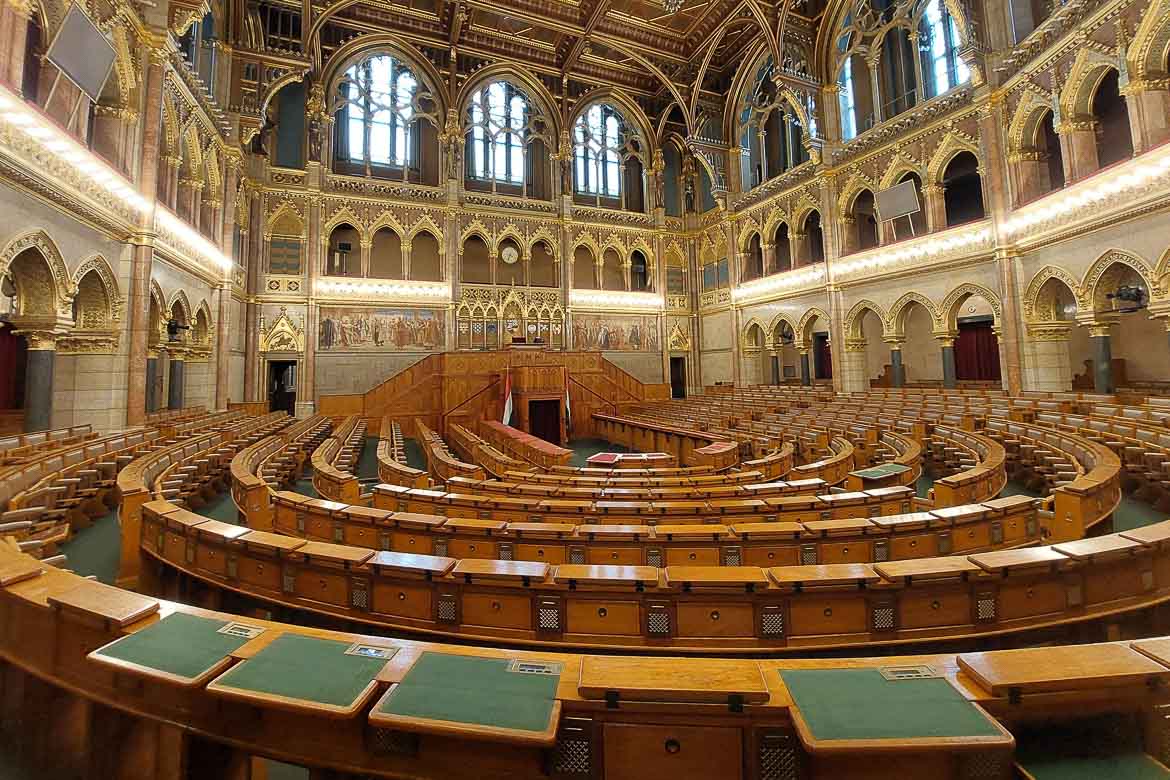
The building’s intricate exterior is absolutely impressive. Yet, nothing can prepare you for the lavish interior with its golden details.
You can visit the interior only on a guided tour. We recommend booking a tour via the official website way in advance to make sure you find a free slot in English at your preferred time and date.
Alternatively, you can book a tour that combines a visit to the Hungarian Parliament building with a walking tour of the city’s highlights.
Shoes on The Danube Bank
Close to the Hungarian Parliament building, the Shoes on The Danube Bank, a unique bronze memorial, awaits.
This monument commemorates the mass murder of Jewish people by Hungarian Fascists, who were members of the infamous Arrow Cross Party.
The victims were ordered to stand on the edge of the riverbank and take their shoes off before the fascists would execute them.
You see, shoes at that time were extremely valuable. The fascists preferred to resell them rather than waste them as easily as they took the lives of so many innocent people.

Danube Promenade
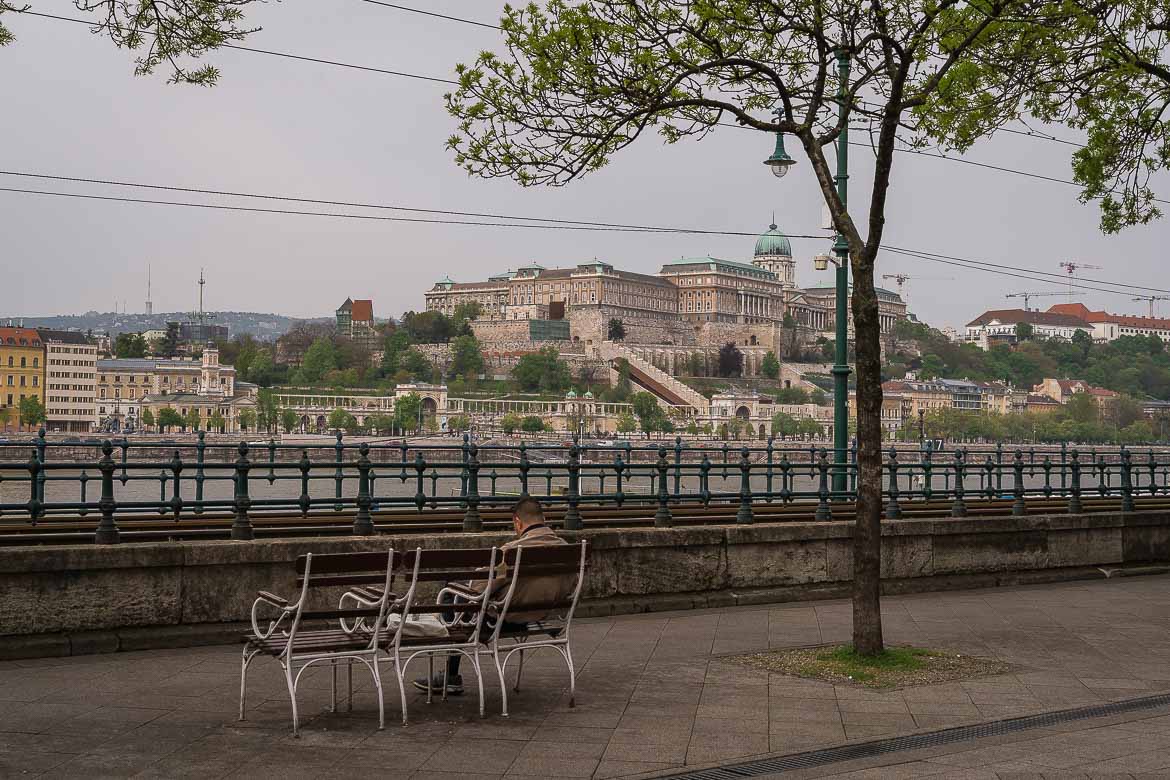
From the Shoes on The Danube Bank monument, continue your stroll along the Danube Promenade for splendid views of the Danube River and Castle Hill.
Along your way, you will come across several bronze statues, such as the Little Princess Statue and the Statue of Painter Ignac Roskovics.
If you don’t feel like walking, you can take tram number 2 for a scenic ride along the Danube River.
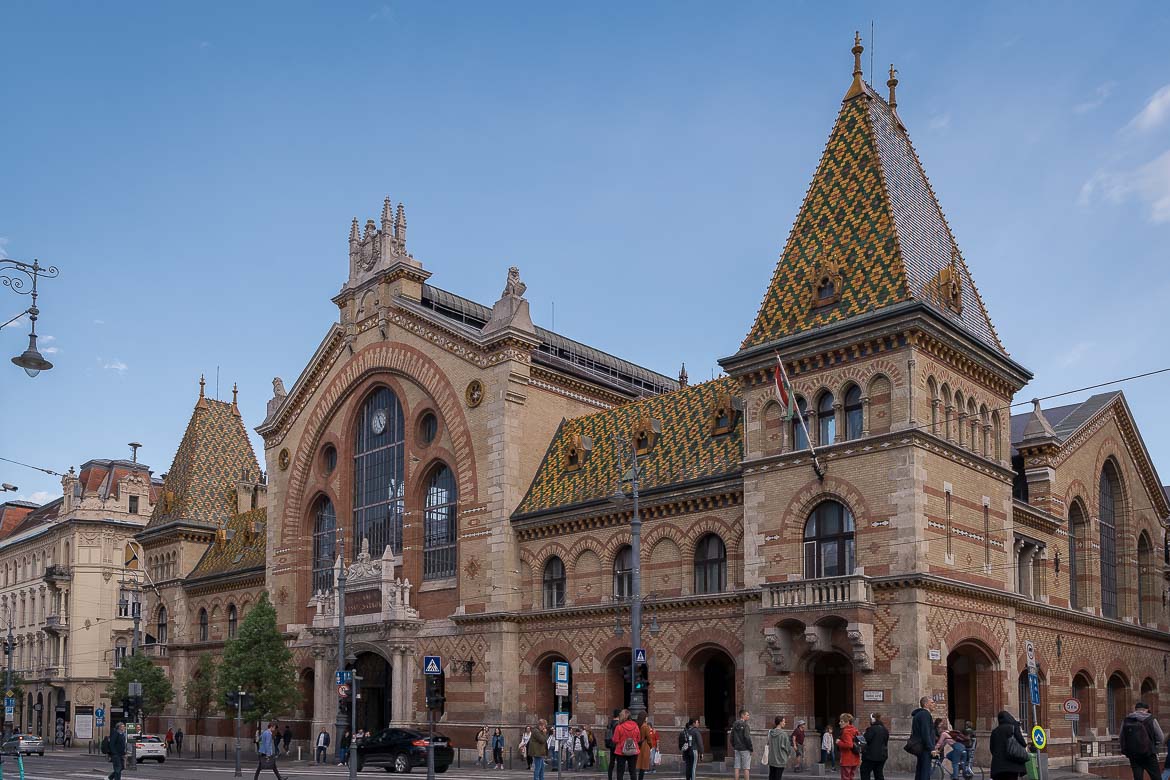
Great Market Hall
A stone’s throw from Liberty Bridge, the Great Market Hall is a 10,000-square-metre covered market. It was built in the end of the 19th century during a flourishing period for Budapest.
Sadly, the market was seriously damaged during the Second World War. It re-opened in 1997, after a full renovation.

The Central Market Hall is a great place to buy local products, like paprika and palinka, a strong traditional spirit made of fruit, and souvenirs such as Hungarian Secret Boxes, Rubik’s Cubes, handmade lace and embroidery.
Apart from the shopping area at its main hall on the ground floor, the market is also one of the best places in Budapest to grab a quick lunch at one of the upper floor’s food stalls and restaurants.
Jewish Quarter: Dohany Street Synagogue & Ruin Pubs
Spend your evening at the vibrant Jewish Quarter, home to three synagogues and the famous ruin bars.
After the Buda Jewish Quarter was destroyed, Jews started to settle in Pest in the late 18th century. They built a thriving community there that was almost 25% of Budapest’s population by the early 20th century.
Similar to what happened to other Jewish communities in Europe, the Budapest Jewish Quarter was converted into a ghetto in November 1944 by the Hungarian Fascists.
The Soviets liberated the Jewish ghetto two months later. Yet, thousands of Hungarian Jews had already died of diseases or had been sent to concentration camps.
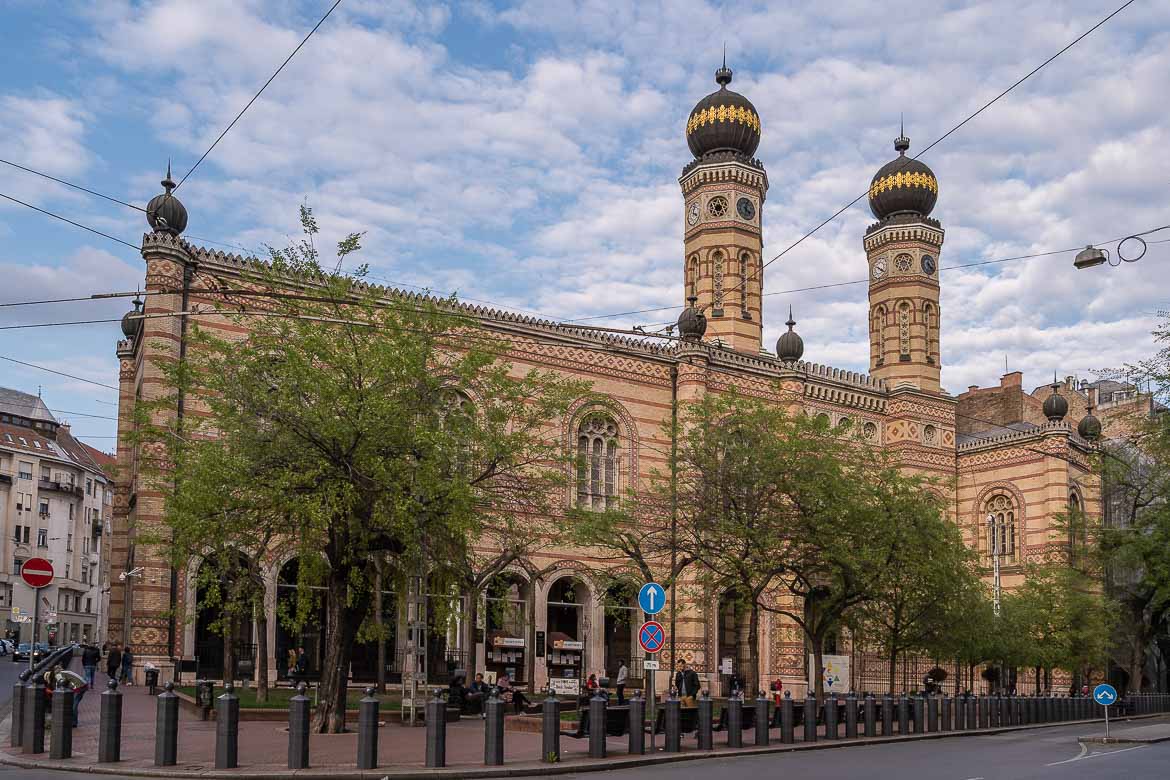
The three synagogues in the Jewish Quarter are a testament to the grandeur of the Jewish community. Among them, the Dohany Street Synagogue is the largest synagogue in Europe.
Built in Moorish style, the 19th-century Great Synagogue in Dohany Street is the only synagogue that has organ pipes and a cemetery.
The other two synagogues are the Kazinczy Street Orthodox Synagogue and the Rumbach Street Synagogue.
If you’re interested in Budapest’s Jewish history, this Jewish Heritage walking tour includes visits to the Hungarian Jewish Museum and the Dohany Street Synagogue.
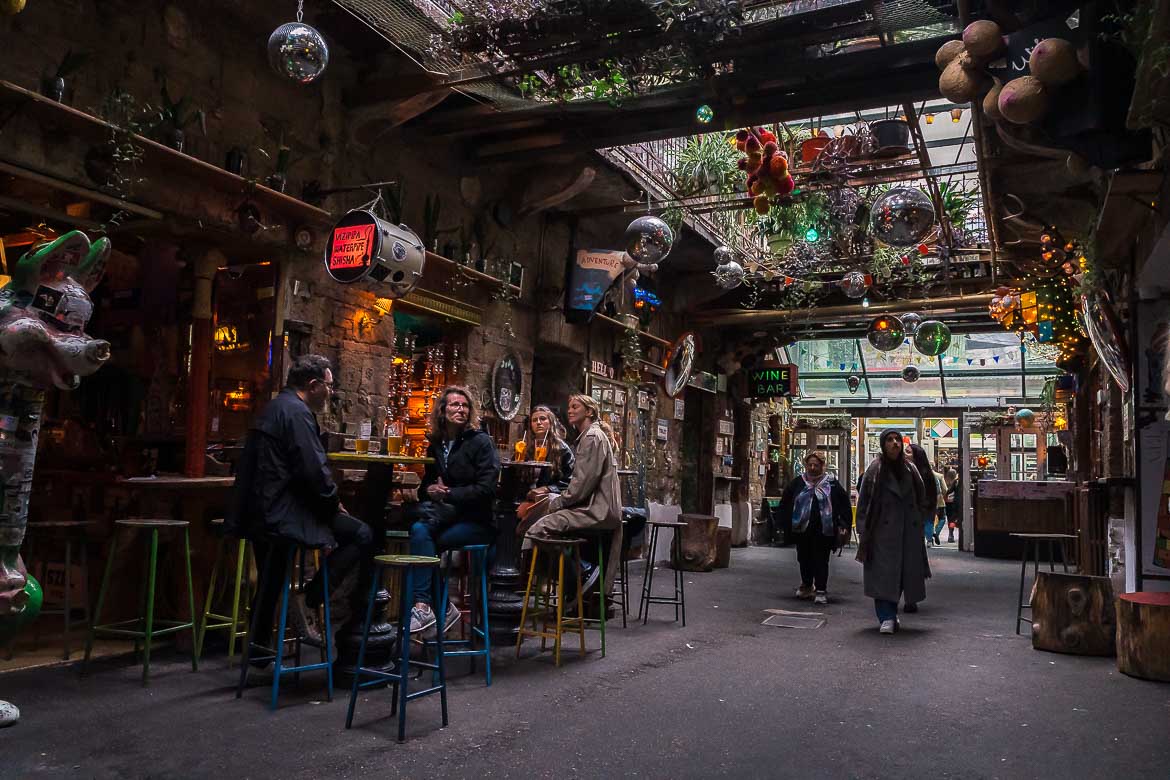
Nowadays, apart from the treasures of the city’s Jewish heritage, the Jewish Quarter is popular for its quirky ruin pubs, too.
Housed in abandoned pre-war buildings, ruin bars have defined Budapest’s nightlife scene over the last few decades.
Szimpla Kert was the first ruin pub to open in the city of Budapest and it’s still one of the most popular bars in Budapest.
Day 3: Explore The Pest Side of Budapest (Part II)
Pest is full of wonders and one day isn’t enough to enjoy everything it has to offer. Therefore, your third day in Budapest should be spent in this part of the city as well.
Saint Stephen’s Basilica
Start your third of 4 days in Budapest at Saint Stephen’s Basilica, one of the most important churches in Budapest.
Opened in the beginning of the 20th century, the largest church in Budapest is dedicated to Saint Stephen in honour of King Stephen I, the first king of Hungary who founded the country in 1000.
The basilica’s interior is decorated with gorgeous mosaics, frescoes and statues. The highlight of the church, though, is the Holy Right, King Stephen’s right hand, which is kept in the church’s reliquary.
Saint Stephen’s Basilica is built in Neo-Classical style. It stands at a height of 96 metres, following the country’s height restriction imposed on all constructions, according to which no building can be higher than 96 metres.
That’s because 96 is a symbolic number in Hungary. It was in 896 when the first Hungarians – the Magyars – settled in Hungary’s territory.
The Hungarian Parliament building stands at the same height, symbolising that religion and government are equally important to the country.
Saint Stephen’s Basilica is popular for the best views of Budapest it offers from its dome. To reach the lookout at the top of the dome, you have to climb 364 steps. Thankfully, there’s a lift.
A few steps from Saint Stephen’s Basilica, don’t forget to rub the shiny belly of the Policeman Statue. Doing so is supposed to bring good luck.
But it may take a while for good luck to reach you. While you wait, why not taste the famous rose-shaped ice cream at Gelarto Rosa near Saint Stephen’s Basilica?

Pit Stop at Budapest’s Cat Café
Make a quick pit stop for laid-back moments at the city’s Cat Café.
Home to several lovely kitties, this café can easily qualify as the most relaxing in the city because you can enjoy a cup of coffee or a hot beverage while playing with the furry little angels that reside there.
Make sure you book a table as this place is insanely popular. How could it not be?

Oldest Metro Line in Mainland Europe
We don’t normally recommend using the metro while travelling. We believe that by taking the metro, you miss out on a city’s views.
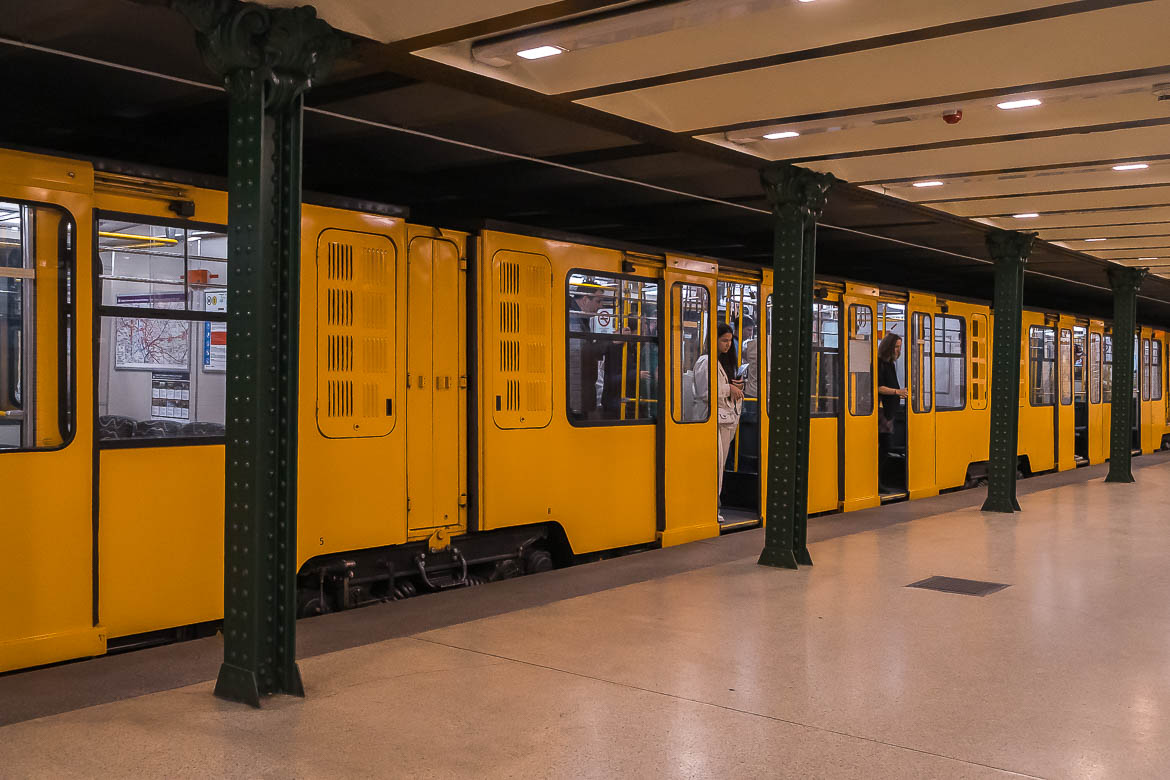
Yet, in Budapest’s case, we will make an exception. Riding Metro Line M1 is one of the best things to do in Budapest.
Opened in 1896, a thousand years after the Magyars arrived in Hungary, the Budapest Metro is the oldest in continental Europe.
The Small Underground, as locals affectionately call it, runs only one metre below Andrassy Avenue, with numerous stops at significant landmarks. Its tiled stations and yellow carriages still retain an old-fashioned charm.
If you’re a railway lover, there is an underground museum where you can learn everything about the history of the Budapest Metro.
Heroes’ Square
Take Metro Line M1 from your closest station and head to Heroes’ Square.
Situated at one end of Andrassy Avenue, Heroes’ Square is one of Budapest’s main squares and the entry point to the famed City Park.
Heroes’ Square is home to the iconic Millennium Monument, one of Budapest’s most significant landmarks.
1896 was the year when important buildings and monuments were constructed to commemorate the millennium anniversary of the Magyars’ arrival in 896. One of these was the Millennium Monument.
Completed in 1906, the monument features the seven leaders of the Magyars and other Hungarian heroes.
A column and two colonnades form part of the monument. The statues on top of the colonnades represent historic figures of Hungary.
After the monument was destroyed in World War II, the statues on the left colonnade replaced the Habsburg statues that had been standing there before.
Heroes’ Square is where most political events take place. Among them, the reburial of Imre Nagy in 1989 stands out. Imre Nagy was the leader of the Hungarian Revolution of 1956. He was then executed by the Soviets.
Right on Heroes’ Square, you can visit the Museum of Fine Arts and the Palace of Art.
The nearby City Park is home to the lakeside Vajdahunyad Castle, a fairytale-like castle, which is a copy of Corvin Castle, one of the best castles in Transylvania, Romania.

Szechenyi Baths
In our humble opinion, one of the best reasons to visit Budapest is to immerse yourselves in the country’s spa culture.
Budapest is home to several spa complexes that use water from the city’s thermal springs. Among our favourite thermal baths in Budapest are the Szechenyi, Rudas and Gellert Baths we mentioned earlier in this guide.
The Szechenyi Baths complex is the most famous spa in Budapest and a must-visit for anyone visiting Budapest.

Opened in 1913, the Neo-Baroque Szechenyi Thermal Baths offer indoor pools, saunas, massage therapies and three fantastic outdoor pools. One of them features a built-in whirlpool for endless fun moments.
Book your tickets for a full spa day at Szechenyi Baths or a late-night spa party.
For more information about the top 3 Budapest spas and what to know before you visit them, watch our YouTube video.
Andrassy Avenue
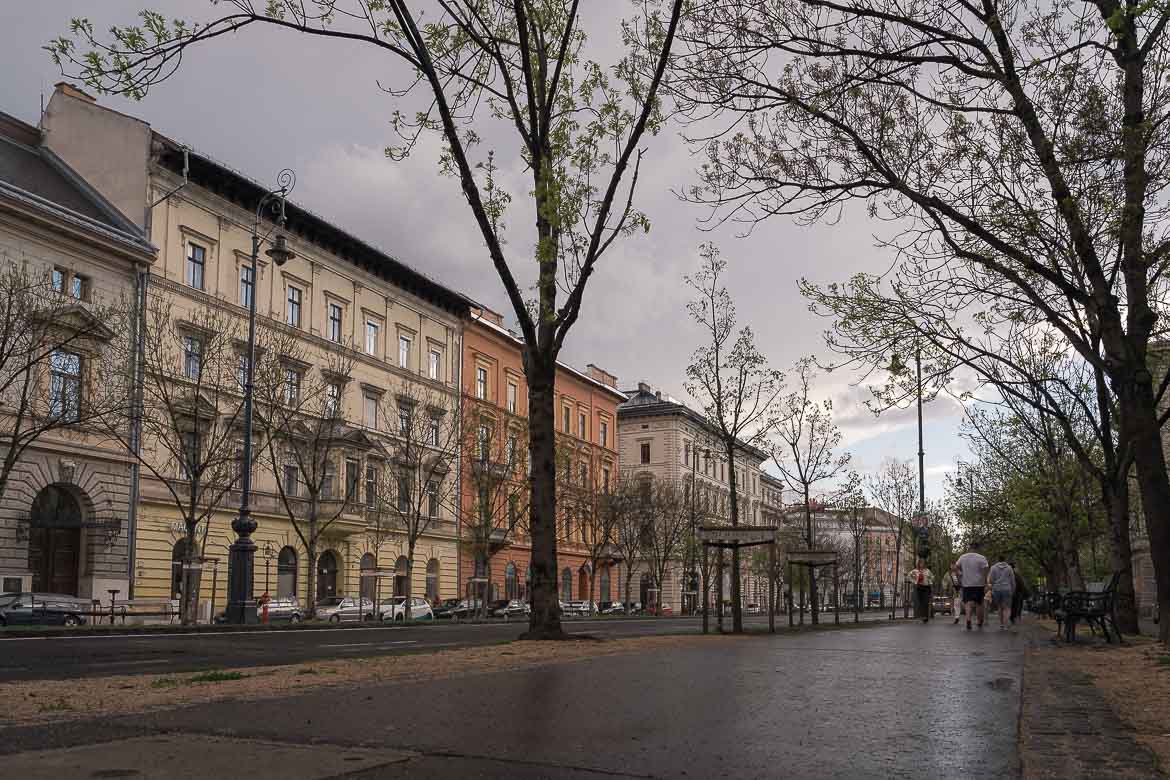
All relaxed and reinvigorated, head back to the city centre by walking along the aristocratic Andrassy Avenue. Inaugurated in 1876, the boulevard was named after a former Hungarian Prime Minister.
Andrassy Avenue is the main shopping street in Budapest. It’s lined with magnificent mansions and historic buildings that now house museums and embassies.
There are a lot of notable spots along or near Andrassy Avenue, such as the Hungarian State Opera House.
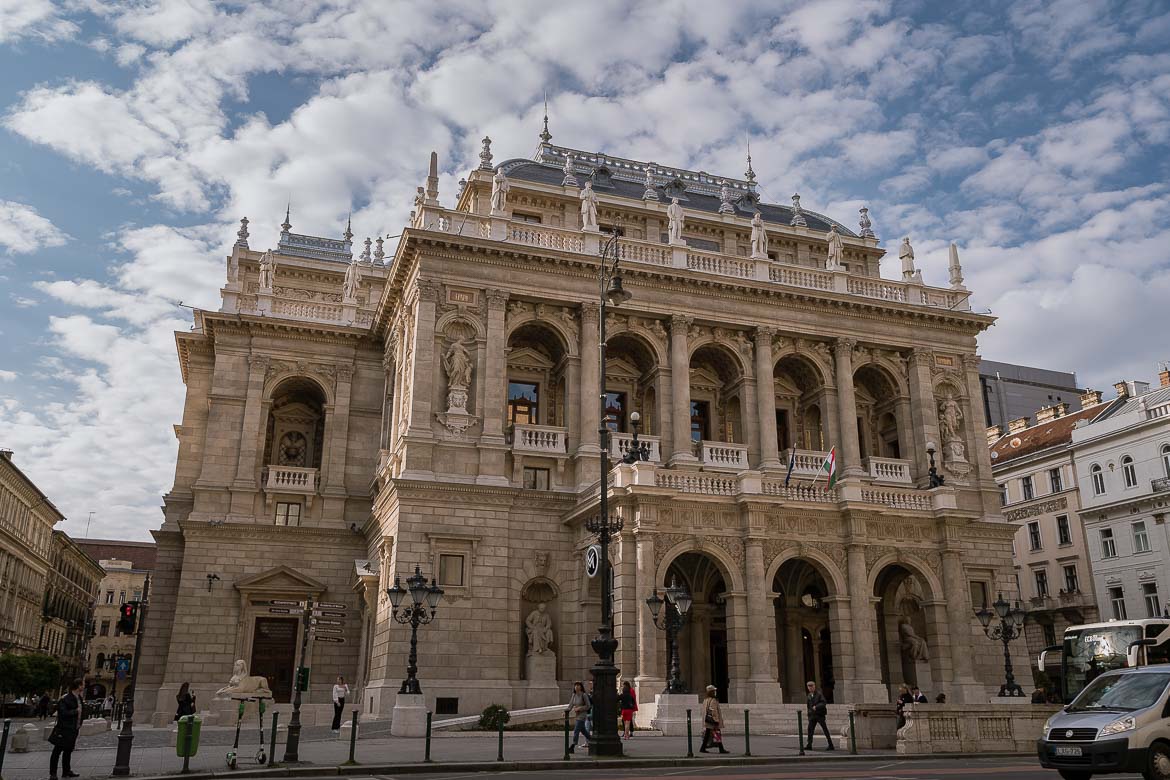
Near Andrassy Avenue, there are two amazing places for photography lovers.
The House of Hungarian Photographers, which is the former studio and home of the Imperial and Royal Court photographer, Mai Mano, and the Robert Capa Contemporary Photography Centre.
Danube River Cruise
A romantic sightseeing cruise is the best way to end your third day in Budapest as now the scenery feels so familiar, allowing you to recognise all the major sites.
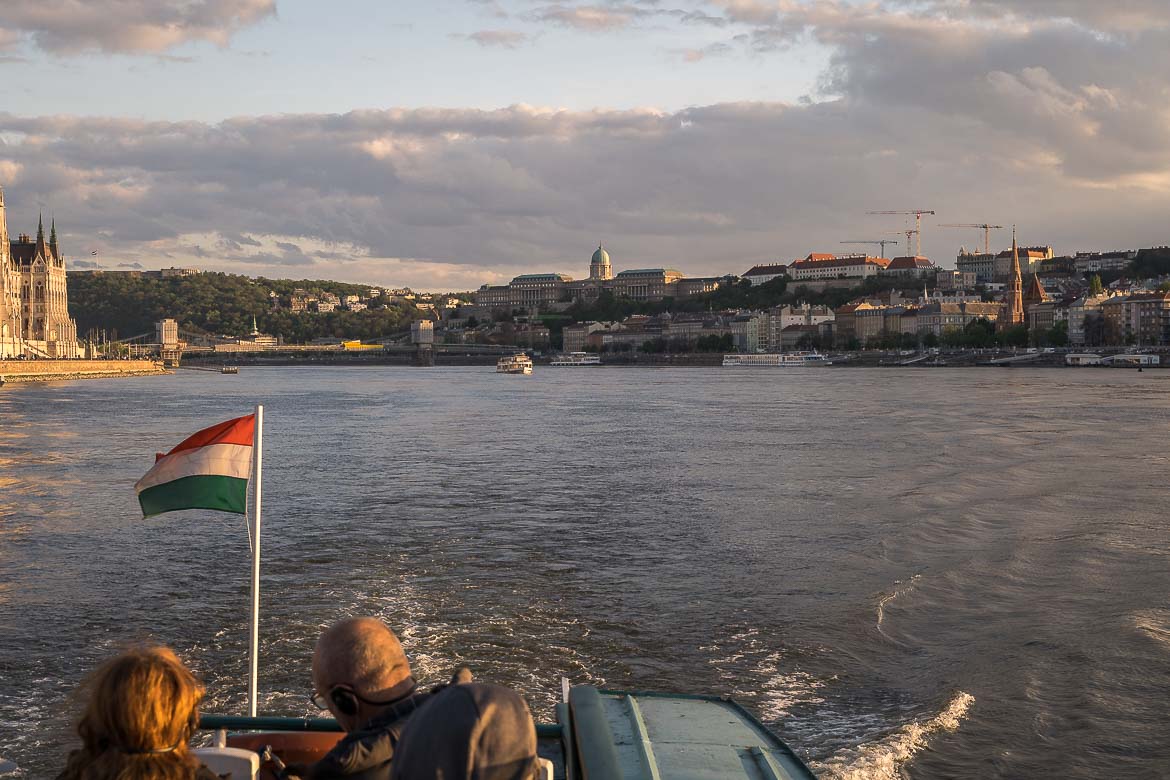
Almost every cruise along the Danube River offers a welcome drink on board. The best time to enjoy the cruise is at sunset. It is then that Budapest’s skyline is dyed by the splendid colours of the golden hour.
During our trip to Budapest, we enjoyed a fabulous river cruise along the Danube. Book the same cruise here.
Day 4: Beyond Budapest’s City Centre
After having seen the best of Budapest already, why not spend your last day in Budapest beyond the city centre?
Aquincum
Take the public bus to start your day in Obuda and, more specifically, Aquincum, an ancient Roman city that was part of the Roman Empire.
At first, a Celtic tribe settled in the area. Then, the Romans occupied Aquincum, turning it into a city which later became the capital of the Roman Province of Pannonia Inferior.
As you wander around the ruins of the ancient city, you can learn about the lifestyle and the achievements of the Roman Empire, such as the central heating system they developed for houses and public baths.

Szentendre
Take the H5 train from the railway station near Aquincum and spend the rest of your fourth day in Budapest in Szentendre, a picturesque riverside town north of Budapest.
Once you arrive at the train station in Szentendre, don’t let the somewhat bleak surroundings disappoint you. The good part starts once you cross the bridge that leads to the utterly charming Old Town.
Cobbled streets, colourful houses, several interesting museums compared to the town’s size and many restaurants and souvenir shops make Szentendre an exciting yet super easy day or half-day trip from Budapest.

While in Szentendre, take the short uphill path to Saint John the Baptist Parish Church to enjoy panoramic views of the town.
If you ask us, our favourite part of Szentendre is the riverside walk along the Danube and the café right on the riverfront, with its sun loungers and easy-going vibes.
The train ride back to Budapest takes about 40 minutes.
Yet, another great way to explore Szentedre and other gorgeous places along the Danube River is by joining this relaxing boat tour, which is available during the summer.

We always say that slow travel is the best way to travel. The more time you spend in any destination, the better it is for your appreciation of the place and its people but also for the local economy and community.
Slow travel is sustainable travel at its best and this is why we believe that seeing Budapest in 4 days rather than a weekend helps you appreciate this beautiful city and enjoy it to the fullest.
WORDS & IMAGES: Katerina
EDITING: Maria