Our website uses affiliate links. If you click through any of these affiliate links in this article to make a purchase, we may earn a small commission at no extra cost to you. As Amazon Associates, we earn from qualifying purchases. Read our Disclosure for more. Thanks for your support!
If you’re visiting Italy soon and wondering how to eat vegetarian in Rome, this guide to the best vegetarian food in Rome is here to prove that you don’t need meat to appreciate the deliciousness of Roman cuisine.
During the last 15 years, we’ve visited Rome more times than we can count. Each time, our quest was to try a new restaurant, osteria or pizzeria or sample a meat-free dish we’d never tried before. It turns out that Rome never gets boring for vegetarians.
Here’s our well-researched guide to the best vegetarian food in Rome; and, yes, we did try each and every dish on this list. It was a tough job (not), but someone had to do it.
Vegetarian Food in Rome at a Glance
If you’re considering a trip to our beloved Italy soon, we’re here to answer all your questions.
Click here to book a 60-minute video call with us or purchase a travel planning bundle that consists of a video call and an Italy itinerary, customised to your travel needs and desires.
Learn more about our travel planning services.
Watch Our YouTube Video About How To Eat Vegetarian in Rome
A Quick Survival Guide To Italy’s Multi-Course Meal Structure
Proper dining in Italy is an unhurried, deeply social event, meant to last for a few hours, allowing enough time for people to catch up and connect. As such, a typical Italian meal consists of several courses and here’s how these work for vegetarians:
- Aperitivo: A pre-dinner drink (for example, an Aperol Spritz or a glass of Prosecco) with small nibbles, like crisps, olives or small pieces of pizza, usually enjoyed at a bar rather than the restaurant itself.
- Antipasti: The appetisers, things like grilled or fried vegetables.
- Primo: The first course, almost always a pasta dish.
- Secondo: The main course, which is a meat or fish dish. Not all restaurants offer vegetarian secondi per se, but sometimes, an appetiser can double as a secondo. Most of the time, though, you won’t even need a secondo. Appetisers, a pasta dish and contorni are more than enough to keep you full and happy.
- Contorni: Side dishes, like boiled greens, oven-baked potatoes, etc., all of which are almost always vegan.
- Formaggi & Frutta: Cheese and fruit. Not very common nowadays.
- Dolce: Dessert.
- Caffé: If you want to do it like the locals, an espresso is mandatory after a full meal.
- Digestivo: A glass of limoncello or other digestive liqueur to wrap up a full meal in the best way.
Some of these courses are skipped in everyday life, reserved only for special occasions and celebrations. Of course, you can mix and match any of the above; you won’t be frowned upon.
The Best Vegetarian Food in Rome – Zero Meat, 100% Flavour
From classic pasta staples to centuries-old plant-based dishes to mouthwatering sweet treats, the list of delicious meat-free things to eat in Rome might not be very long, but it guarantees a unique culinary journey in the Italian capital.
1. Cacio e Pepe
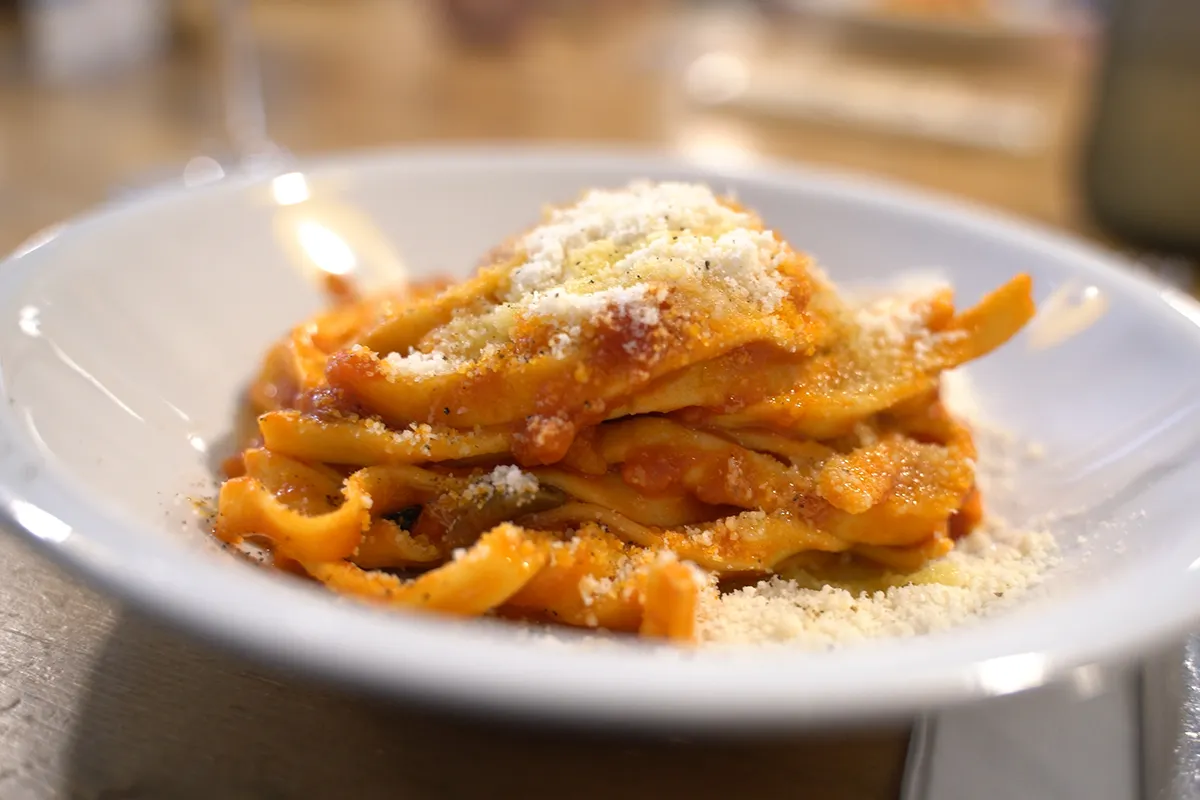
Roman cuisine is famous for its four iconic pasta dishes: Carbonara, Amatriciana, Pasta alla Gricia and Cacio e Pepe. Among the four, the latter is the only traditionally meat-free pasta in Rome.
If you think that this takes away any of its flavour, though, think again. Cacio e Pepe is the richest and most delicious dish you can try from this list of the best vegetarian food in Rome.
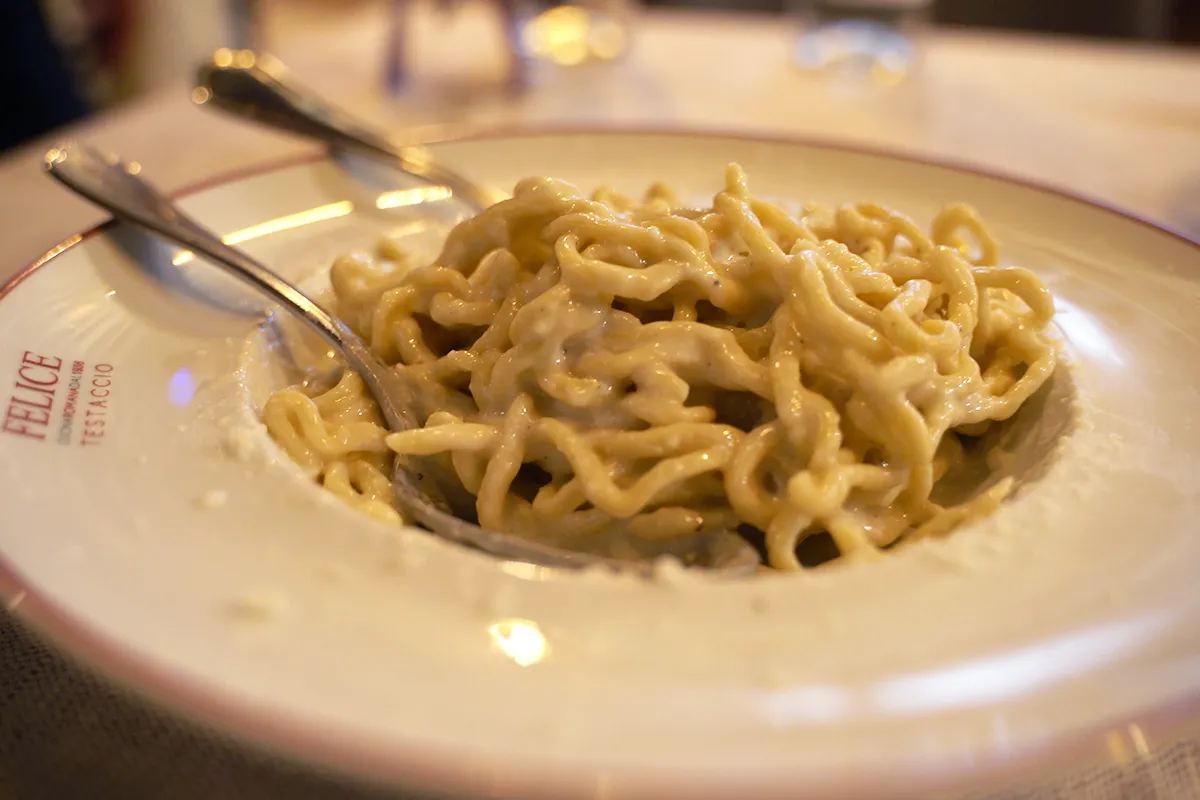
Made of just three ingredients (handmade pasta, top-quality Pecorino Romano cheese and freshly ground black pepper), Cacio e Pepe is the epitome of simplicity. When done right, this might just be the most delectable pasta dish in Italy.
Hands down, the best place to try Cacio e Pepe in Rome is Felice a Testaccio, a traditional Roman restaurant locals swear by.
Lately, though, it’s also popular with visitors, which means you have to book a table to ensure availability. Although we’re not great fans of advance reservations, in this case, we strongly recommend it. You simply can’t risk missing out on tasting this specific Cacio e Pepe.
2. Vegetarian Pasta alla Carbonara
On the other hand, Pasta alla Carbonara, probably the most famous Roman pasta, isn’t meat-free. One of its main ingredients is guanciale, which is salt-cured pork cheek.
However, these days, you can find vegetarian takes on the classic Carbonara or, at least, similar dishes that hint at the traditional Pasta alla Carbonara.
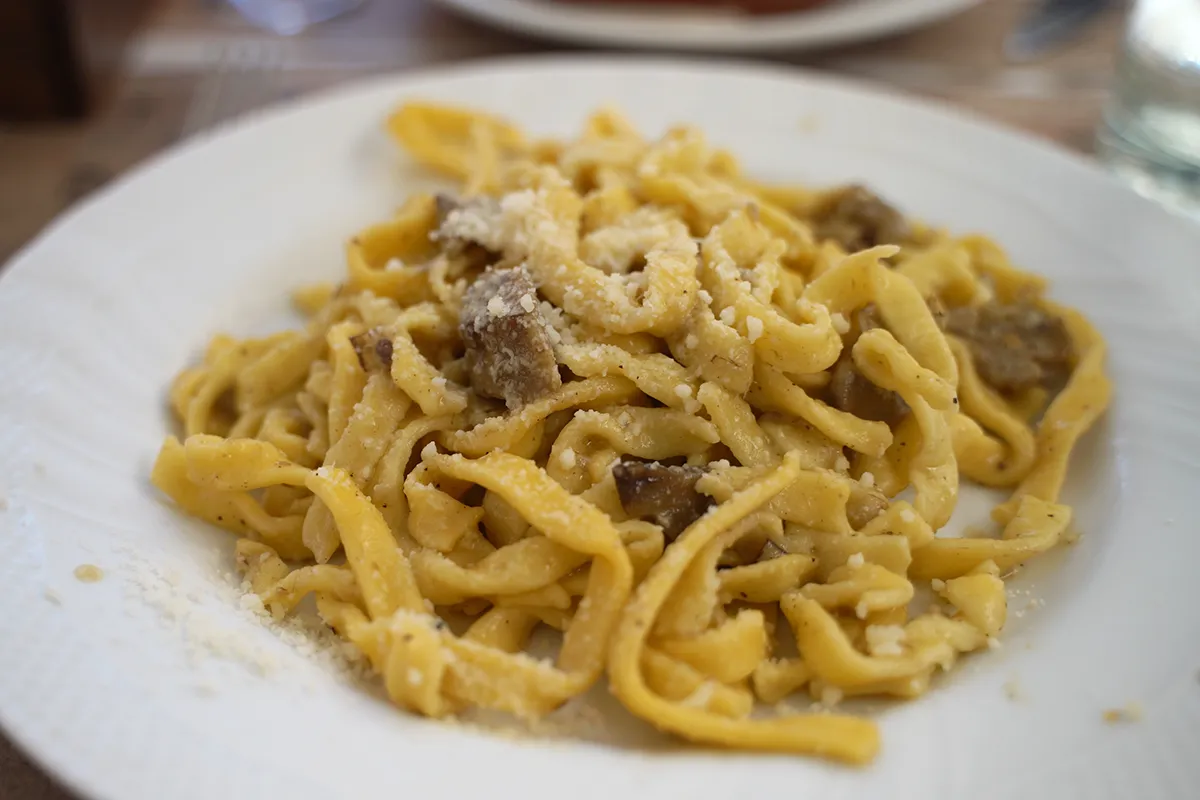
For instance, we tried pasta with artichokes at Nonna Betta and it tasted vaguely like a proper Carbonara although it had neither guanciale nor eggs.
Mind you, rarely will you find the words Vegetarian Carbonara spelt out on a menu. Romans and Italians in general take great pride in their traditional recipes and wouldn’t easily call a pasta dish Carbonara if it’s not a “real” Carbonara.
One exception is Origano Campo de’ Fiori, a restaurant that features a full vegan menu, including vegan takes on Carbonara, Amatriciana and Cacio e Pepe.
Top Tip: Join a Pasta-Making Class in Rome
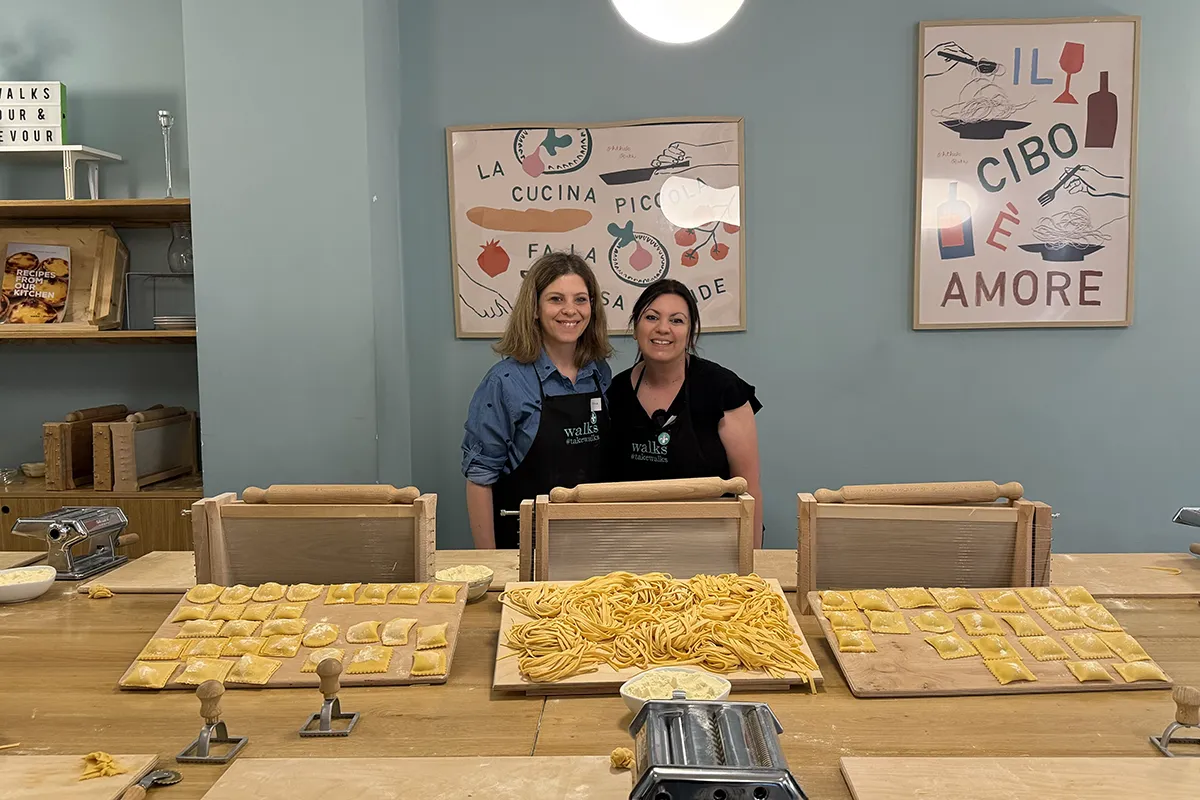
Eating pasta in Rome is one thing, but learning how to make it from scratch is a whole different level. This is why we’d highly recommend joining the same pasta-making experience we enjoyed during our most recent trip to Rome, which was completely adapted to vegetarians.
During this pasta-making class, we cooked and savoured, among others, a vegetarian take on Pasta alla Puttanesca. Full disclosure: Puttanesca isn’t a Roman dish, as it originated in Naples. Yet, this version is so delicious we now cook it at home at least twice a month.
3. Roman-Style Pizza
But what is a trip to Italy without pizza? Unlike the UNESCO-listed, fluffy pizza you’ll find sold along the noisy yet fascinating streets of Naples, Roman-style pizza is very thin and crispy.
Most sit-down restaurants in Rome serve this type of pizza, but luckily, it’s not the only type of pizza you’ll find in the Italian capital.
Yes, that was a subtle confession that we’re not great fans of thin and crispy pizza, unless we have the pleasure of making our own from scratch, the way it’s done during this fantastic pizza-making class in Trastevere.
4. Pizza al Taglio
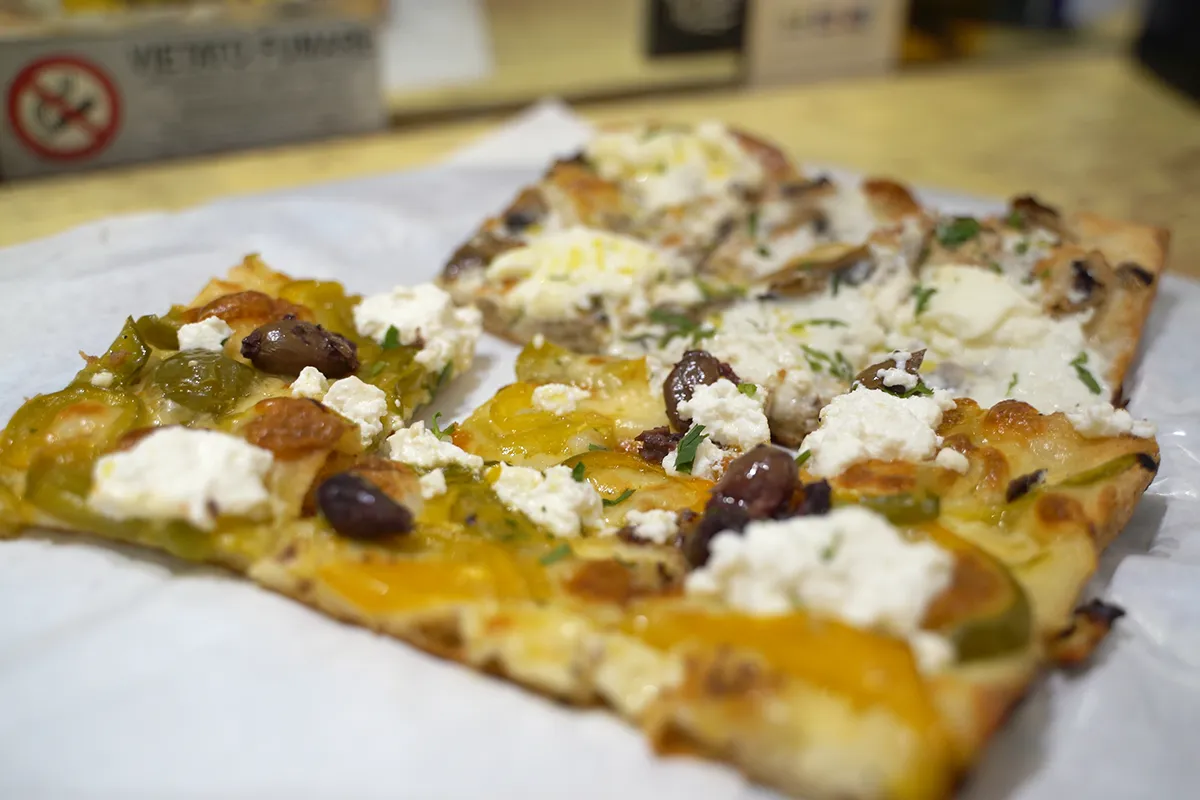
A staple of Roman street food, Pizza al Taglio is a thicker type of pizza, reminiscent of focaccia. Cut into square pieces and sold by weight, Pizza al Taglio in Rome comes in a wide variety of toppings, most of them vegetarian.
Pizza al Taglio is the ideal thing to eat in Rome for a quick lunch on the go, when you’re out sightseeing. You can’t go wrong with any pizzerias that sell pizza by the piece in Rome.
That said, some places are better than others. We particularly liked Pizzeria La Boccaccia in Trastevere, so if you’re in the neighbourhood, make sure to grab a piece or two.
5. Pinsa Romana
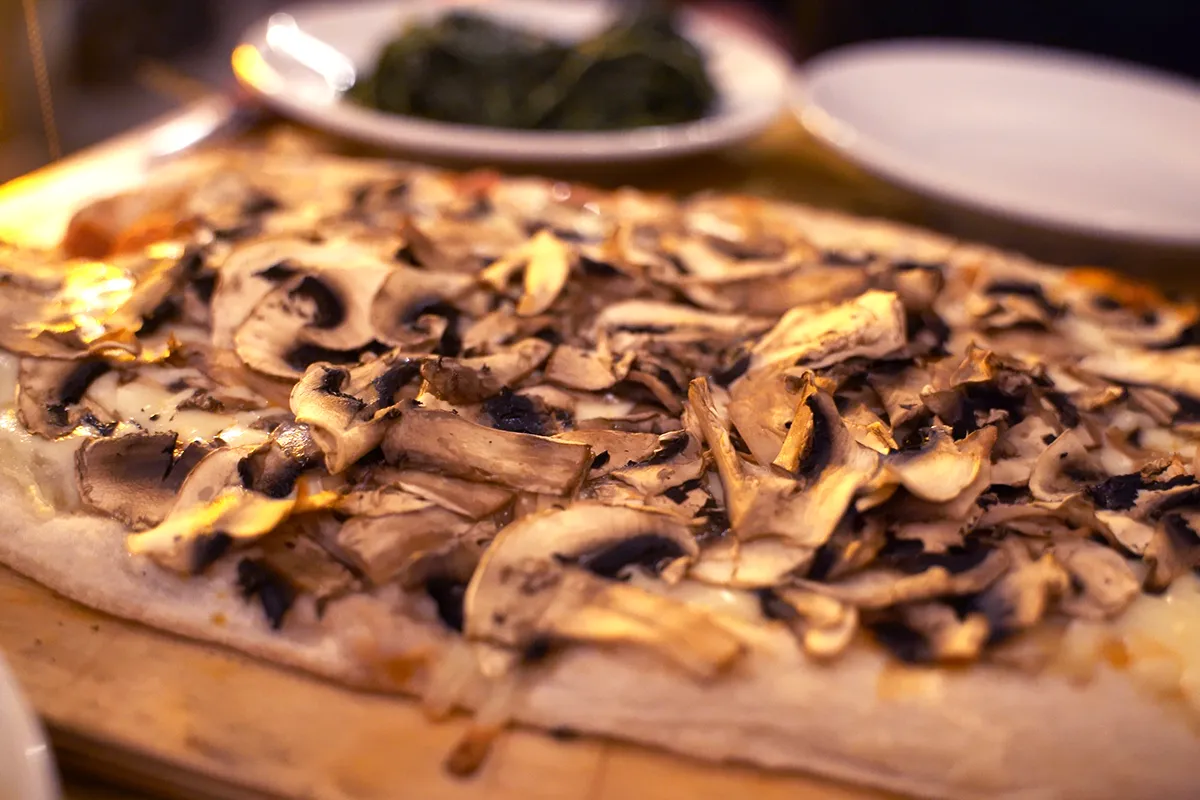
A third type of pizza you can try in Rome is Pinsa Romana. Although there’s a marketing gimmick here involved, the pizza itself is delicious and may easily be our favourite type of pizza in Rome.
Pinsa Romana is in essence a flatbread with a crispy crust, a soft interior and the toppings you would normally add to a pizza, like tomato sauce, mozzarella, black olives, etc.
So, what’s the marketing trick? Pinsa Romana is often advertised as a direct descendant of Ancient Roman flatbread. Undoubtedly, a story like this is always intriguing and draws attention.
However, the truth is that Roman Pinsa was trademarked in 2001 by an Italian baker who later admitted that he made up the historical connection to promote his, admittedly delicious, product.
Therefore, don’t be fooled. Ancient Romans didn’t eat Pinsa Romana while resting half asleep on their dining couches, but this doesn’t mean you shouldn’t try Pinsa while in Rome.
6. Roman Gelato
No trip to Italy is complete without a good taste of pasta, pizza and gelato. So, let’s get this out of the way before we continue with this list of the best vegetarian food in Rome.
Gelato isn’t unique to Rome. No matter where you are in Italy, it’s mandatory to try the Italians’ divine take on ice cream, whose secret lies in fresh, local, seasonal ingredients.
Similarly, there are no gelato flavours that you’ll only find in Rome or any gelaterias that are infinitely better than others to justify long waiting times and queues.
In other words, just step inside any gelateria that serves authentic gelato, pick any flavour you like and enjoy.
You never know; this way, you might even meet a future Hollywood star, like the ridiculously handsome guy who served us gelato at a random gelateria whose tip box was there to help him raise money to become an actor.
But how to tell if it’s an authentic gelateria? Easy: stay away from ice-cream shops that display mountains of gelato and look for those that keep it stored in metal containers with lids.

7. Carciofi alla Giudia
Now that we’ve covered the basics of typical Italian food in Rome, let’s dive deeper into the Eternal City’s authentic cuisine, which is meat-free to its core.
Since ancient times, vegetables and fruit have been integral to Roman cuisine. Fresh seasonal produce from the surrounding countryside was used to prepare delectable dishes that have always stood out for their simplicity and heartiness.
Later, Roman cuisine was redefined by the Jews who lived in the city for centuries. Their influence is still evident in dishes born in the heart of the Jewish Ghetto, now found in traditional restaurants across the city.
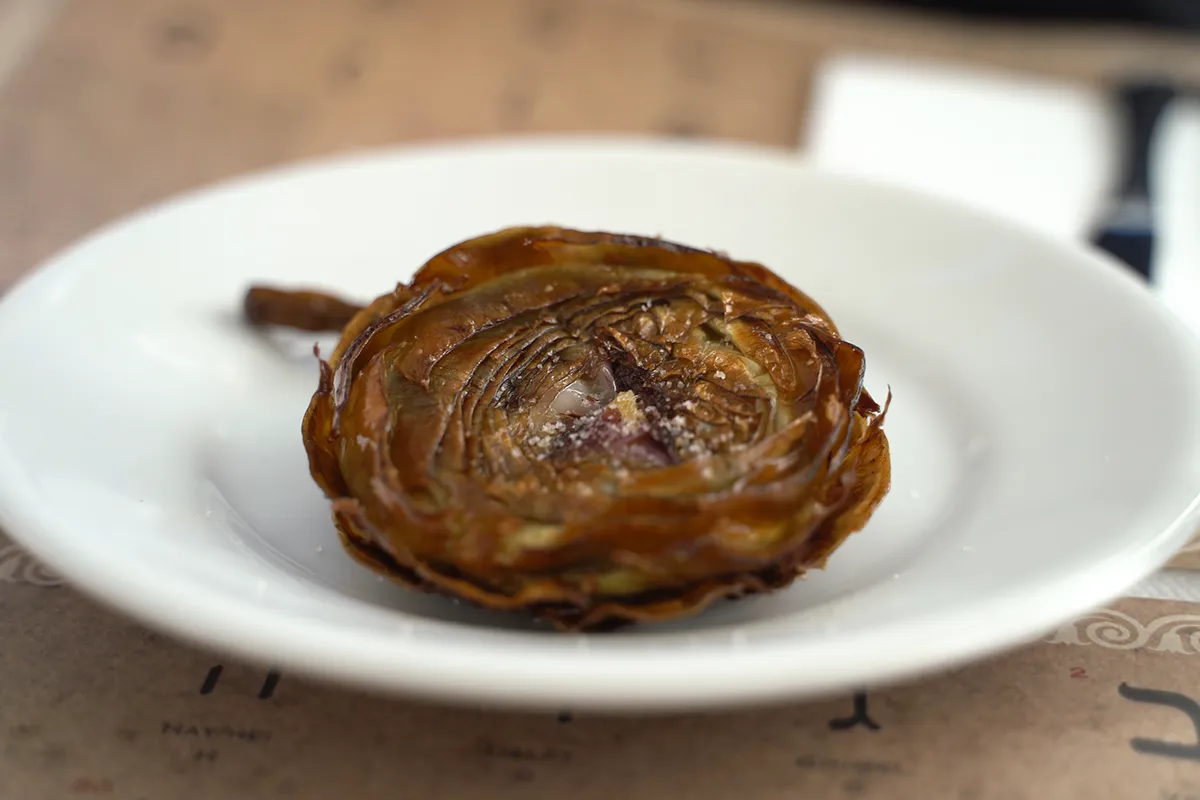
Perhaps the most emblematic among those dishes is Carciofi alla Giudia, a speciality of the Roman Ghetto.
Carciofi alla Giudia is a dish that consists of fresh artichokes deep-fried to perfection and the best place to try it is any restaurant in the former Jewish Ghetto, like Nonna Betta.
As this is a highly seasonal dish, you can only find it on menus during the spring months, namely March, April and May. It’s so delicious you might want to time your trip with the fresh artichoke season in Rome. Spring is an amazing time to plan your trip to Rome anyway.
8. Carciofi alla Romana
Romans have a true love affair with fresh artichokes. Therefore, it makes perfect sense that more than one artichoke-based dish is featured on menus across the city.
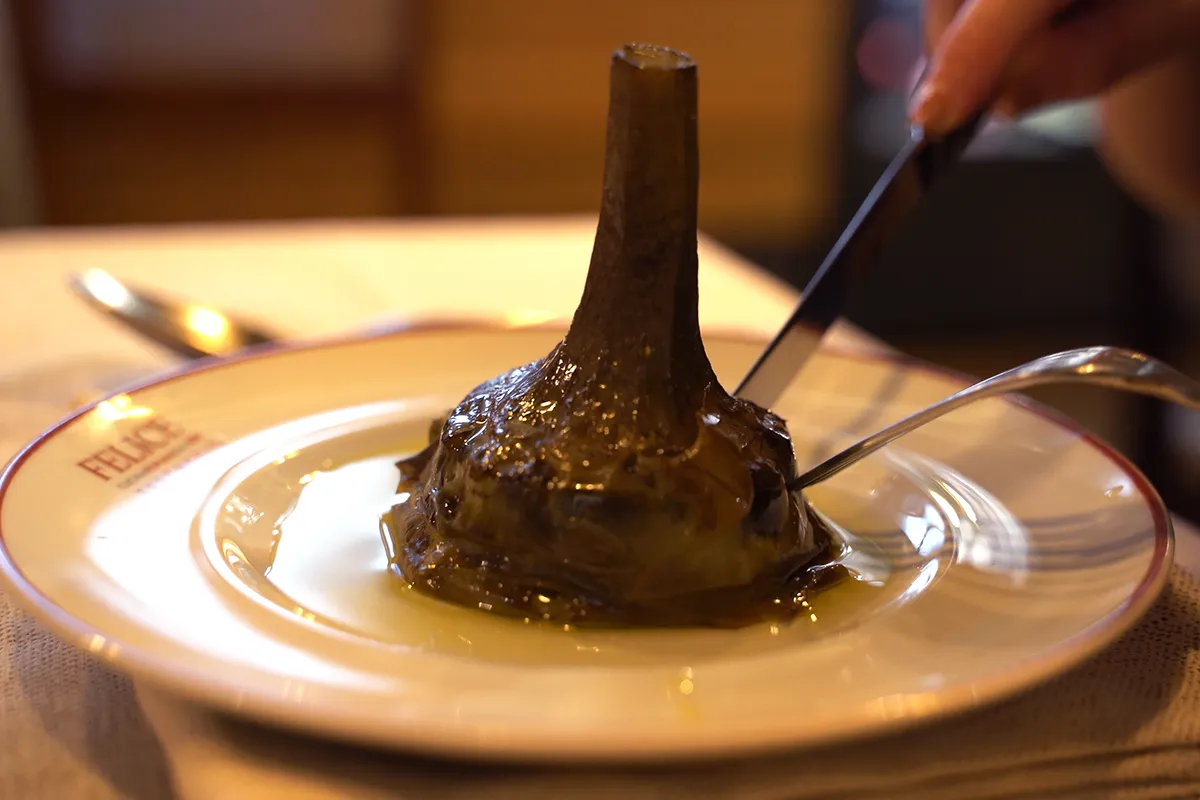
Carciofi alla Romana is very similar to Carciofi alla Giudia, but this time, the fresh artichokes are pan-braised rather than deep-fried. The result is a beyond-words tender delicacy that can double as an appetiser or even a secondo (main course) to follow your pasta dish.
Again, this dish can be found only during the spring months and the best we’ve tried so far was at Felice a Testaccio.
9. Gnocchi alla Romana
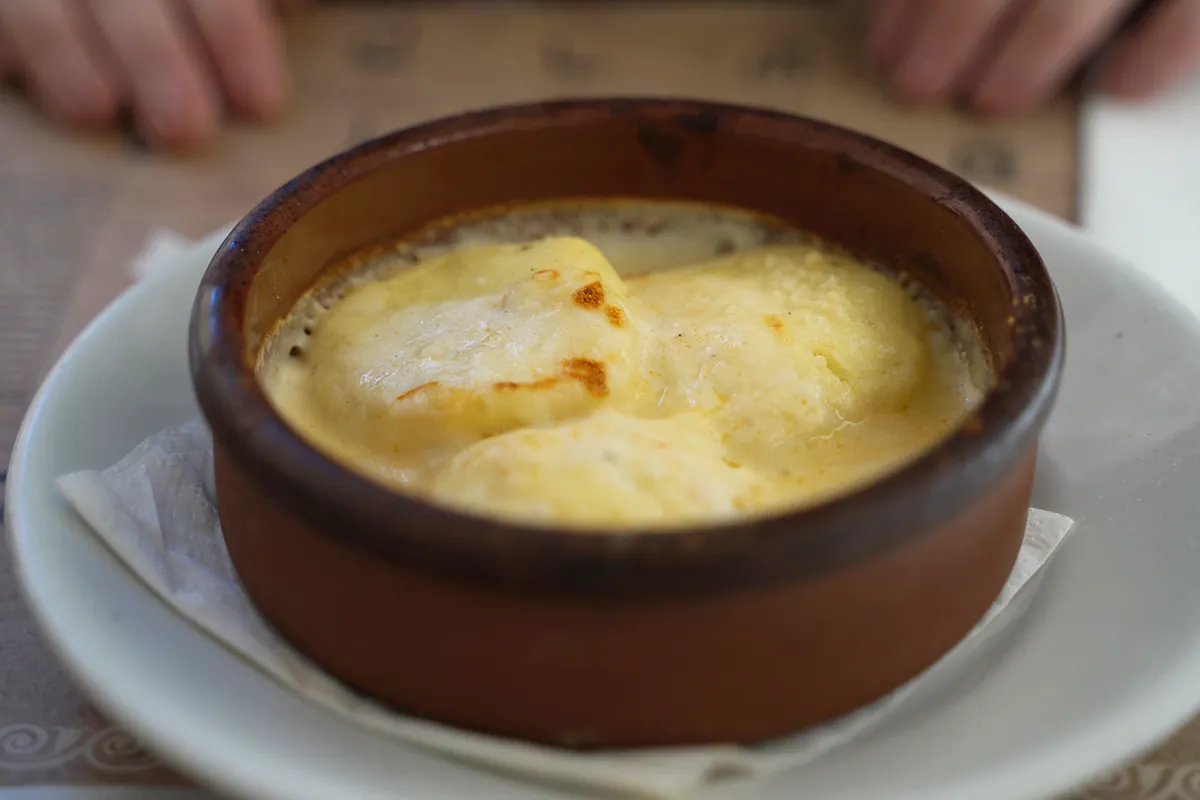
Another traditional vegetarian dish in Rome is Gnocchi alla Romana. But this gnocchi dish isn’t what you would expect.
Unlike the famous, small, pasta-like potato dumplings, Gnocchi alla Romana are large, round dumplings made of semolina, milk and butter. They are then layered in a baking dish, doused in butter and cheese and baked to golden perfection.
Gnocchi alla Romana is Roman comfort food at its best, but not super easy to find. We tried this dish at Nonna Betta and loved every bite of its heartiness.
10. Supplì
Undeniably, pizza is the ultimate street food in Italy. But there’s more to the Italian capital’s street food scene.
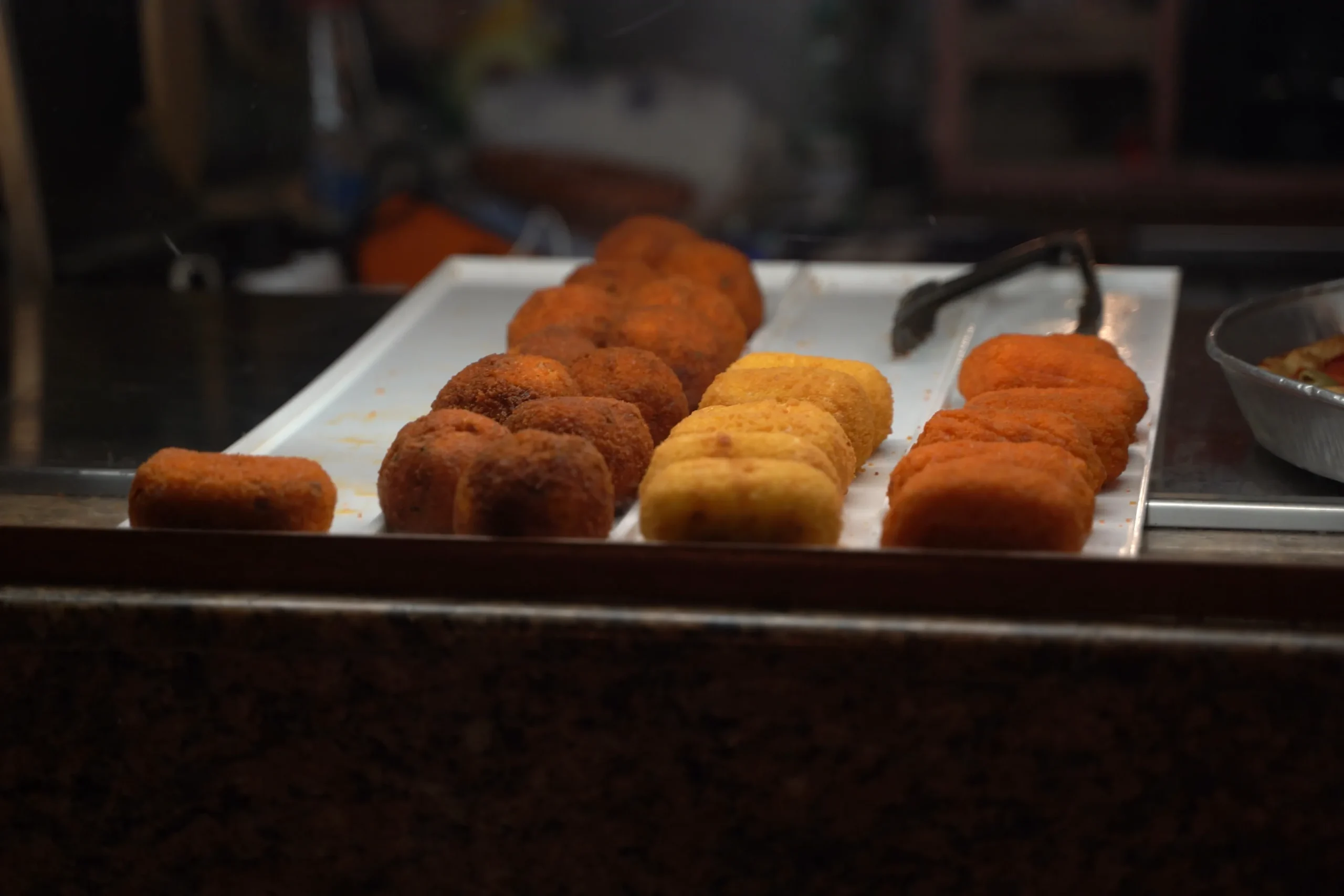
Supplì are deep-fried snacks filled with rice, minced meat ragu and mozzarella cheese. The vegetarian version replaces the ragu with a simple tomato sauce.
The oval-shaped Supplì are the Roman cousins of the Sicilian arancini, which are generally larger than Supplì and typically round or cone-shaped.
One of the most popular places to try Supplì in Rome is Supplì Roma, which is featured on many Instagram reels. For that reason, the queues to buy Supplì there are absurdly long.
Seriously, it’s not worth wasting valuable time queuing up for something you can find literally everywhere in Rome. So, if there’s no queue, step inside.
But if you see a long line, keep walking, just like we did. Equally delicious Supplì await you just around the corner at Gusteria al 17 Roma.
11. Contorni
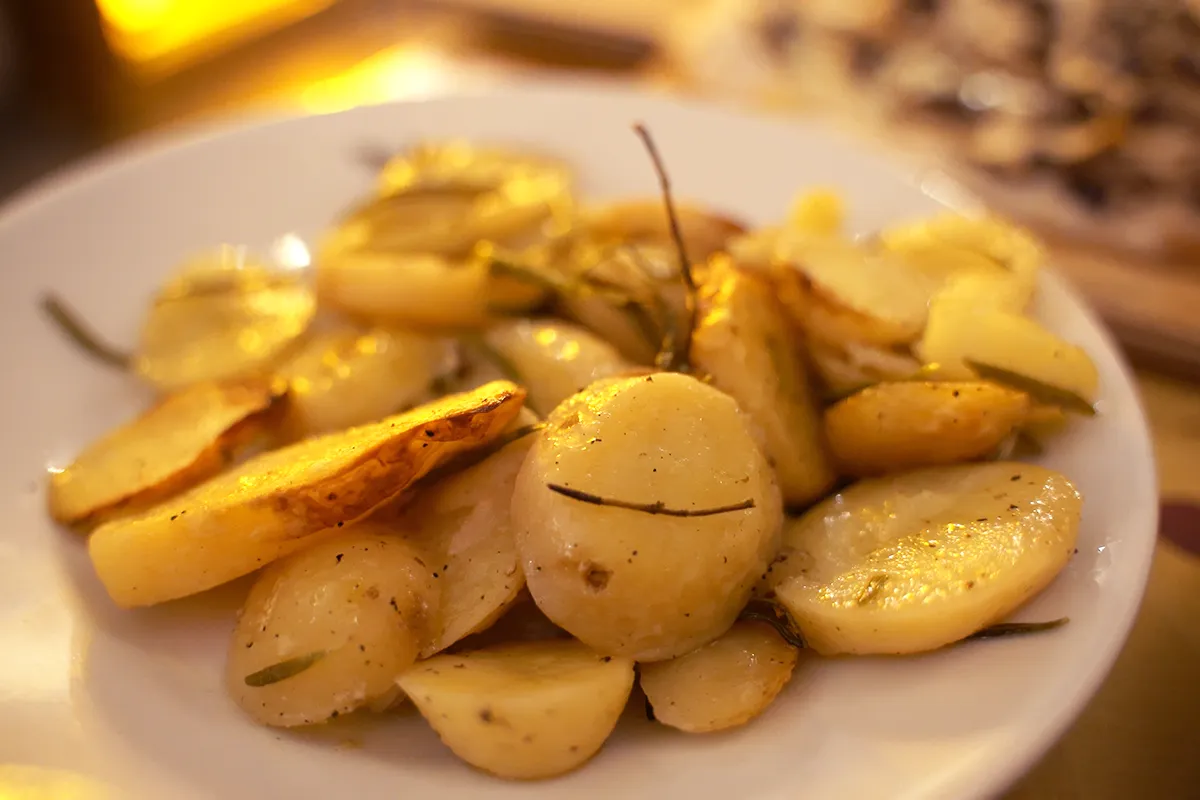
As mentioned at the beginning of this article, Contorni are the side dishes you can order alongside a main dish or as standalone small plates to nibble on. The vast majority of Contorni are plant-based, and as such, ideal for vegans and vegetarians.
Some typical Roman Contorni include:
- Cicoria Ripassata: boiled then sautéed bitter greens.
- Puntarelle alla Romana: a winter salad of chicory sprouts with a garlic dressing. Traditionally, the dressing has anchovies, so double-check before ordering to make sure you get a plant-based version.
- Oven-baked potatoes.
- Carciofi alla Romana or Carciofi alla Giudia: these Roman staples are often served as Contorni.
12. Pecorino Romano
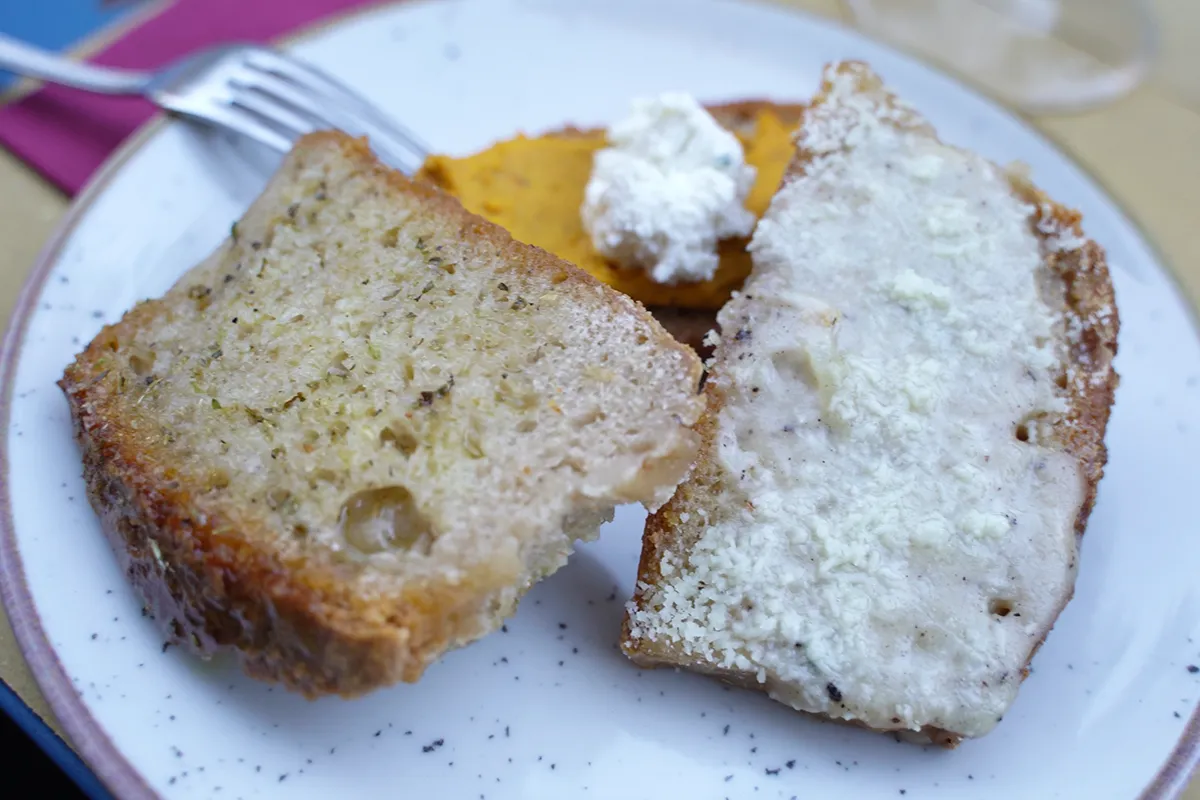
At this point, a special mention should be made to Pecorino Romano, the Italian capital’s superb local cheese.
Apart from being one of the three main ingredients of Cacio e Pepe, Pecorino Romano is also a delicious treat on its own or paired with honey or jam to balance its intense tanginess and a glass of exquisite local wine.
13. Maritozzo
Now, let’s take a moment to appreciate what must be the most scrumptious entry on this list of the best vegetarian food in Rome.
Maritozzo is a traditional Roman soft bun made from a sweet, brioche-like dough and generously filled with freshly whipped cream.
We haven’t confirmed whether Italians actually eat Maritozzo for breakfast or not. But this didn’t stop us from trying it ourselves at Il Maritozzaro one fine Saturday morning. We can safely say that this is the real breakfast of champions.
No words can describe how delicious this sweet bun is. The moment Maritozzo hits your palate, angelic choirs will echo in your ears as you’re ready to cross through floating golden gates. Welcome to food heaven.

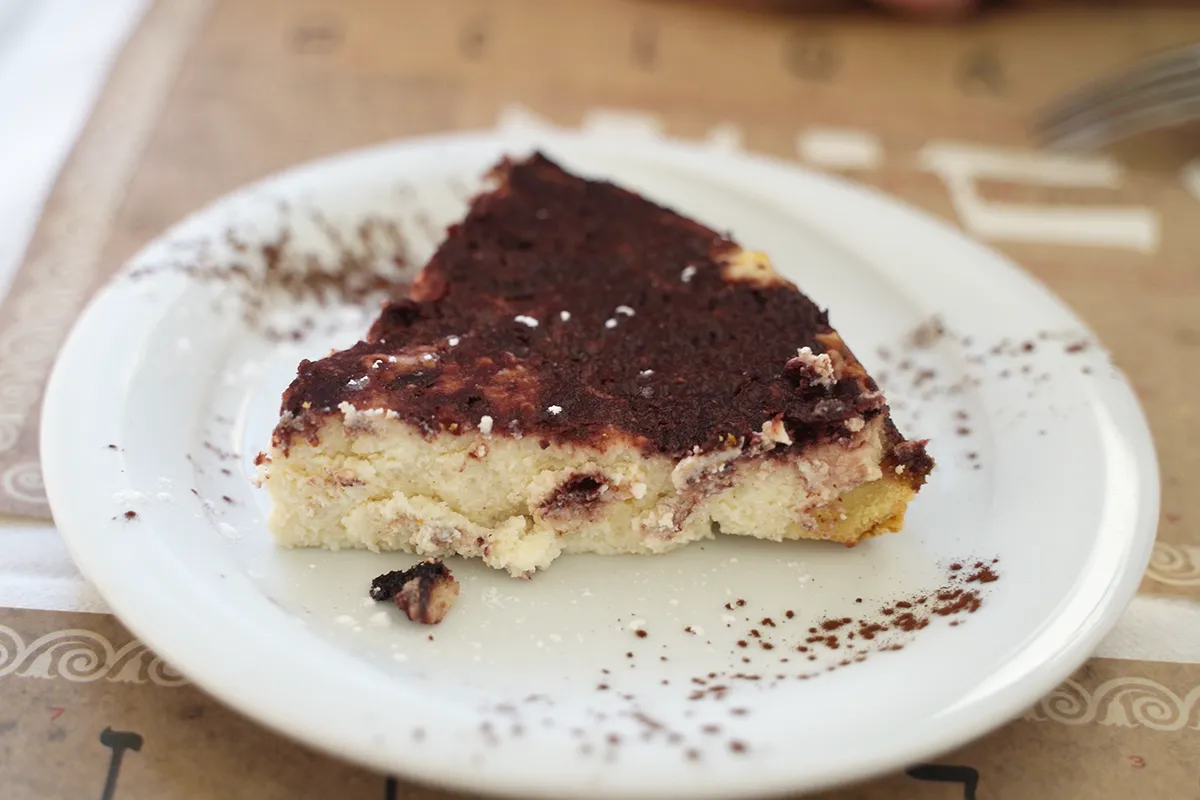
14. Crostata di Ricotta e Visciole
Another Roman staple that hails from the city’s rich Jewish heritage, Crostata di Ricotta e Visciole is a decadent dessert, best enjoyed after a full meal.
Crostata di Ricotta e Visciole is a traditional dessert featuring mouthwatering shortcrust pastry filled with sweetened, fresh sheep’s milk ricotta and sour cherry jam.
It’s not your average dessert, as it has a very distinct taste, but after the initial shock, you’ll love it.
15. Aperitivo
Aperitivo isn’t a dish but a part of Italy’s multi-course meal structure. However, the art of Aperitivo is so woven into the fabric of Italy’s soul that we just had to add it to our list of the best vegetarian food in Rome.
Aperitivo is a proper ritual whereby you order a pre-dinner alcoholic drink that comes with an assortment of snacks to nibble on.
There are quite a few variations of the Aperitivo ritual. Some places bring a couple of snacks, like crisps or olives, free of charge.
Other bars have a selection of cheese, cold cuts, small pizzas and other snacks on a shared platter for a fixed price. In this case, you can simply ask the waiter to omit the meat and cold cuts from your platter.
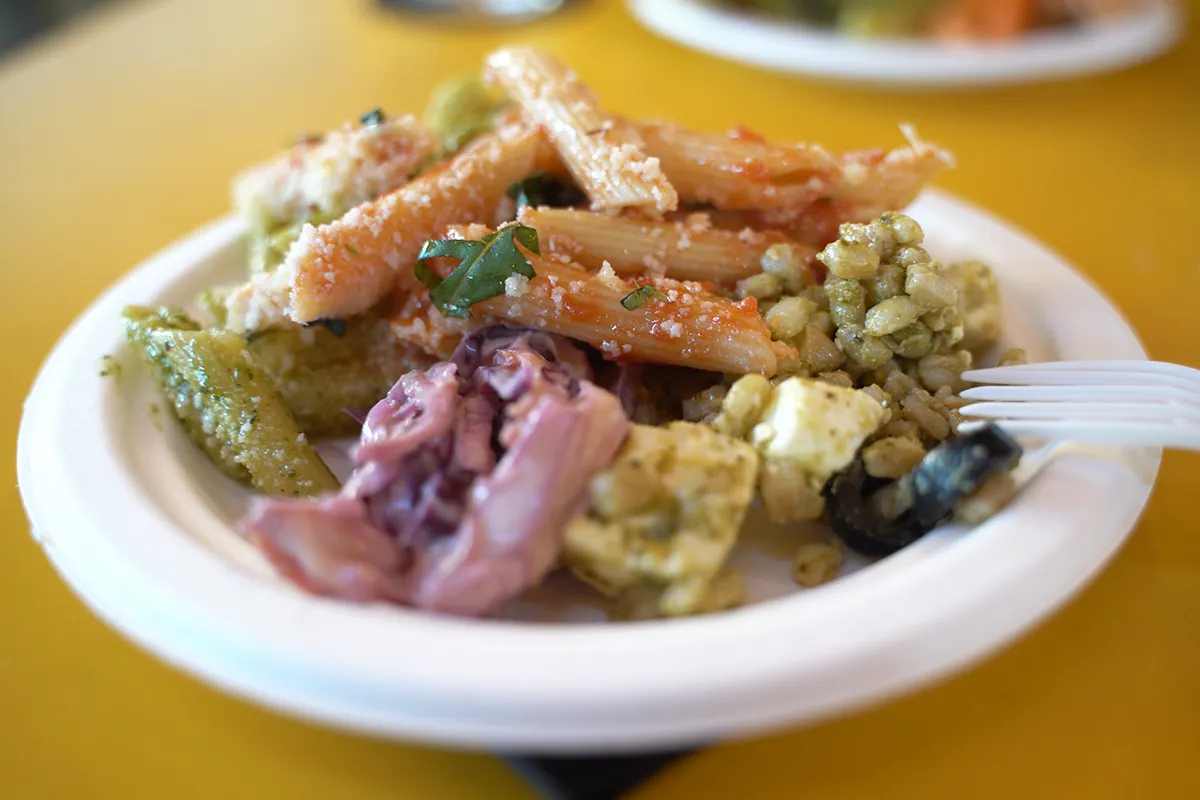
Our favourite type of Aperitivo, though, is when the bar offers a proper buffet for a small surcharge (around 2 EUR). The best place to try the Aperitivo ritual in Rome is the legendary Freni e Frizioni.
This lively bar in Trastevere features a rich buffet, which is 90% vegetarian. As Freni e Frizioni is a very popular bar, make sure you’re there early, around 6:30 PM, its opening time.
However, if you want to enjoy your Aperitivo in the company of new friends, we recommend joining this fantastic sunset tour of Trastevere, one of our favourite vegetarian-friendly food tours in Rome, which includes a proper Aperitivo session at a bar frequented mostly by locals.
Savour Rome, One Veggie Dish at a Time
Before we leave you, here’s an insider tip. To sample the best vegetarian food in Rome, don’t just stick to pizzerias and restaurants.
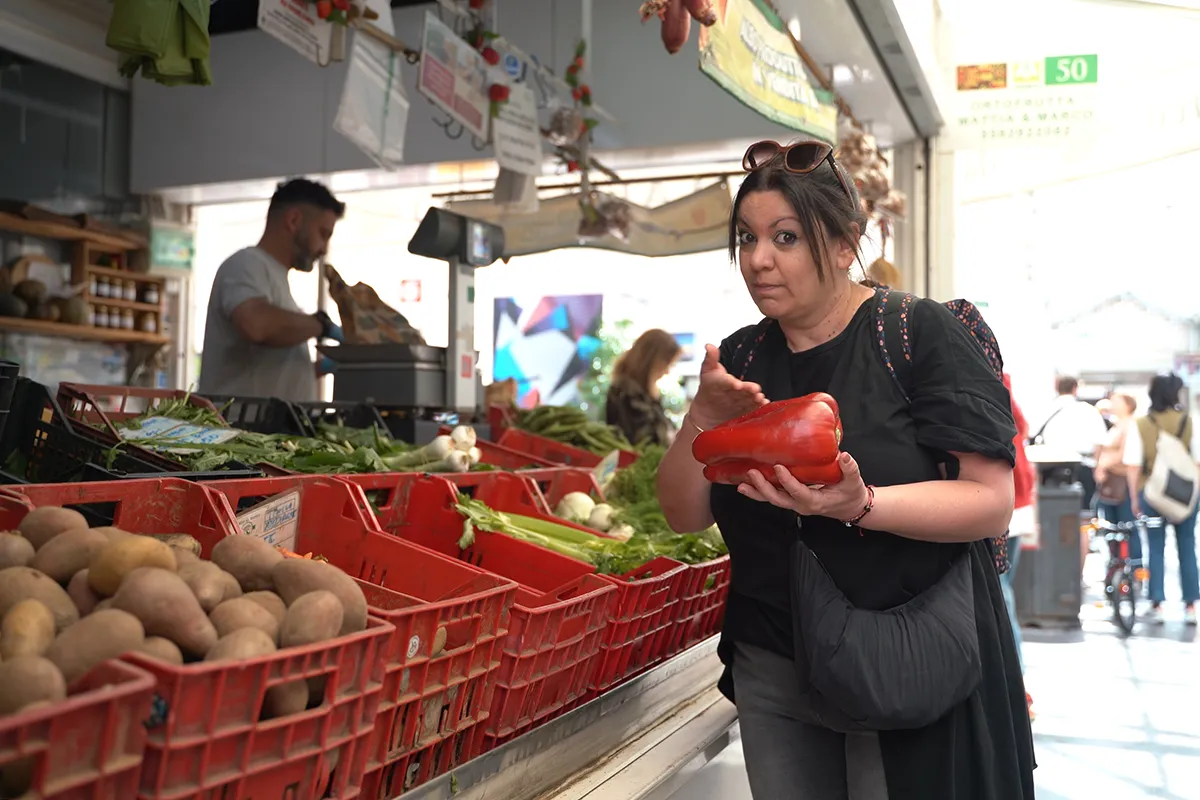
The ultimate celebration of fresh produce and traditional recipes is the colourful Testaccio market. At this vibrant market, you can buy locally grown vegetables and fruit, but also try quintessential Roman dishes, like Pizza al Taglio, Carciofi alla Romana and plenty of others.
Better still, you can join a vegetarian-friendly guided food tour of the Testaccio market to learn the secrets of this authentic part of Rome.
Whatever you do, make sure you savour Rome at a slow pace, taking in its tastes and flavours without rushing.
And don’t forget: Italy is like a second home to us and we’d love to help you plan the trip of your dreams, so don’t hesitate to reach out to learn more about our travel planning services.
Frequently Asked Questions About Vegetarian Food in Rome
Is eating vegetarian in Rome easy?
Yes, eating delicious vegetarian food in Rome is very easy. From iconic pasta dishes to street food staples, like pizza and supplì, to traditional plant-based dishes and sweets, there’s a wide variety of meatless things to eat in Rome.
Is eating vegan in Rome easy?
Eating vegan food in Rome isn’t as easy as eating vegetarian, as most dishes contain cheese and fresh pasta has eggs. That said, some appetisers (such as deep-fried vegetables like courgette flowers and artichokes) are plant-based and so are most of the contorni. As a modern European capital, Rome has a selection of vegan eateries, too.
How to ask for vegetarian food in Rome?
Some easy phrases to remember are: Sono vegeteriano/vegetariana (I’m a vegetarian), Senza carne, per favore (Without meat, please), Senza pesce, per favore (Without fish, please), Senza alici, per favore (Without anchovies, please).
Are there vegetarian food tours in Rome?
All the food tours we recommend in this article about the best vegetarian food in Rome can be adapted for vegetarians. Here are the links to book these tours directly:
Pasta-Making Experience
Pizza-Making Class in Trastevere
Sunset Food Tour of Trastevere
Guided Food Tour of the Testaccio Market